Jury given charge in Johnny De La Rosa aggravated‑assault trial; deliberations begin
November 18, 2025 | Judge Stephanie Boyd 187th District, District Court Judges, Judicial, Texas
This article was created by AI summarizing key points discussed. AI makes mistakes, so for full details and context, please refer to the video of the full meeting. Please report any errors so we can fix them. Report an error »
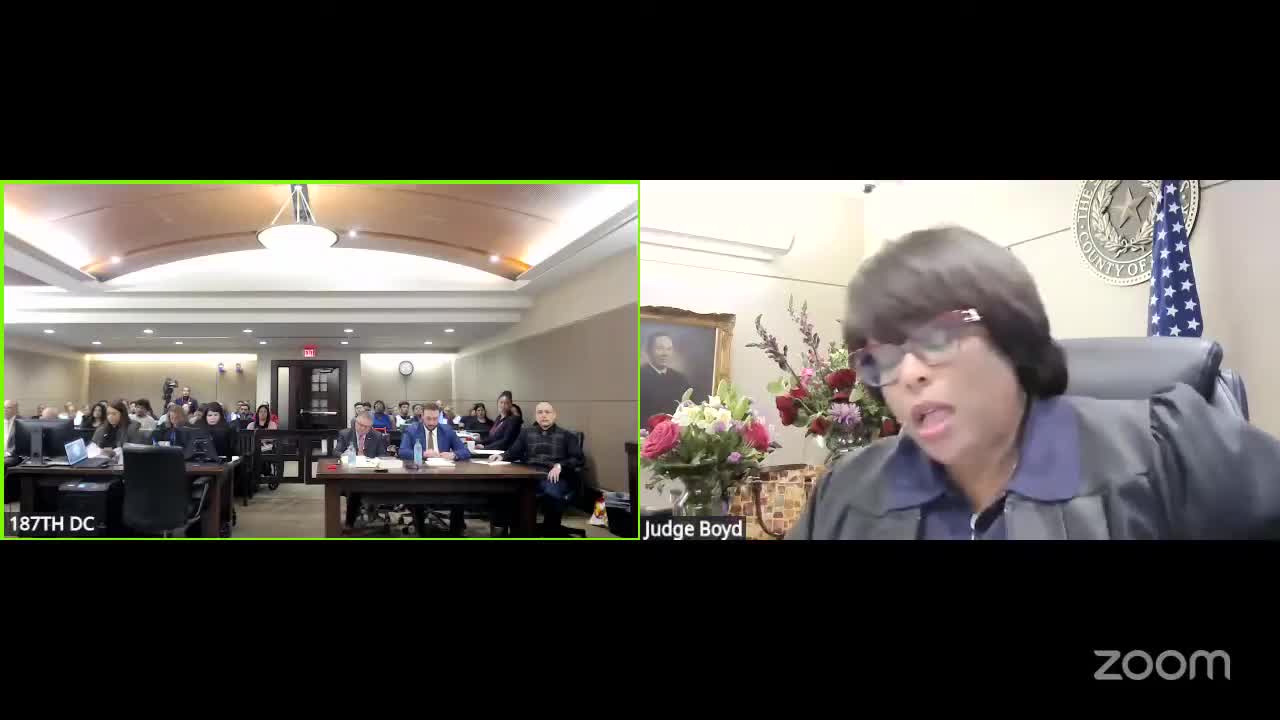
During closing presentations, the state argued the evidence and video exhibits show the defendant pursued and cornered the complainant, creating a context the prosecutor said undercuts the defendant's claim of self‑defense and supports the indictment. Defense counsel told jurors the videos and witness testimony show the complainant had a pocketknife, that the defendant did not display a firearm until after he was stabbed and pushed to the ground, and urged jurors to apply the court's instructions to find reasonable doubt.
The court told jurors they would select a presiding juror and begin deliberations in the jury room; deputies escorted the panel for deliberation. No verdict was recorded in the transcript provided. The judge repeatedly instructed jurors they must follow the law in the written charge and not consider extraneous matters while deliberating.
Why it matters: The case turns on the narrow legal distinctions summarized in the jury charge — in particular whether jurors believe the defendant provoked an encounter that gave him a pretext to use deadly force or whether he reasonably believed deadly force was necessary to defend himself.
What’s next: The jury will deliberate and either return a verdict, request further instruction from the court, or be unable to reach a unanimous decision, in which case the court will address next steps according to Texas procedure.
View the Full Meeting & All Its Details
This article offers just a summary. Unlock complete video, transcripts, and insights as a Founder Member.
30-day money-back guarantee
Sponsors
Proudly supported by sponsors who keep Texas articles free in 2025

