Committee flags data gaps, HPSA uncertainty and proposes standing committee for accountability
November 18, 2025 | Department of Public Health, Departments and Agencies, Organizations, Executive, Connecticut
This article was created by AI summarizing key points discussed. AI makes mistakes, so for full details and context, please refer to the video of the full meeting. Please report any errors so we can fix them. Report an error »
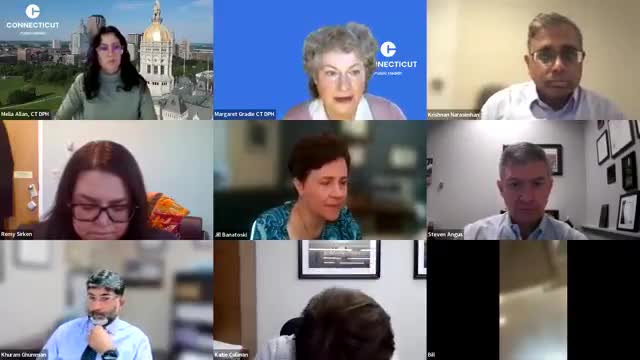
"So none of those revisions have received final federal approval. So we're kind of in a, a state of, limbo with regard to what the HPSAs are in the state," Margaret said while presenting the draft outline and data limitations. She said she will contact supervisors in the primary care office to confirm whether updated HPSA lists are available.
Members repeatedly raised the need for better tracking of where trainees actually practice after training. One member noted that graduates of internal medicine programs often do not enter primary care and urged collecting data on the percentage of residents who remain in Connecticut and practice outpatient primary care. Margaret said an exit survey — modeled after New York State's — is already a recommended tool in the draft report.
To address accountability and follow-through, members proposed converting the committee's work into a standing committee with rotating membership, periodic monitoring (quarterly, triannual or annual check-ins), and a role in selection or oversight if the scholarship or grant programs are implemented. The group emphasized including administrative funding for program management in any appropriation requests.
Members directed staff to check HPSA updates, review Rhode Island's administrative model, and circulate revised top-three recommendations for individual comment; FOIA rules were explicitly noted as a constraint on group email edits.
Don't Miss a Word: See the Full Meeting!
Go beyond summaries. Unlock every video, transcript, and key insight with a Founder Membership.
30-day money-back guarantee
Sponsors
Proudly supported by sponsors who keep Connecticut articles free in 2025

