Albert Lea school finance director warns of tightening budget as enrollment falls
November 17, 2025 | ALBERT LEA PUBLIC SCHOOL DISTRICT, School Boards, Minnesota
This article was created by AI summarizing key points discussed. AI makes mistakes, so for full details and context, please refer to the video of the full meeting. Please report any errors so we can fix them. Report an error »
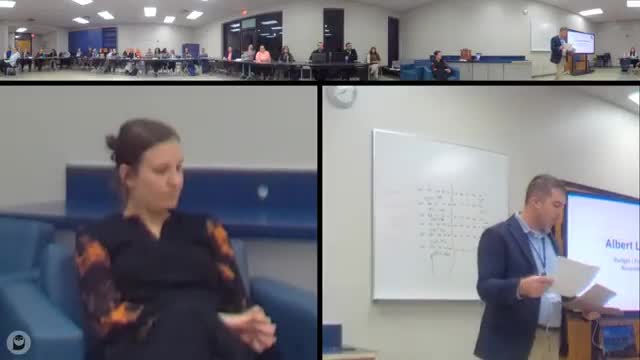
"Our expenditures are mostly salaries and benefits," Durban said, adding that staffing is the primary budget driver and "you cannot cut your way out of this" was repeated by a task-force member during the meeting. Durban outlined that the district had already reduced roughly $1.3 million two years ago and over $2 million last year, and warned that without further planning the district could face deficits in a multi-year horizon.
Durban said most revenue is set by formula at the state level and multiplied by APUs; local property-value increases shift more of the funding burden to local taxpayers without increasing APU-driven revenue. He explained that increasing the levy requires a referendum and community approval, not a unilateral board action.
Staff described the district's forecasting process: financial advisers (Ehlers) model enrollment using historic ADM data and county birth rates, and different averaging windows (four- or six-year) change projections. Durban emphasized the district was still awaiting the state's official October 1 MARS report, which will firm up APUs for budget decisions.
The district proposed a capacity study and a task force to evaluate options. Staff said the task force will gather additional data (county birth rates, peer-district case studies), develop community-engagement approaches (surveys, listening sessions), and present finance-committee targets and recommendations to the school board after audits and contract settlements are complete.
Durban noted the district currently maintains a strong fund balance and a long-term target of 12% fund balance in policy but cautioned that repeated, small cost increases (transportation, property insurance, substitute costs and specialized services) can outpace modest revenue gains and put pressure on that reserve.
Next steps: staff will post meeting materials and a high-school principal's video online, share the Hazel demographer's written report, and reconvene the task force to review audit results, finalized October 1 enrollment figures and collective recommendations before any formal board decisions.
View the Full Meeting & All Its Details
This article offers just a summary. Unlock complete video, transcripts, and insights as a Founder Member.
30-day money-back guarantee
Sponsors
Proudly supported by sponsors who keep Minnesota articles free in 2025

