Lawmakers Hear Veterans’ Testimony Urging Congress and VA to Expand Access to Stellate Ganglion Block for PTSD
November 18, 2025 | Veterans Affairs & Emergency Preparedness, House of Representatives, Legislative, Pennsylvania
This article was created by AI summarizing key points discussed. AI makes mistakes, so for full details and context, please refer to the video of the full meeting. Please report any errors so we can fix them. Report an error »
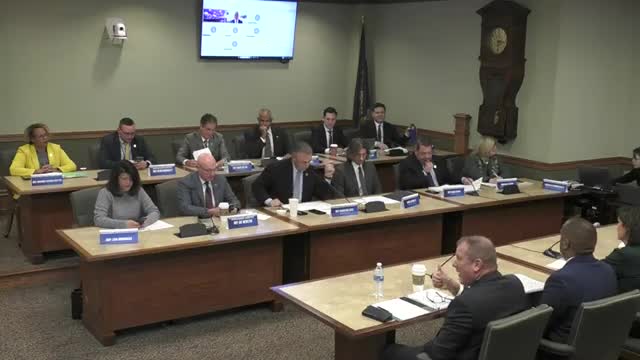
A joint public hearing of the House Intergovernmental Affairs and Operations Committee and the House Veterans Affairs & Emergency Preparedness Committee reviewed HR 157 and testimony urging federal action to increase access to stellate ganglion block, or SGB, therapy for veterans with post‑traumatic stress disorder.
Representative Zach Zimmerman, sponsor of HR 157, opened the hearing by saying the measure would help ensure veterans have access to "every resource available" as they transition to civilian life. Witnesses included Dr. Sean Mulvaney, founder of the SGB Treatment Center and a retired Navy SEAL; Robin Cody, an Army and Air Force veteran and sexual‑assault nurse examiner; Lieutenant Colonel J Ostrich, director of Berks County Veterans Affairs; Will Tobin, deputy director of Berks County Veterans Affairs; and Christine Walsh, founder of the nonprofit For the Love of a Veteran.
Dr. Mulvaney described the SGB procedure as an ultrasound‑guided injection of a local anesthetic to the cervical sympathetic chain that he said can "reset" the autonomic "fight or flight" response. He told the committee he first published a report in 2010 and that a 2019 randomized multicenter trial published in the Journal of the American Medical Association (as he described it) showed causal benefit; he also said six‑month follow‑up data and an in‑press Ohio State trial show durable improvement for some patients. Mulvaney characterized the procedure as safe when performed with current protocols and said about one‑third of his patients are "one and done," while others may need retreatment.
Several veterans recounted rapid improvements after SGB. Robin Cody testified that after severe trauma and persistent PTSD symptoms she received SGB from Dr. James Lynch and experienced near‑instant relief that allowed her to pursue further therapy; she said the treatment "saved my life." Lieutenant Colonel Ostrich described his own recovery and argued the VA offers SGB at too few facilities — he stated SGB is available at 11 of the VA's 1,380 hospitals and clinics — and that veterans are often required to "fail" other treatments before receiving SGB. Will Tobin cited local impacts, saying 26 of this year's suicide deaths in Berks County were veterans, and called the statistics a call for action. Christine Walsh said her nonprofit has funded more than 767 SGB procedures, amounting to roughly $994,500, to help veterans who otherwise lack access.
Committee members asked about mechanism, safety, training and rollout. Mulvaney and others told lawmakers that training and protocol differences across VA facilities are barriers: although some VA sites offer SGB, capacity is limited, appointments are scarce, and many sites treat only veterans inside their local catchment area. Mulvaney described hands‑on training he has provided to VA anesthesia departments but said scaling that training across the VA would be challenging without federal or systemwide action.
Lawmakers pressed for paths to compel broader VA adoption and discussed the role Congress could play in moving HR 157 forward. The hearing closed with Chair Deloso thanking the panel and saying he would work to "move HR 157 and get the light of day it needs." No formal vote on HR 157 was recorded at the hearing.
What the record shows and what remains to be decided: witnesses attributed clinical trial results and facility‑count figures to their own work or reporting; committee members did not introduce independent VA policy documents at the hearing. Next steps discussed were legislative attention to HR 157 and further engagement with VA leadership and federal agencies to address training and access limitations.
The hearing transcript and testimony are the source for all quotes and claims in this report.
Representative Zach Zimmerman, sponsor of HR 157, opened the hearing by saying the measure would help ensure veterans have access to "every resource available" as they transition to civilian life. Witnesses included Dr. Sean Mulvaney, founder of the SGB Treatment Center and a retired Navy SEAL; Robin Cody, an Army and Air Force veteran and sexual‑assault nurse examiner; Lieutenant Colonel J Ostrich, director of Berks County Veterans Affairs; Will Tobin, deputy director of Berks County Veterans Affairs; and Christine Walsh, founder of the nonprofit For the Love of a Veteran.
Dr. Mulvaney described the SGB procedure as an ultrasound‑guided injection of a local anesthetic to the cervical sympathetic chain that he said can "reset" the autonomic "fight or flight" response. He told the committee he first published a report in 2010 and that a 2019 randomized multicenter trial published in the Journal of the American Medical Association (as he described it) showed causal benefit; he also said six‑month follow‑up data and an in‑press Ohio State trial show durable improvement for some patients. Mulvaney characterized the procedure as safe when performed with current protocols and said about one‑third of his patients are "one and done," while others may need retreatment.
Several veterans recounted rapid improvements after SGB. Robin Cody testified that after severe trauma and persistent PTSD symptoms she received SGB from Dr. James Lynch and experienced near‑instant relief that allowed her to pursue further therapy; she said the treatment "saved my life." Lieutenant Colonel Ostrich described his own recovery and argued the VA offers SGB at too few facilities — he stated SGB is available at 11 of the VA's 1,380 hospitals and clinics — and that veterans are often required to "fail" other treatments before receiving SGB. Will Tobin cited local impacts, saying 26 of this year's suicide deaths in Berks County were veterans, and called the statistics a call for action. Christine Walsh said her nonprofit has funded more than 767 SGB procedures, amounting to roughly $994,500, to help veterans who otherwise lack access.
Committee members asked about mechanism, safety, training and rollout. Mulvaney and others told lawmakers that training and protocol differences across VA facilities are barriers: although some VA sites offer SGB, capacity is limited, appointments are scarce, and many sites treat only veterans inside their local catchment area. Mulvaney described hands‑on training he has provided to VA anesthesia departments but said scaling that training across the VA would be challenging without federal or systemwide action.
Lawmakers pressed for paths to compel broader VA adoption and discussed the role Congress could play in moving HR 157 forward. The hearing closed with Chair Deloso thanking the panel and saying he would work to "move HR 157 and get the light of day it needs." No formal vote on HR 157 was recorded at the hearing.
What the record shows and what remains to be decided: witnesses attributed clinical trial results and facility‑count figures to their own work or reporting; committee members did not introduce independent VA policy documents at the hearing. Next steps discussed were legislative attention to HR 157 and further engagement with VA leadership and federal agencies to address training and access limitations.
The hearing transcript and testimony are the source for all quotes and claims in this report.
View the Full Meeting & All Its Details
This article offers just a summary. Unlock complete video, transcripts, and insights as a Founder Member.
✓
Watch full, unedited meeting videos
✓
Search every word spoken in unlimited transcripts
✓
AI summaries & real-time alerts (all government levels)
✓
Permanent access to expanding government content
30-day money-back guarantee
