Commission debates 12% proposed rate of return for dark fiber; staff to return with cost‑of‑service analysis
November 18, 2025 | Marshfield, Wood County, Wisconsin
This article was created by AI summarizing key points discussed. AI makes mistakes, so for full details and context, please refer to the video of the full meeting. Please report any errors so we can fix them. Report an error »
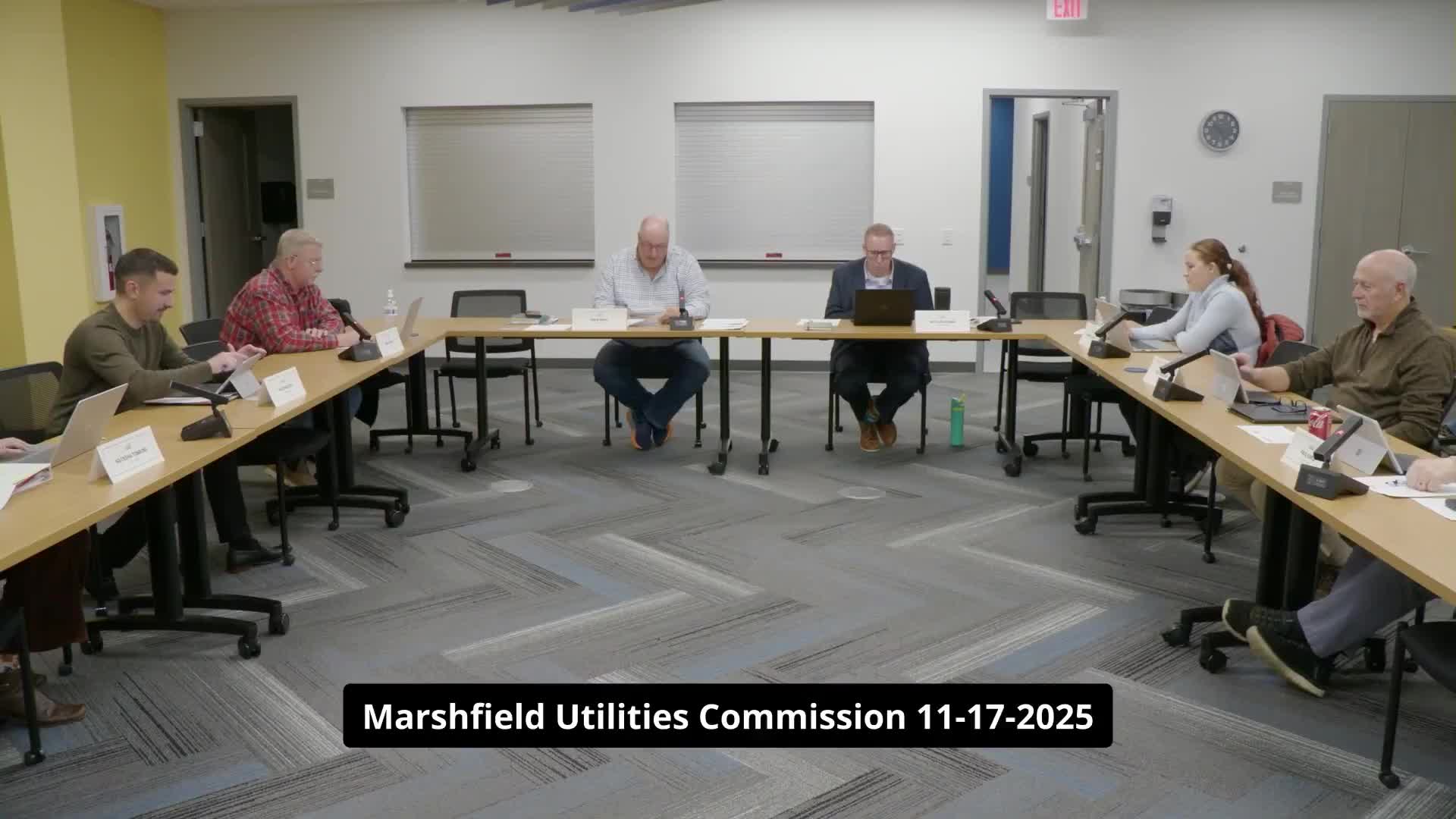
Staff explained the policy sections that assign cost causation for new interconnection requests, set a cost‑of‑service analysis approach and describe per‑strand/per‑mile billing and an annual rate review. Staff said the communications utility is unregulated, serves a small number of customers (fewer than a dozen in current practice) and carries different cash‑flow characteristics than the electric and water utilities.
Several commissioners questioned whether a 12% rate of return aligns with the municipal utility role. Commissioner Natasha said, "ROR of 12% doesn't, in my opinion, align with that," urging consideration of rates closer to the water and electric utilities' authorized returns. Staff responded that private sector fiber operators commonly expect returns in the 10–15% range and that the draft 12% target is intended to provide revenue stability for an unregulated, potentially competitive product.
Commissioners requested concrete financial comparisons and implementation details. Staff offered illustrative net operating income figures and agreed to produce specific analyses: net operating income at alternative RORs (staff cited roughly $148,000 at 18%, about $94,000 at 12% and about $50,000 at 6% as examples in discussion), a breakdown of how different rates would change charges for major local customers (city and school district), and an estimate of the replacement cost for the fiber infrastructure to inform the commission’s cash‑target policy.
Other discussion points included whether the utility should use market‑based pricing for new customer connections or require new customers to cover front‑end installation costs, whether setting different rates by customer class is appropriate, and the role of a commission‑designated fund to accumulate reserves for future infrastructure replacement.
Next steps: staff will run the requested scenarios, obtain a cost‑of‑service study estimate, and return to the commission with dollar impacts by customer and recommended policy language for final consideration.
View the Full Meeting & All Its Details
This article offers just a summary. Unlock complete video, transcripts, and insights as a Founder Member.
30-day money-back guarantee
Sponsors
Proudly supported by sponsors who keep Wisconsin articles free in 2025

