Retired Naperville detective tells Flossmoor parents to collect five pieces of evidence before reporting online abuse
November 17, 2025 | Flossmoor SD 161, School Boards, Illinois
This article was created by AI summarizing key points discussed. AI makes mistakes, so for full details and context, please refer to the video of the full meeting. Please report any errors so we can fix them. Report an error »
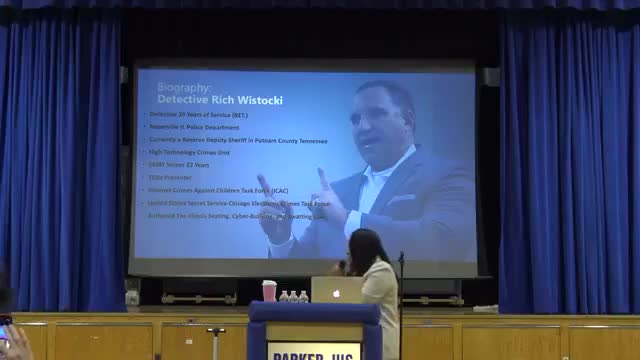
"I need screen captures of everything," Mustoski said, listing the "five pieces of evidence" he asks parents and students to collect before making a formal report: screen captures of chats and profiles; a capture of the phone number, gamer tag or email address; a typed, detailed statement describing what happened and how it made the child feel; printed photos of the content; and copies saved on one or more flash drives. "If you want us to find out who it is, don't report it to the social network," he added, arguing platform takedowns can destroy evidence investigators need.
Mustoski framed the guidance around casework and investigation timelines. He described examples where rapid preservation and submission of the five items allowed investigators to use platform law-enforcement portals and return metadata to identify and locate suspects within hours. In one example he shared, a delay or an officer unfamiliar with cyber reporting led to evidence being deleted and the case becoming harder to investigate.
The presentation included practical tips parents can use immediately: keep devices out of bedrooms at night and centralize charging; regularly check messaging search bars for phrases such as "don't tell"; turn off in-game messaging or move play to public family rooms; and take screenshots and back them up to removable media.
Mustoski also encouraged parents to put a nonpunitive "golden ticket" rule in place: promise no punitive consequences if a child reports an incident so children will come forward rather than hide abuse. "If you come to us, we're gonna give you that golden ticket pass, and there will be no consequences for what happened. None," he said.
The presentation closed with a demonstration of takeitdown.ncmec.org, the National Center for Missing & Exploited Children (NCMEC) removal tool, which Mustoski said can produce a digital fingerprint (hash) of images that platform partners use to block further distribution. He stopped the recording at the end of his talk to take private questions from parents.
The guidance is framed as operational advice for parents and school staff; Mustoski presented it as a set of investigator-tested steps rather than new district policy. Flossmoor parents at the meeting were given handouts and contact information for follow-up.
View the Full Meeting & All Its Details
This article offers just a summary. Unlock complete video, transcripts, and insights as a Founder Member.
30-day money-back guarantee
Sponsors
Proudly supported by sponsors who keep Illinois articles free in 2025

