Panama City leaders seek standard process for selling city-owned lots, prioritize affordability and transparency
November 18, 2025 | Panama City, Bay County, Florida
This article was created by AI summarizing key points discussed. AI makes mistakes, so for full details and context, please refer to the video of the full meeting. Please report any errors so we can fix them. Report an error »
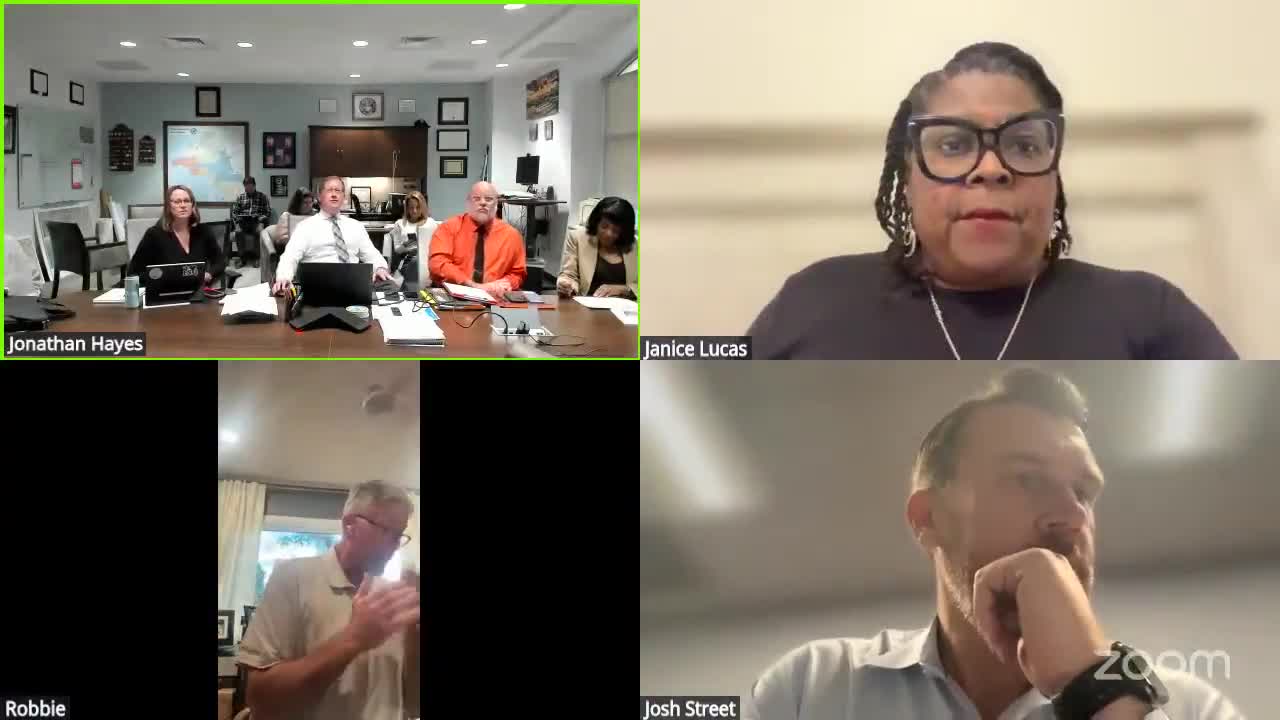
The commission convened a virtual workshop to sort when to use sealed RFPs and when unsolicited offers should trigger a public process. “I think we all collectively agree, that the city owns too many parcels in general across the whole city, and we need to have a systematic way to address those and what's the best way to dispose of them,” the meeting moderator said, opening the discussion.
Commissioner Robbie Hughes urged a uniform rule that treats unsolicited offers similarly to RFPs so “everybody ought to have an opportunity to buy it,” proposing that staff keep initial offers confidential, advertise an opportunity for public bids, and set clear limits on allowable uses and due‑diligence and closing timelines to avoid long delays.
Several commissioners said the city should tailor rules by parcel type. Commissioner Street recommended separating residential, mixed‑use and commercial rules: subdivide larger residential lots, require residential proposals to commit to building within one year, prioritize lots inside neighborhood plans, and require mixed‑use proposals to show zoning overlays and a residential component.
“Residential construction is much more streamlined than commercial,” Street said, arguing that offloading acquisition cost for certain affordable housing projects could lower purchase prices for buyers. Commissioners discussed using land as a form of acquisition assistance to bring sale prices closer to targeted affordable thresholds.
Housing staff warned of program constraints when lots were purchased with housing funds. “On the lots that have been purchased with ... housing funds, we have to keep in mind we do have to recoup some of those funds,” Sheila of the housing department said, explaining that if the city gives a lot as down‑payment assistance it must secure the grant or loan with a lien and ensure end users meet income qualifications.
Purchasing staff outlined the mechanics the commission can use. “We just do it through an RFP process... normally, it's 30 days. And so after 30 days, we do a public opening for that,” Sean Self, logistics director over purchasing, said. Self added that RFP language can be written to include whatever restrictions or contract terms the commission directs.
Self also cautioned that some proposers submit extremely low opening bids to get projects before the commission, a trend he has seen in recent months. “We're getting very, very low bids in the hopes that the commission will approve that just to get that business in that location,” Self said, and urged the commission to structure the process so proposers put adequate skin in the game.
Commissioners discussed practical next steps: refine a scoring grid for neighborhood and equity priorities, centralize unsolicited‑offer intake, and clarify which parcels (for example, CRA‑held or housing‑funded lots) require special statutory notice or program accounting. Staff reported there are roughly 15 unsolicited offers currently on file and recommended directing all unsolicited submissions to Purchasing so they land in a single master list.
The workshop did not adopt formal rules or take votes. Commissioners agreed to follow up in one‑on‑one meetings with staff, consider codifying a process in the purchasing manual or policy (rather than an ordinance), and return with more detailed language and lists of parcels to be covered. The commission scheduled its next meeting for the following day.
View the Full Meeting & All Its Details
This article offers just a summary. Unlock complete video, transcripts, and insights as a Founder Member.
30-day money-back guarantee
Sponsors
Proudly supported by sponsors who keep Florida articles free in 2025

