Tipton utility consultant proposes higher water, wastewater bills; board previews 2026 action
November 18, 2025 | Tipton City, Tipton County, Indiana
This article was created by AI summarizing key points discussed. AI makes mistakes, so for full details and context, please refer to the video of the full meeting. Please report any errors so we can fix them. Report an error »
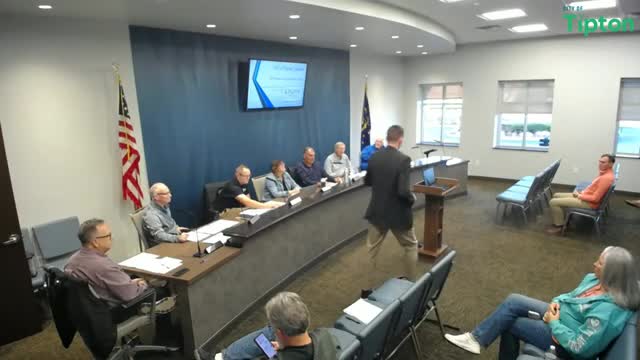
Brandon told the board the study uses recent financial data (2019–mid‑2025) and said the water utility’s depreciation fund was about $428,000 in June while the wastewater depreciation balance was roughly $27,000, levels he described as limited for future capital needs. "We're proposing $26 for 4,000 gallons would be the average bill that it comes out to," Brandon said, adding the increase helps build depreciation funding and avoid larger borrowing later.
The consultant presented two wastewater scenarios: a proposed rate (about $52.02 for 4,000 gallons) and a bond scenario using $5 million in borrowing (an added roughly $7–$8 to the monthly bill). He warned that the utility’s June bond‑coverage metric was just under the covenant minimum — "about 124.6 percent," he said — while bond covenants typically require 125 percent, leaving little margin for unexpected operating‑cost increases.
Brandon also recommended raising availability and connection fees using an EDU (equivalent dwelling unit) method so future customers buy into plant value; he specifically suggested a wastewater connection fee increase (from $1,000 to $1,500) to better align with water connection charges. He noted wholesale wastewater customers Sharpsville and Kenton would be treated on an across‑the‑board basis in any adjustment.
On capital needs, Brandon identified aging equipment at the wastewater plant — clarifier mechanisms with unit equipment estimates of $250,000–$400,000 each, additional blowers at about $100,000 apiece and an electrical switchgear relocation likely in the low‑to‑mid six figures — and estimated total horizon projects could approach $5 million. "You may consider that going forward," he said, describing replacement and relocation work as prudent to avoid failures.
Council and board members asked detailed questions. Nick Crane, identified in the meeting as City Council president, began the board Q&A by asking about costs associated with the consultant’s work and projects: "First question is, how much did the trip cost?" Other members pressed on development impacts of higher tap/connection fees, household consumption assumptions (Brandon used 4,000 gallons as a commonly used benchmark), and whether alternative rate structures — tiered or usage‑based pricing — should be considered.
Brandon and staff said availability/connection fee increases would generally affect future connections rather than existing customers, and that meter‑size minimum charges or base charges by meter size already differentiate customers. He noted that some peer communities and State Revolving Fund (SRF) funding thresholds now show higher average bills, which affects grant eligibility and financing options.
The board took no formal rate action at the meeting but approved routine business: minutes from the previous meeting, claims (motioned and carried) and the monthly charge‑off report. Staff said the board will preview the study to the mayor and city council and that a resolution or formal recommendation could come in early 2026. "We don't think the utility board plans to do anything yet this year, but probably early in '26, we might be headed towards a resolution making a recommendation to the city," staff said during the meeting.
Next steps: the board and staff will refine proposals and answer follow‑up questions; any rate ordinance or bond decision would require board action and city council approval before taking effect.
View the Full Meeting & All Its Details
This article offers just a summary. Unlock complete video, transcripts, and insights as a Founder Member.
30-day money-back guarantee
Sponsors
Proudly supported by sponsors who keep Indiana articles free in 2025

