County details high school waterline grant, limited connections and long‑term supply options for CSA 11
November 18, 2025 | San Mateo County, California
This article was created by AI summarizing key points discussed. AI makes mistakes, so for full details and context, please refer to the video of the full meeting. Please report any errors so we can fix them. Report an error »
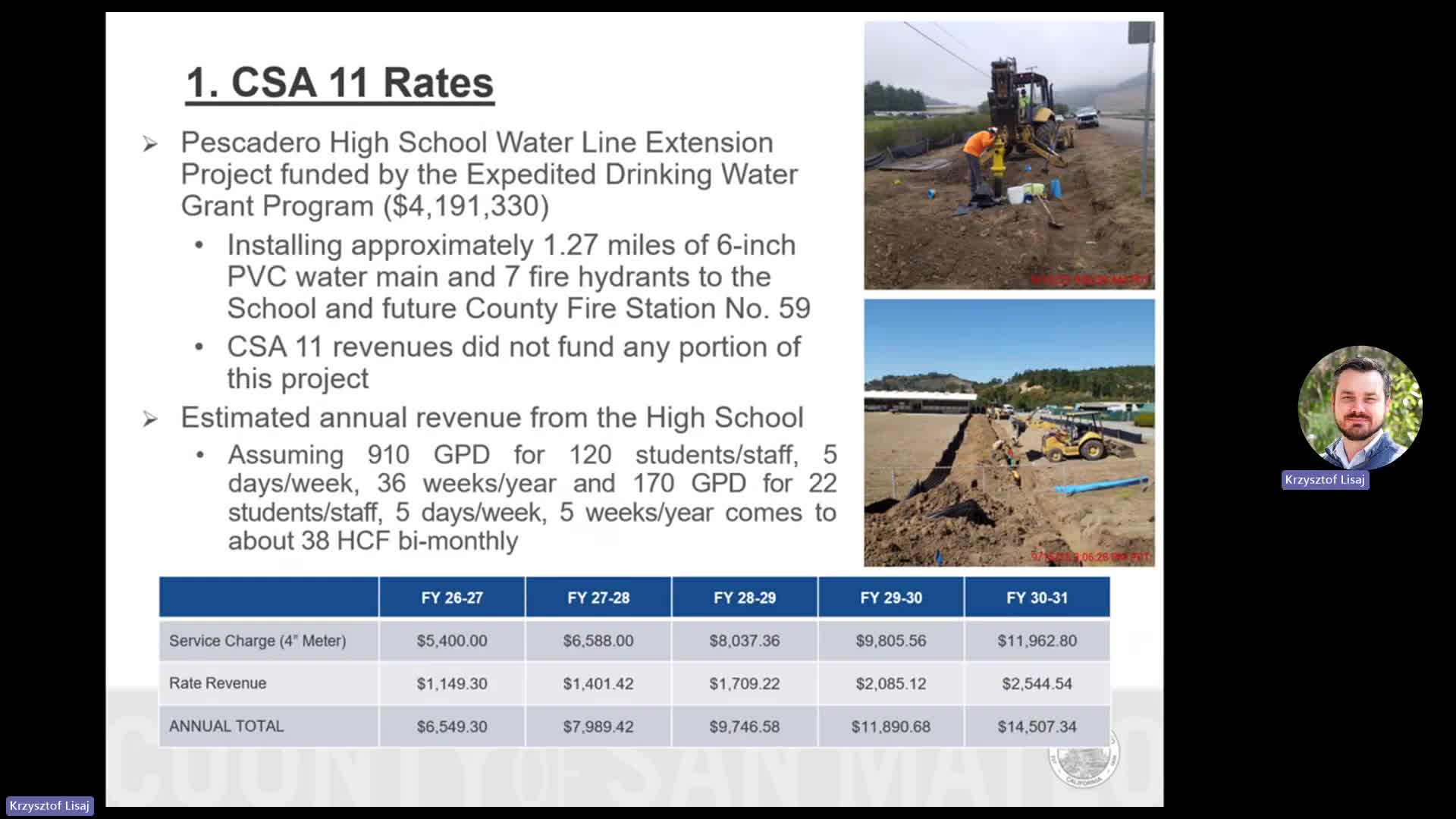
Staff said the Pescadero High School waterline extension project was bid successfully and is fully funded through the state expedited drinking water grant program at a total estimated cost of $4,191,000 to install about 1.27 miles of 6‑inch PVC main and connect the future high school and the adjacent fire station. Litsai clarified, "CSA 11 revenue did not pay for any work effort or anything related to this project. It was a 100% grant funded." The extension's approvals limit new connections to essential public facilities to comply with the local coastal program and the California Coastal Commission permitting approach, so adjacent private properties cannot connect via that project.
On long‑term supply, staff summarized a Pescadero water supply yield and sustainability screening analysis (dated 05/24/2024) that identified six alternatives and the attendant uncertainties, capital and operating cost ranges, and treatment needs. Staff said alternatives such as surface water would likely require much more robust treatment, water‑rights review and higher capital and operating costs; the county currently has no staffing or dedicated funds to advance feasibility of alternatives and will pursue grant or loan opportunities as they arise.
Staff recounted prior actions: a deeper well was drilled with grant funding in the past and monitoring continued; some residents recalled returning grant funds rather than pursuing deeper work earlier. Staff said projected timing to pursue and implement a secondary source is long‑term (five to eight, or more likely eight to ten years) given current finances, and that any near‑term effort will be contingent on securing grants or other external funding.
Litsai also discussed planned capital priorities once reserves are restored: a smart‑meter replacement program (goal: replace all meters on a five‑year cycle, roughly 20% per year) and further aquifer analysis. He said staff will continue to monitor aquifer conditions and take grant opportunities to fund studies and capital work when available.
View the Full Meeting & All Its Details
This article offers just a summary. Unlock complete video, transcripts, and insights as a Founder Member.
30-day money-back guarantee
Sponsors
Proudly supported by sponsors who keep California articles free in 2025

