U.S.-sponsored Security Council resolution on Gaza adopted; speaker outlines 'Board of Peace' and demilitarization plan
November 18, 2025 | United Nations, Federal
This article was created by AI summarizing key points discussed. AI makes mistakes, so for full details and context, please refer to the video of the full meeting. Please report any errors so we can fix them. Report an error »
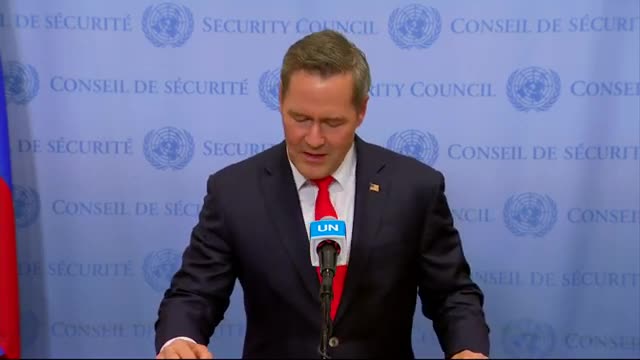
An unnamed U.S. government official at the United Nations announced that the Security Council had adopted a U.S.-sponsored resolution on Gaza, calling the action "a historic moment at the United Nations" and saying it "provides a real actionable pathway to lasting peace for Palestinians and Israelis."
The speaker, identified only in the transcript as S1, said the resolution endorses what the transcript terms a "historic 20 comprehensive plan" and "welcomes the establishment of the Board of Peace as a transitional administration for Gaza" to oversee day-to-day services and a technocratic Palestinian committee. The official described the measure as including authorization for an international stabilization force and steps to "demilitariz[e] the Gaza Strip," including actions to destroy and prevent reconstruction of military infrastructure.
Why it matters: The address framed the Security Council vote as a shift from conflict toward a multilayered stabilization effort that pairs political arrangements with security measures and humanitarian aid. The speaker urged journalists and the public to read the full resolution text before drawing conclusions.
In the remarks, the official credited recent diplomacy for enabling the outcome. The speaker said President Trump "secured a historic peace deal with the critical support of Qatar, Egypt, and Turkiye," and that hostages had been returned to families as part of that process. The transcript states that "we are still working to bring home the remaining 3 hostages" and that humanitarian aid has averaged "660 trucks per day since the ceasefire."
The speaker named several governments as supporters of the resolution and the underlying plan: the United States, Qatar, Egypt, the United Arab Emirates, the Kingdom of Saudi Arabia, Indonesia, Pakistan, Jordan and Turkiye, and referenced endorsement at a Sharm El Sheikh gathering that included over 20 countries and the European Union. The transcript also lists U.S. officials and envoys ("president Trump, secretary Rubio, Jared Kushner, special envoy Whitcough") as having pressed for the vote; the speaker did not provide formal titles or vote tallies in the remarks.
The address characterized opposing the resolution as a risky choice, saying the U.S. team had "made it clear that a vote against this resolution was a vote to return to war." The transcript does not provide a vote count, which agencies will need to confirm by examining the official Security Council record and the resolution text.
What the resolution would do, as described in the speech, includes: endorsing the plan referenced by the speaker, establishing a Board of Peace as a transitional administration for Gaza, emphasizing humanitarian assistance, authorizing an international stabilization force to help demilitarize the territory, and measures described by the speaker as ensuring the decommissioning of Hamas and its partners. The speech did not provide implementation timelines, legal citations, or a vote tally.
The speaker closed by thanking regional partners and allies and saying that, thanks to these actions, "a stable, a safe, and a prosperous future in The Middle East is now finally within reach."
The speaker, identified only in the transcript as S1, said the resolution endorses what the transcript terms a "historic 20 comprehensive plan" and "welcomes the establishment of the Board of Peace as a transitional administration for Gaza" to oversee day-to-day services and a technocratic Palestinian committee. The official described the measure as including authorization for an international stabilization force and steps to "demilitariz[e] the Gaza Strip," including actions to destroy and prevent reconstruction of military infrastructure.
Why it matters: The address framed the Security Council vote as a shift from conflict toward a multilayered stabilization effort that pairs political arrangements with security measures and humanitarian aid. The speaker urged journalists and the public to read the full resolution text before drawing conclusions.
In the remarks, the official credited recent diplomacy for enabling the outcome. The speaker said President Trump "secured a historic peace deal with the critical support of Qatar, Egypt, and Turkiye," and that hostages had been returned to families as part of that process. The transcript states that "we are still working to bring home the remaining 3 hostages" and that humanitarian aid has averaged "660 trucks per day since the ceasefire."
The speaker named several governments as supporters of the resolution and the underlying plan: the United States, Qatar, Egypt, the United Arab Emirates, the Kingdom of Saudi Arabia, Indonesia, Pakistan, Jordan and Turkiye, and referenced endorsement at a Sharm El Sheikh gathering that included over 20 countries and the European Union. The transcript also lists U.S. officials and envoys ("president Trump, secretary Rubio, Jared Kushner, special envoy Whitcough") as having pressed for the vote; the speaker did not provide formal titles or vote tallies in the remarks.
The address characterized opposing the resolution as a risky choice, saying the U.S. team had "made it clear that a vote against this resolution was a vote to return to war." The transcript does not provide a vote count, which agencies will need to confirm by examining the official Security Council record and the resolution text.
What the resolution would do, as described in the speech, includes: endorsing the plan referenced by the speaker, establishing a Board of Peace as a transitional administration for Gaza, emphasizing humanitarian assistance, authorizing an international stabilization force to help demilitarize the territory, and measures described by the speaker as ensuring the decommissioning of Hamas and its partners. The speech did not provide implementation timelines, legal citations, or a vote tally.
The speaker closed by thanking regional partners and allies and saying that, thanks to these actions, "a stable, a safe, and a prosperous future in The Middle East is now finally within reach."
Don't Miss a Word: See the Full Meeting!
Go beyond summaries. Unlock every video, transcript, and key insight with a Founder Membership.
✓
Get instant access to full meeting videos
✓
Search and clip any phrase from complete transcripts
✓
Receive AI-powered summaries & custom alerts
✓
Enjoy lifetime, unrestricted access to government data
30-day money-back guarantee
