Douglas County School District warns of multimillion-dollar shortfall as enrollment falls
November 17, 2025 | DOUGLAS COUNTY SCHOOL DISTRICT, School Districts, Nevada
This article was created by AI summarizing key points discussed. AI makes mistakes, so for full details and context, please refer to the video of the full meeting. Please report any errors so we can fix them. Report an error »
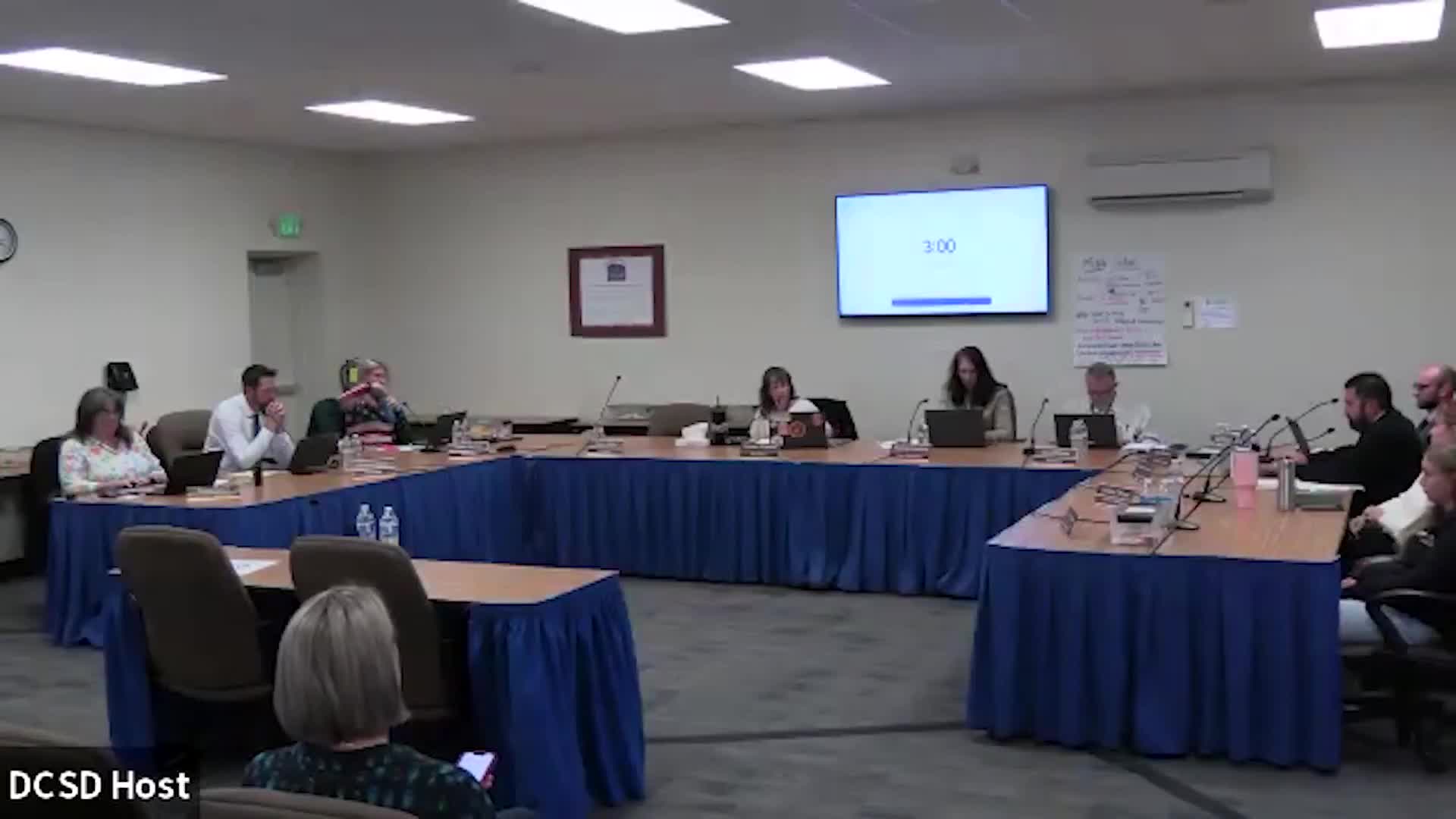
Douglas County School District Superintendent Jared Alvarado on Monday told trustees the district is facing a multi-year revenue shortfall driven by declining enrollment and rising expenditures, and that preliminary audit information could show a negative ending fund balance this fiscal year.
Alvarado said the district has declined from about 5,221 students in fiscal 2022 to roughly 4,691 at present and that the district has lost more than $5 million in revenue over three years. "We anticipate... a projected negative $5,000,000," he said, adding that a December audit finding could show an initial negative $1.1 million and that the district may need to present its plan to the Department of Taxation.
Why it matters: the district relies on per-pupil state funding and a provision in the Pupil-Centered Funding Plan (PCFP) that limits hold-harmless protection to districts with declines below 5 percent. Alvarado said Douglas County missed that threshold by 0.25 percentage points, exposing it to reduced state funding and prompting the administration to examine both expense reductions and revenue enhancements.
What officials presented: the superintendent walked the board through audited actuals and projections showing large percentage increases in multiple spending categories over the last four years — student support up about 39 percent, instructional staff support up about 28 percent and general administration up about 97 percent. He detailed recurring transfers from the general fund to other accounts (about $6.6 million total), including roughly $1.0 million to self-insurance, $1.2 million to inclusive education and $1.1 million to transportation (with about $700,000 for regular transportation and $400,000 for inclusive education transportation).
Public reaction and staff concerns: teachers and parents urged caution about cuts to front-line staff. Ashley Nielsen, a third-grade teacher at Pinion Hills Elementary School, told the board, "Please consider protecting these affordable and amazing employees in our district," naming instructional aides, inclusive-ed paras and media techs as critical to classroom function. Teacher Christine Ensign urged trustees to consider proportions and legal limits on what can be reduced, saying earlier pay increases were affordable when revenue was higher and that some teachers had actually experienced a net pay decline this year because of healthcare and funding shifts.
Options under consideration: trustees asked administration for a long list of follow-ups, including a breakdown of positions and salary bands (no names), an analysis of enrollment by school and grade, bus-route utilization and cost per route, the fiscal effect of converting vice-principal positions to teachers-on-special-assignment, scenarios for furlough days (calendar and contract constraints apply), and an assessment of Medicaid billing potential for eligible inclusive-education services. On Medicaid billing, Alvarado estimated a conservative potential in the range of about $200,000 annually if the district can implement billing systems similar to neighboring districts.
State interaction and legal risk: Alvarado said the district has notified the Nevada Department of Education and the Department of Taxation that it is spending ending fund balance. If the audit findings require it, a Department of Taxation subcommittee could recommend the district be declared in severe financial emergency under Nevada Revised Statutes, which could trigger additional oversight. "There's a likelihood that we may be declared in severe financial emergency," he said, noting the district will seek legal guidance and present an audit-finding report at a special meeting.
Board direction and next steps: trustees asked staff to prepare concrete dollar figures and options before meeting the state subcommittee. The superintendent said the auditor will be asked to present findings at a special meeting on Dec. 3 and that administration will request to appear before the Department of Taxation's subcommittee (next meeting Dec. 10) to explain the district's plan. No formal budget cuts or personnel reductions were approved at the meeting.
Votes at a glance: the only formal motion recorded in the special meeting was a procedural motion to adopt a flexible agenda, moved by Trustee Knighting and seconded by Trustee Jansen; the motion passed unanimously.
What comes next: the board compiled a long list of data requests and directed administration to return with detailed, itemized analyses (staff counts by role and cost, transportation usage and cost, projected savings scenarios, comparative district data, and legal briefings). Trustees emphasized transparency and community engagement as staff develop options.
Alvarado said the district has declined from about 5,221 students in fiscal 2022 to roughly 4,691 at present and that the district has lost more than $5 million in revenue over three years. "We anticipate... a projected negative $5,000,000," he said, adding that a December audit finding could show an initial negative $1.1 million and that the district may need to present its plan to the Department of Taxation.
Why it matters: the district relies on per-pupil state funding and a provision in the Pupil-Centered Funding Plan (PCFP) that limits hold-harmless protection to districts with declines below 5 percent. Alvarado said Douglas County missed that threshold by 0.25 percentage points, exposing it to reduced state funding and prompting the administration to examine both expense reductions and revenue enhancements.
What officials presented: the superintendent walked the board through audited actuals and projections showing large percentage increases in multiple spending categories over the last four years — student support up about 39 percent, instructional staff support up about 28 percent and general administration up about 97 percent. He detailed recurring transfers from the general fund to other accounts (about $6.6 million total), including roughly $1.0 million to self-insurance, $1.2 million to inclusive education and $1.1 million to transportation (with about $700,000 for regular transportation and $400,000 for inclusive education transportation).
Public reaction and staff concerns: teachers and parents urged caution about cuts to front-line staff. Ashley Nielsen, a third-grade teacher at Pinion Hills Elementary School, told the board, "Please consider protecting these affordable and amazing employees in our district," naming instructional aides, inclusive-ed paras and media techs as critical to classroom function. Teacher Christine Ensign urged trustees to consider proportions and legal limits on what can be reduced, saying earlier pay increases were affordable when revenue was higher and that some teachers had actually experienced a net pay decline this year because of healthcare and funding shifts.
Options under consideration: trustees asked administration for a long list of follow-ups, including a breakdown of positions and salary bands (no names), an analysis of enrollment by school and grade, bus-route utilization and cost per route, the fiscal effect of converting vice-principal positions to teachers-on-special-assignment, scenarios for furlough days (calendar and contract constraints apply), and an assessment of Medicaid billing potential for eligible inclusive-education services. On Medicaid billing, Alvarado estimated a conservative potential in the range of about $200,000 annually if the district can implement billing systems similar to neighboring districts.
State interaction and legal risk: Alvarado said the district has notified the Nevada Department of Education and the Department of Taxation that it is spending ending fund balance. If the audit findings require it, a Department of Taxation subcommittee could recommend the district be declared in severe financial emergency under Nevada Revised Statutes, which could trigger additional oversight. "There's a likelihood that we may be declared in severe financial emergency," he said, noting the district will seek legal guidance and present an audit-finding report at a special meeting.
Board direction and next steps: trustees asked staff to prepare concrete dollar figures and options before meeting the state subcommittee. The superintendent said the auditor will be asked to present findings at a special meeting on Dec. 3 and that administration will request to appear before the Department of Taxation's subcommittee (next meeting Dec. 10) to explain the district's plan. No formal budget cuts or personnel reductions were approved at the meeting.
Votes at a glance: the only formal motion recorded in the special meeting was a procedural motion to adopt a flexible agenda, moved by Trustee Knighting and seconded by Trustee Jansen; the motion passed unanimously.
What comes next: the board compiled a long list of data requests and directed administration to return with detailed, itemized analyses (staff counts by role and cost, transportation usage and cost, projected savings scenarios, comparative district data, and legal briefings). Trustees emphasized transparency and community engagement as staff develop options.
Don't Miss a Word: See the Full Meeting!
Go beyond summaries. Unlock every video, transcript, and key insight with a Founder Membership.
✓
Get instant access to full meeting videos
✓
Search and clip any phrase from complete transcripts
✓
Receive AI-powered summaries & custom alerts
✓
Enjoy lifetime, unrestricted access to government data
30-day money-back guarantee
