Short-term rental debate dominates public comment at Atlanta council meeting
November 18, 2025 | Atlanta, Fulton County, Georgia
This article was created by AI summarizing key points discussed. AI makes mistakes, so for full details and context, please refer to the video of the full meeting. Please report any errors so we can fix them. Report an error »
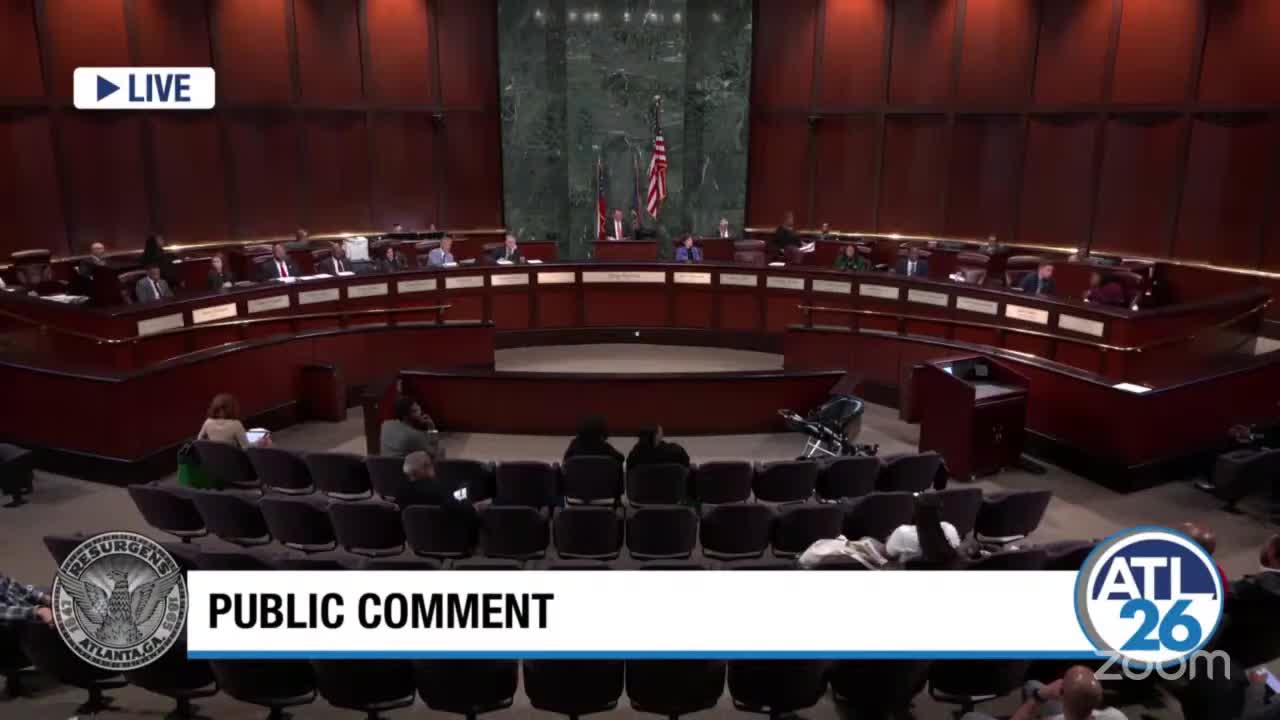
Multiple hosts described STRs as a modest income source that helps pay property taxes and supports local small businesses. "Short-term rentals provide too much of an added benefit to the city to begin throwing out blanket bans," said AJ Satcher, a host and community member who urged collaboration on targeted solutions. Industry representatives, including Rich Monroe of the Atlanta Metro Short Term Rental Alliance (AMSTRA), said operators have best-practice rules—quiet hours, guest vetting and three-strike enforcement—that can be used to curb bad actors.
Speakers representing residents and condominium associations described different experiences. Nikki Buggs and residents from the Landmark condominium said investor-run listings have led to repeated disturbances, parties and safety concerns at scale. "It's not that we dislike STRs, it's what they're doing to us," one condo resident said, describing foreclosures, liens, and unsafe conditions attributed to investor operation.
Several speakers reminded the council that state law and the city's zoning process limit what the council can say on zoning items pending before the City Zoning Review Board (ZRB) or contested before committee. Council members reiterated that policy decisions tied to zoning must follow the ZRB and NPU processes and that comments at the council must avoid addressing specific pending CRB-reviewed legislation.
Council members and advocates said the path forward includes more robust, evidence-based rules, stronger enforcement, and fuller engagement with Neighborhood Planning Units (NPUs) and the ZRB; some called for postponing final action until after the World Cup, when visitor demand is expected to spike.
The council did not vote on STR legislation during the Nov. 17 meeting; numerous STR-related items were listed for committee referral later in the agenda.
View the Full Meeting & All Its Details
This article offers just a summary. Unlock complete video, transcripts, and insights as a Founder Member.
30-day money-back guarantee
Sponsors
Proudly supported by sponsors who keep Georgia articles free in 2025

