Covington study finds five human‑service gaps; commission pushes outreach and funding alignment
November 17, 2025 | Covington, King County, Washington
This article was created by AI summarizing key points discussed. AI makes mistakes, so for full details and context, please refer to the video of the full meeting. Please report any errors so we can fix them. Report an error »
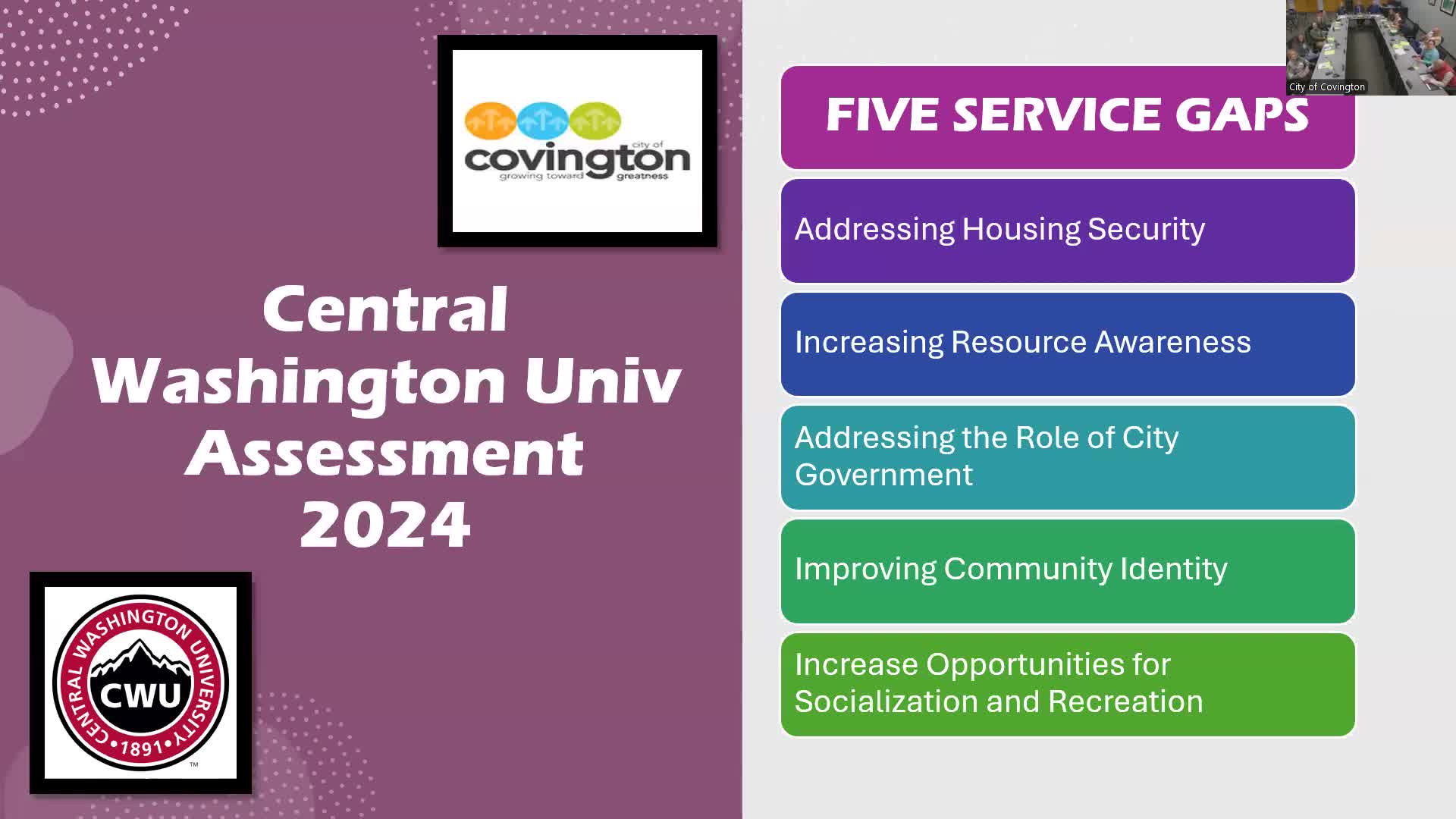
The findings were summarized by Brian (identified only by first name in the transcript), a presenter for the commission, who said the assessment found ‘‘immediate shelters are unavailable within city limits’’ and that eligibility criteria for many programs exclude people recently incarcerated or with unstable employment. The report, Brian said, also flagged poor internet and social‑media literacy as a barrier to accessing services.
Why it matters: Commissioners said the gaps mean many residents cannot reach services already funded or provided in the region. Commissioners and staff argued that better coordination, more visible outreach and a limited number of local funding priorities would increase the impact of scarce dollars.
Commissioners described outreach already underway: site visits to housing partners and tabling at community events including the Maker’s Market, Kids Fest, Covington Days and the library. Brian said those activities confirmed the assessment data and helped the commission compile resident suggestions about needs and priorities.
The commission proposed creating a small coordination team to improve communication among providers and to produce shareable outreach materials (brochures, resource packets and event kits) that council members and volunteers can carry to neighborhood meetings and community hubs. Commissioners noted that King County controls some application parameters for regional grants, which complicates local efforts to prioritize funding for specific gaps such as transportation.
Quotes:
"Clientele and residents did not know the full extent of services offered," Brian said, describing why the commission plans more tabling and partner outreach.
"We need to set priorities based on what the community sets," Brian added, arguing that a clearer priority list will guide which applicants should receive limited city funding.
Looking ahead: Commissioners recommended producing a clear outreach packet this year, aligning local funding criteria to a short list of city priorities, and building partnerships with service hubs while planning longer‑term investments such as a community center. No formal funding decision or motion was made during the session.
Don't Miss a Word: See the Full Meeting!
Go beyond summaries. Unlock every video, transcript, and key insight with a Founder Membership.
30-day money-back guarantee
Sponsors
Proudly supported by sponsors who keep Washington articles free in 2025

