Mohave County debates state groundwater policy as farmers and residents demand better data
November 17, 2025 | Mohave County, Arizona
This article was created by AI summarizing key points discussed. AI makes mistakes, so for full details and context, please refer to the video of the full meeting. Please report any errors so we can fix them. Report an error »
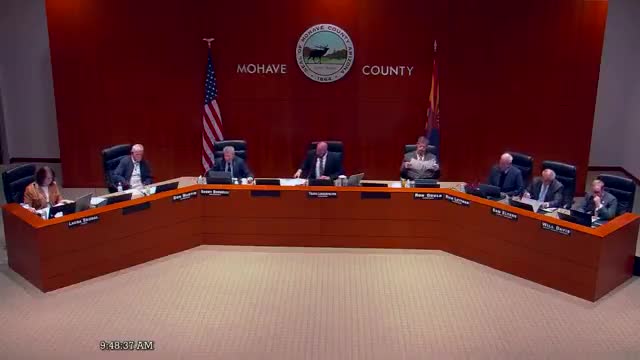
Development Services Director Scott Hultry told the board the basin contains roughly 28,000,000 acre-feet of groundwater above the 1,200-foot level ADWR treats as usable, and annual withdrawals across municipal, domestic and agricultural users are currently estimated at roughly 35,000–40,000 acre-feet. "There is roughly about 28,000,000 acre feet of groundwater," Hultry said, adding natural recharge estimates of about 5,000–10,000 acre-feet per year and noting monitoring wells show modest decade-scale changes in some locations.
Those numbers — and how they should shape policy — divided speakers at the meeting. Farmers and agribusiness leaders said the models overstate irrigation acreage and water use. "Bad information is bad policy, bad governance," said Jeff Duarte of Peacock Nut Company, who said his farm's metered flow data had been ignored in past analyses. Multiple farmers urged the county to gather and validate additional on-farm flow-meter records before supporting mandatory limits.
Other residents warned of a different risk: long-term municipal affordability and domestic-well failures if high-capacity pumping continues unchecked. Representative John Gillette, who attended the meeting, urged caution about stepping into state authority while pressing for locally enforceable metrics. "We need standardized testing on every single well," Gillette said, and argued any local governance structure should ensure local appointees and a judicial tie-break for disputes.
Board members described the policy package they intend to advocate to the Legislature next year: management plans with measurable, enforceable targets; mandatory metering and annual reporting for nonexempt wells (those with high capacity); local-government representation on decision bodies with residency requirements; prioritization of domestic and municipal water supplies over high-demand exports; and tools to support recharge projects and demand reduction. The county is explicitly opposing proposals that would create easily tradable, certifiable groundwater rights that could concentrate control of basin water in a few hands.
Staff emphasized the county lacks unilateral regulatory authority now and is focused on producing defensible data and working with ADWR and USGS. Hultry said the county has requested and begun to receive farm-level data (2022–24) and will rerun models as more verified information arrives.
What happens next: supervisors said they want an agreed set of policy points to present to state lawmakers at the start of the session and will continue outreach to irrigators, municipal water systems and ADWR. The board did not take any regulatory action during the meeting.
Don't Miss a Word: See the Full Meeting!
Go beyond summaries. Unlock every video, transcript, and key insight with a Founder Membership.
30-day money-back guarantee
Sponsors
Proudly supported by sponsors who keep Arizona articles free in 2025

