Zionsville approves interlocal agreement to serve Whitestown ordinance filings in town court
November 17, 2025 | Town of Zionsville, Boone County, Indiana
This article was created by AI summarizing key points discussed. AI makes mistakes, so for full details and context, please refer to the video of the full meeting. Please report any errors so we can fix them. Report an error »
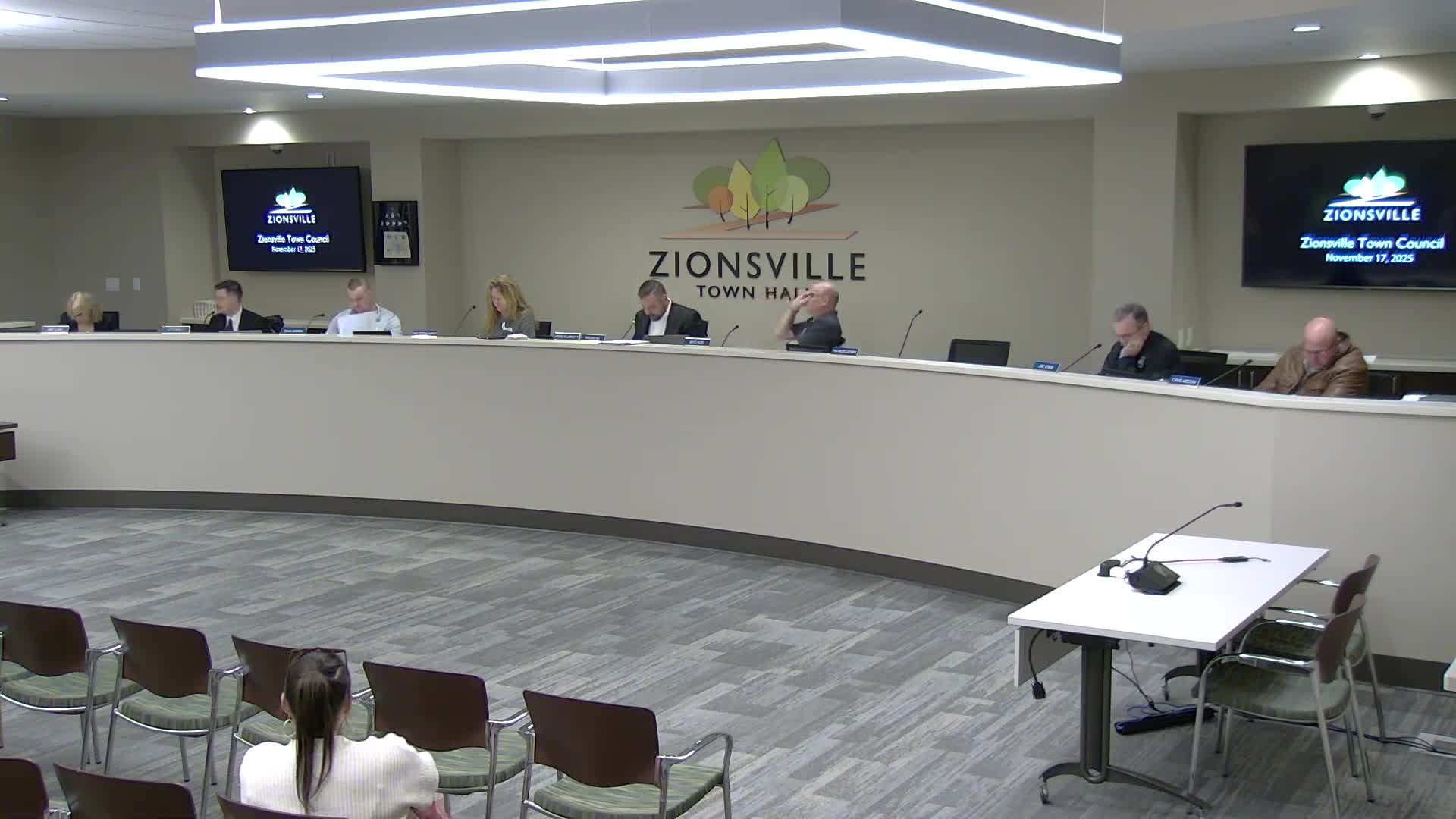
Town attorney John Oberlander presented the agreement, explaining that Zionsville would retain all court costs for Whitestown filings and would keep 50% of fines collected on those cases while Whitestown would receive a portion designated for a police continuing-education fund. "This is gonna allow Whitestown to file their ordinance violations in the Zionsville town court," Oberlander said, describing the revenue-sharing structure.
Why it matters: Whitestown’s town court was abolished a few years ago and it is currently not filing ordinance violations; the agreement centralizes local ordinance enforcement for Whitestown within Zionsville’s town court and is intended to be revenue-neutral for Zionsville, according to staff. The agreement includes a 60-day termination provision should either party seek to end the arrangement.
Councilors asked for clarifying language about the distribution of costs versus fines so the town’s intention to retain court costs was explicit in the document. Oberlander noted that most court costs are statutory and that the interlocal addresses Whitestown filings only, not Zionsville’s own filings. He also confirmed that operational impacts — for example, interpreter needs or additional court nights — would be monitored and could be addressed if caseloads increased.
What happened at the meeting: after discussion and clarifying questions, council moved, seconded and approved the agreement. The attorney noted the agreement allows for amendment and contains a 60-day termination clause.
Next steps: the agreement will take effect as specified in the interlocal; staff will monitor caseload and operational needs and may seek amendments if the workload or revenue assumptions change.
Don't Miss a Word: See the Full Meeting!
Go beyond summaries. Unlock every video, transcript, and key insight with a Founder Membership.
30-day money-back guarantee
Sponsors
Proudly supported by sponsors who keep Indiana articles free in 2025

