Martin County schools roll out curated AI platforms, launch teacher-leader program
November 15, 2025 | Events, Martin, School Districts, Florida
This article was created by AI summarizing key points discussed. AI makes mistakes, so for full details and context, please refer to the video of the full meeting. Please report any errors so we can fix them. Report an error »
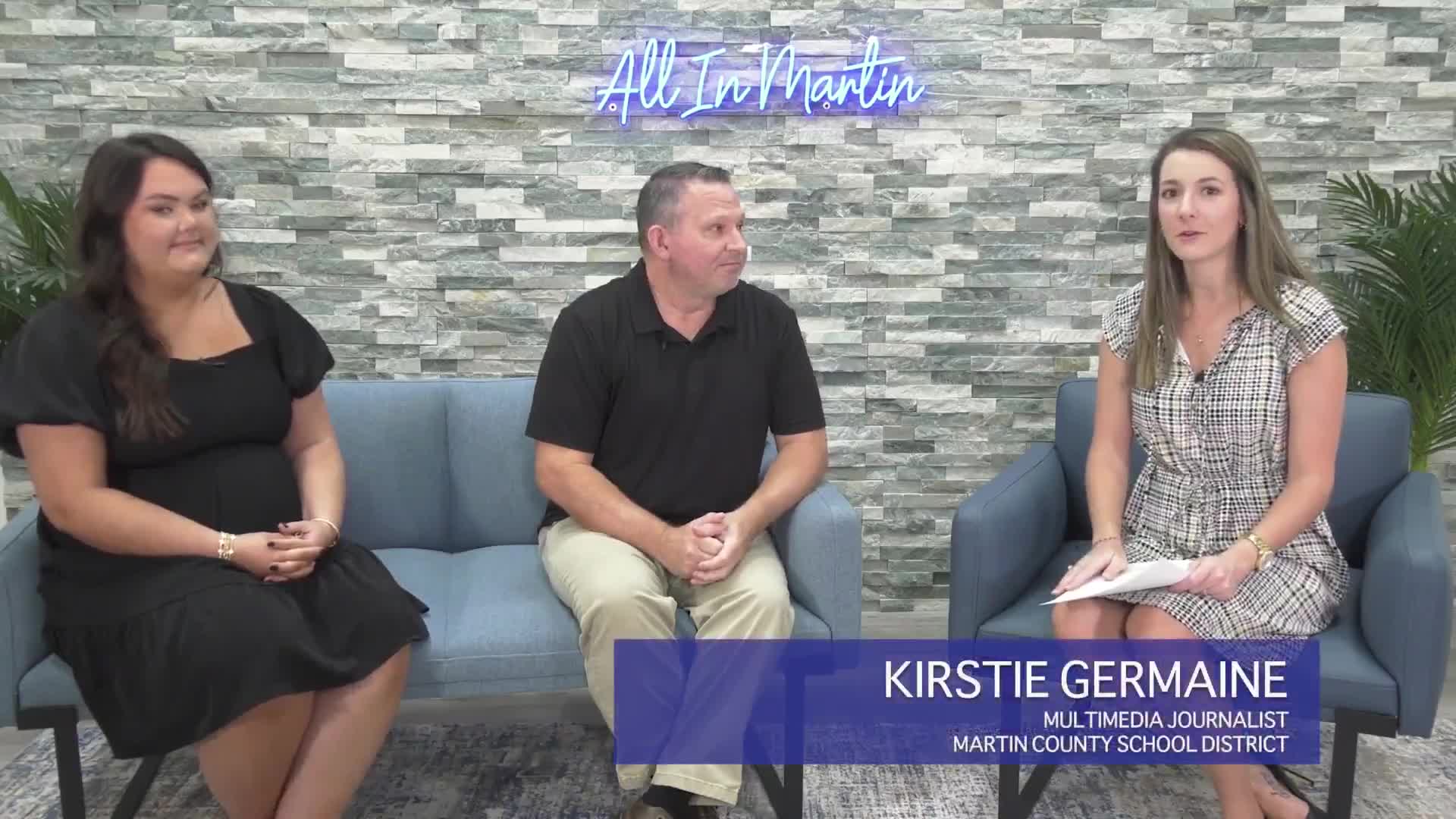
"We really had to start the conversation about AI," said Patrick Cermino, a digital learning specialist for Martin County School District, recalling a conference that prompted district staff to begin districtwide training in the 2023–24 school year. "We didn't have all the answers yet, but we felt some urgency to frame the conversation."
Cermino and teacher and AI cohort member Kelsey Mulvanerton told podcast host Kirsty Germaine that the district started by helping teachers adopt AI for planning and classroom tasks and then moved to supervised, student-facing platforms designed to scaffold thinking rather than generate student work. Mulvanerton described using Class Companion in a fifth-grade rotation: teachers place curriculum passages into the platform, students answer text-dependent questions and receive one attempt at automated feedback that recommends, for example, adding two pieces of text evidence to meet the rubric.
"They would see their score change while I'm also explicitly instructing," Mulvanerton said, describing how instant feedback lets teachers group students for targeted instruction.
District staff said the approach is conservative and curated: the district currently allows four student-facing platforms, chosen for transparency and classroom-focused prompting, and requires data-sharing agreements that prevent student data from being used to train company models. "We have a data sharing agreement in place," Cermino said. "We know that our data is not being used to train AI platforms. It's not leaving our environment." He contrasted the district’s curated set with an industry estimate that there are thousands of student platforms nationally.
The district has piloted an "AI teacher leaders" program to build capacity colleague-to-colleague and plans a second cohort. Staff are also developing an AI guidebook for teachers and parents that will include an AI literacy framework, use-case guides (what tasks are appropriate for AI and which are not), and an "AI in Action" section where teacher leaders document projects with video and classroom examples.
Cermino framed the district’s goals in student terms: faster, actionable feedback, greater visibility into students’ thinking, and support for teachers’ instruction. "That instant feedback in class... you see fist pumps and they're engaged," he said.
On privacy and family communication, the presenters said the district will make the guidebook available to parents and administrators and is teaching digital citizenship alongside tool use so students use AI as a "thought partner" and do not plagiarize. The podcast closed with the district urging patience and explaining that teacher leaders’ classroom examples will help scale effective uses.
The district did not list specific contract vendors, procurement dates, or budget figures on the episode. Officials said four platforms are in district use and that they will provide more resources as the AI guidebook and the second AI teacher-leader cohort produce classroom examples.
Don't Miss a Word: See the Full Meeting!
Go beyond summaries. Unlock every video, transcript, and key insight with a Founder Membership.
30-day money-back guarantee
Sponsors
Proudly supported by sponsors who keep Florida articles free in 2025

