Education committee advances amended K‑12 discipline bill, clarifies use‑of‑force and parental‑notification rules
November 15, 2025 | Education, Joint & Standing, Committees, Legislative, Wyoming
This article was created by AI summarizing key points discussed. AI makes mistakes, so for full details and context, please refer to the video of the full meeting. Please report any errors so we can fix them. Report an error »
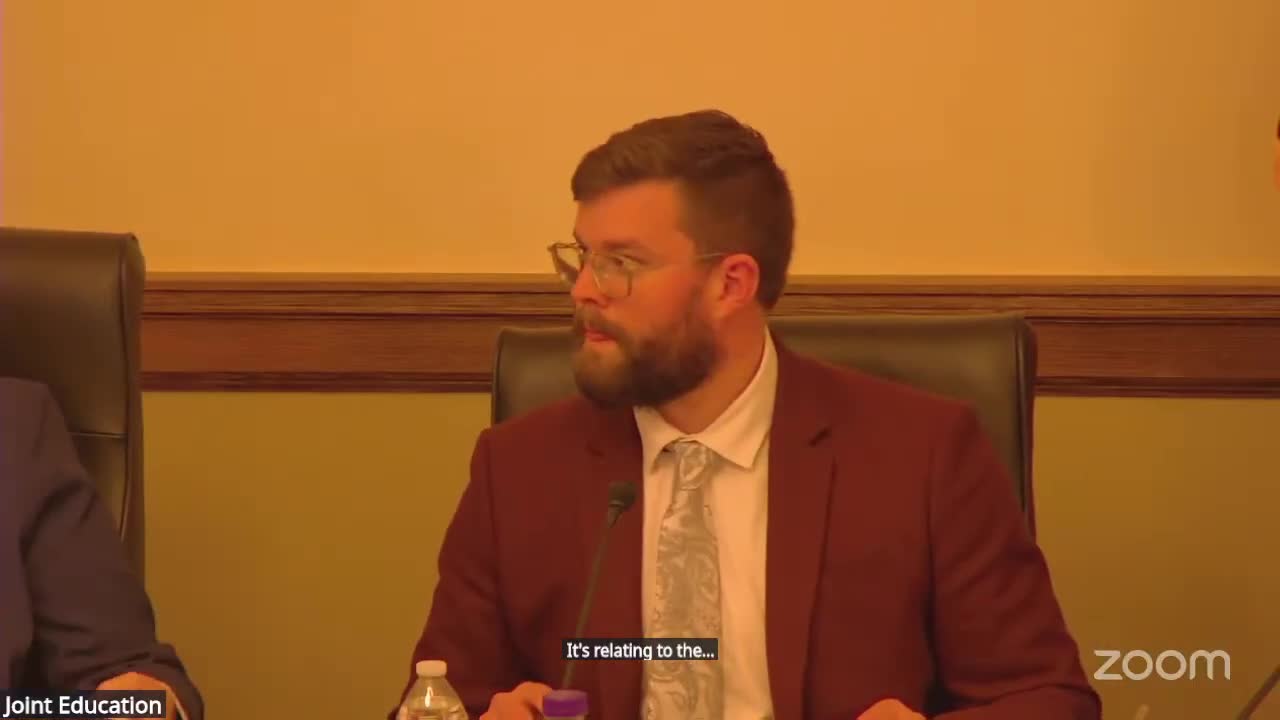
The Joint Education Committee on Nov. 15 adopted multiple amendments to a proposed K‑12 school discipline statute and passed the measure out of committee after extended debate.
Sponsor amendments removed a reference to corporal punishment language, deleted certain repealer language tied to indebtedness, and streamlined who school district employees must consult about student discipline. Senator Scott, who introduced several changes, said removing redundant immunity language reduces legal conflict: "If it's already covered by the Tort Claims Act, I'm not gonna remove the move that we change it," and later urged that "I think just repealing it, we're fine." LSO advised there is a potential conflict between any new immunity language and the Governmental Claims (Tort Claims) Act and recommended care in wording.
The committee rewrote a provision on staff communications to allow district employees to discuss behavior and discipline with a student’s parent and removed the word "informally" after committee concern that it could create ambiguity for teachers. Representative Lolli successfully moved a separate amendment requiring notification and an opportunity for parental consultation when consequences are imposed; LSO recommended consolidating similar notice provisions to avoid implementation confusion.
Members spent substantial time on a passage addressing removal of students and use of reasonable force. LSO and Department of Education staff noted overlap with existing seclusion and restraint statute and Chapter 42 rules. Dickey Shaner of the Department of Education told the committee that the department already has detailed rules "related to seclusion and restraint" and that those provisions "are pretty specific" and may not fully map to the broader language in the draft bill.
Other sponsor‑led, conforming edits adopted by voice votes included removing redundant references to the board of trustees, changing "immediate assistance" to "as soon as reasonably possible," and limiting state reporting to "major" student disciplinary actions; Senator Olsen also obtained language to require that reported data be de‑identified.
After the amendments, the committee called the roll and advanced the bill. The committee’s action is procedural: the bill now moves on the legislative path set for sponsor and chamber consideration.
Sponsor amendments removed a reference to corporal punishment language, deleted certain repealer language tied to indebtedness, and streamlined who school district employees must consult about student discipline. Senator Scott, who introduced several changes, said removing redundant immunity language reduces legal conflict: "If it's already covered by the Tort Claims Act, I'm not gonna remove the move that we change it," and later urged that "I think just repealing it, we're fine." LSO advised there is a potential conflict between any new immunity language and the Governmental Claims (Tort Claims) Act and recommended care in wording.
The committee rewrote a provision on staff communications to allow district employees to discuss behavior and discipline with a student’s parent and removed the word "informally" after committee concern that it could create ambiguity for teachers. Representative Lolli successfully moved a separate amendment requiring notification and an opportunity for parental consultation when consequences are imposed; LSO recommended consolidating similar notice provisions to avoid implementation confusion.
Members spent substantial time on a passage addressing removal of students and use of reasonable force. LSO and Department of Education staff noted overlap with existing seclusion and restraint statute and Chapter 42 rules. Dickey Shaner of the Department of Education told the committee that the department already has detailed rules "related to seclusion and restraint" and that those provisions "are pretty specific" and may not fully map to the broader language in the draft bill.
Other sponsor‑led, conforming edits adopted by voice votes included removing redundant references to the board of trustees, changing "immediate assistance" to "as soon as reasonably possible," and limiting state reporting to "major" student disciplinary actions; Senator Olsen also obtained language to require that reported data be de‑identified.
After the amendments, the committee called the roll and advanced the bill. The committee’s action is procedural: the bill now moves on the legislative path set for sponsor and chamber consideration.
Don't Miss a Word: See the Full Meeting!
Go beyond summaries. Unlock every video, transcript, and key insight with a Founder Membership.
✓
Get instant access to full meeting videos
✓
Search and clip any phrase from complete transcripts
✓
Receive AI-powered summaries & custom alerts
✓
Enjoy lifetime, unrestricted access to government data
30-day money-back guarantee
