Louisiana representative says OT compact proposals clashed with state law; privacy protections negotiated
November 15, 2025 | Louisiana State Board of Medical Examiners, Boards & Commissions, Organizations, Executive, Louisiana
This article was created by AI summarizing key points discussed. AI makes mistakes, so for full details and context, please refer to the video of the full meeting. Please report any errors so we can fix them. Report an error »
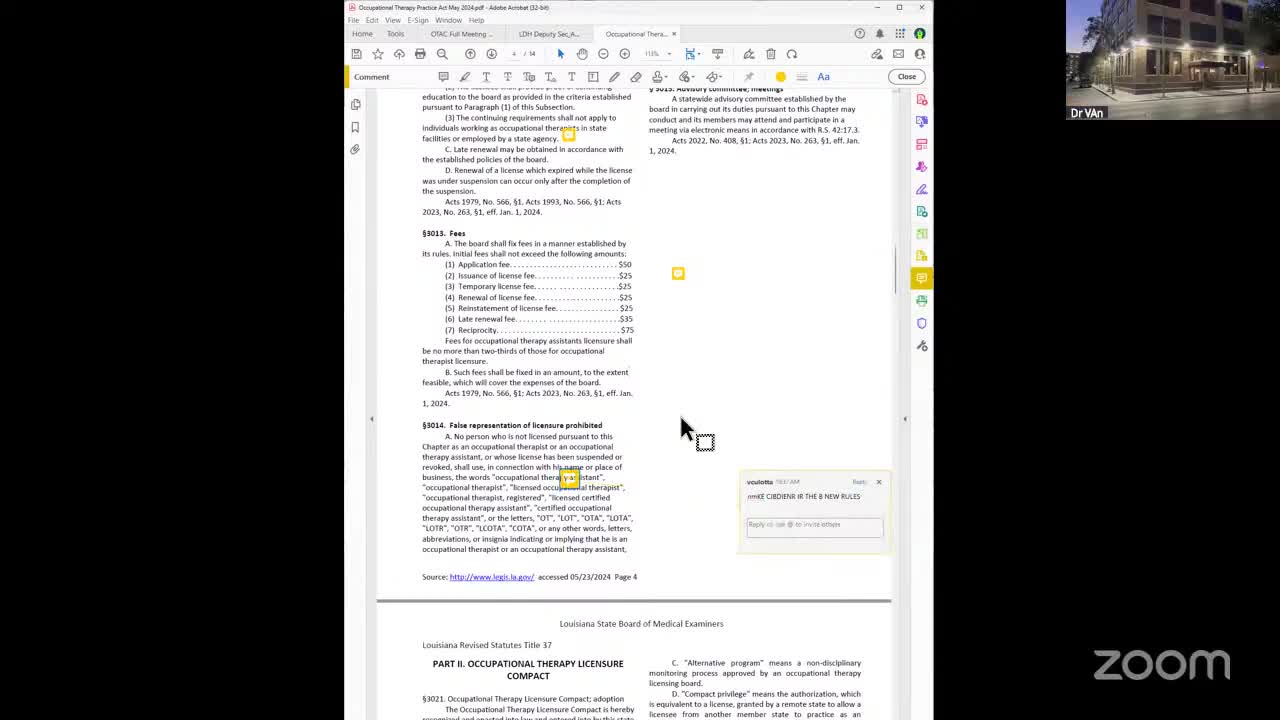
Dr. Vann said the commission debated a proposed rule that would have allowed a new issuing state to skip criminal background checks if the practitioner's state of origin could not legally perform such checks. "That violates Louisiana law, and I've asked the board to consider it," Dr. Vann told the committee, describing vigorous debate; the measures he referenced failed in commission votes.
The committee also discussed the commission's initial plan to collect and centrally store broad practitioner data, including demographic details and Social Security numbers. Dr. Vann said Louisiana pushed back on mass uploads and negotiated limits on the data exchange, moving toward an API-based, individualized approach so boards would not provide bulk personal data to the compact commission.
Patricia Wilton described a broader concern about compact drafting: she said recent compacts use "broad, sweeping language" that can delegate detailed rulemaking authority to compact commissioners and risk reducing state control over public-protection rules. "I've been using the term bait and switch," Wilton said, adding that lack of transparency in how compact rules are filled in is a growing problem for states considering membership.
What happens next: Dr. Vann said he will continue to work with the compact commission and the state board to protect privacy and to bring any recommended positions back to the board and to the legislature if needed.
Don't Miss a Word: See the Full Meeting!
Go beyond summaries. Unlock every video, transcript, and key insight with a Founder Membership.
30-day money-back guarantee
Sponsors
Proudly supported by sponsors who keep Louisiana articles free in 2025

