Hundreds of public commenters press Seattle council to protect shelter funding after HUD NOFO changes
November 15, 2025 | Seattle, King County, Washington
This article was created by AI summarizing key points discussed. AI makes mistakes, so for full details and context, please refer to the video of the full meeting. Please report any errors so we can fix them. Report an error »
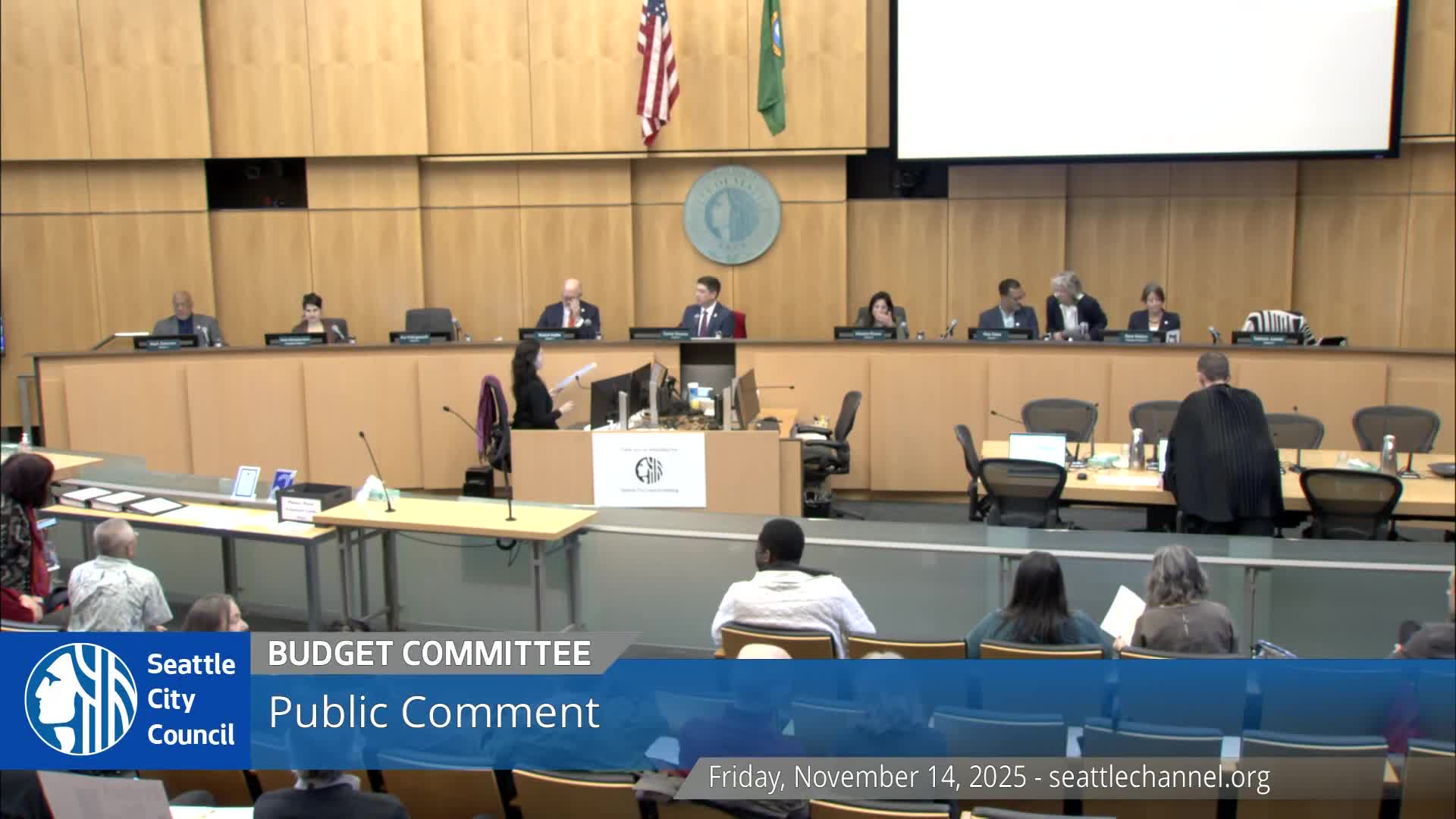
Advocates, service providers and neighborhood leaders described immediate risks for people who are housed through federal programs and called for the council to preserve locally controlled contingency funds. "The continuum of care NOFO dropped last night, and it places, as we feared, a 30% limit on housing funding and makes other changes that make it so 60% of our entire grant could be at risk," Hallie Willis of the Seattle King County Coalition on Homelessness told the committee, adding, "That's $40,000,000."
Speakers who work directly with unhoused neighbors said reduced shelter or outreach funding would harm operations that have shown results. Don Blakely, executive director of the U District Partnership, credited coordinated outreach and partnerships for housing "over 60 people and shelter another 150" and urged the council not to remove proposed shelter dollars. John Scholes, president and CEO of the Downtown Seattle Association, likewise urged support for the mayor's proposed $11,000,000 shelter line and warned against redirecting funds to other contingencies.
Nonprofit leaders asked the committee to preserve or expand tenant-based rental assistance and other services. John Grant of the Low Income Housing Institute urged flexibility in how a proposed non-congregate-shelter allocation would be used, saying the council should not make a strict proviso that would require money to be spent only as a backfill. Several organizations, including Downtown Emergency Service Center and Plymouth Housing, urged the council to back a multi-million-dollar contingency reserve to sustain programs that the NOFO put at risk.
Speakers also raised other budget priorities in the public comment period, with calls for urban-forestry consolidation funding, small-business technical assistance and traffic-safety studies. The committee took the testimony into account as it moved to adopt a revised balancing package and to consider individual amendments later in the meeting. The Select Budget Committee reconvened after public comment to consider proposed provisos and other budget actions.
The committee did not take a formal vote specifically on public-comment requests; instead, multiple subsequent amendments and votes during the meeting addressed the funding priorities raised by commenters.
View the Full Meeting & All Its Details
This article offers just a summary. Unlock complete video, transcripts, and insights as a Founder Member.
30-day money-back guarantee
Sponsors
Proudly supported by sponsors who keep Washington articles free in 2025

