Cheshire committee directs design changes for Barnum solar plan, favors back-hill and roof arrays over front-facing carport
November 14, 2025 | Town of Cheshire, New Haven County, Connecticut
This article was created by AI summarizing key points discussed. AI makes mistakes, so for full details and context, please refer to the video of the full meeting. Please report any errors so we can fix them. Report an error »
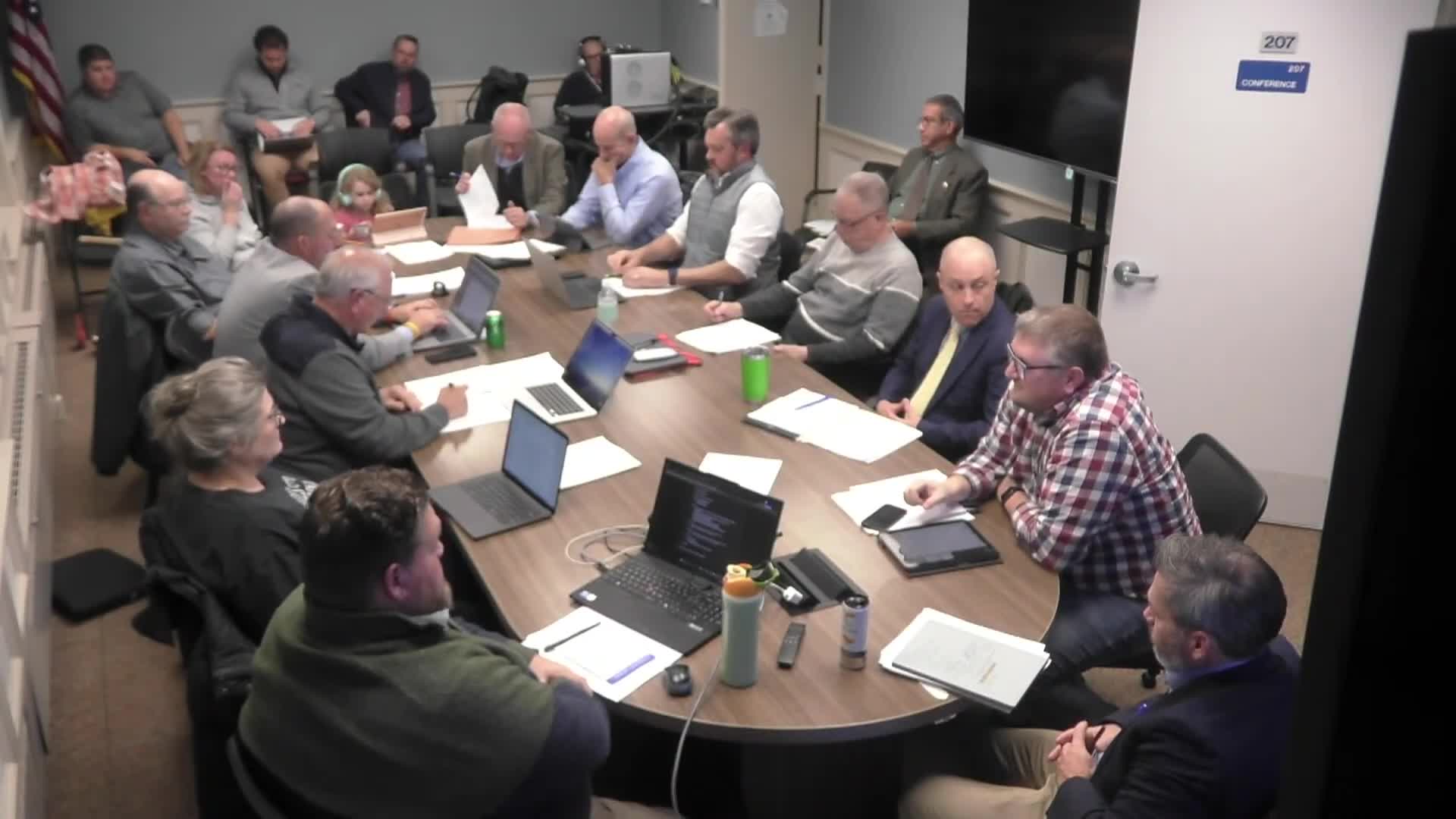
Aaron (design lead) presented several options — roof-mounted panels, a larger ground-mount array on the back hill, and a carport option. He noted some panels would require a 6-foot fence if ground-mounted and that wetlands and property-line buffers in the northeast corner limit placement. "If you lose the 200 (panels), it’ll change project financials," Aaron said, describing how losing ground-mounted capacity would reduce projected production and long-term tariff revenues.
Committee sentiment favored moving as much capacity as practical to the northeast/back hill and keeping some panels on the roof, while avoiding prominent front-facing carports or large ground-mounted arrays in the school's front sightlines. Members also recommended preserving an educational demonstration element (a small, accessible array/kiosk for students) and asked the design team to place a limited number of panels on the Norton roof so the committee can review a real-world mock-up.
The committee asked staff to return to the Dec. 11 meeting with images or a short mock-up of panels on the Norton roof and with refined options that minimize visual impact from Marion Street while maximizing energy production where feasible. The design team will also quantify the production and 20-year tariff revenue impact of removing any portion of the proposed array.
View the Full Meeting & All Its Details
This article offers just a summary. Unlock complete video, transcripts, and insights as a Founder Member.
30-day money-back guarantee
Sponsors
Proudly supported by sponsors who keep Connecticut articles free in 2025

