City staff report HR reforms under way; preliminary analysis finds no broad disparate pay impact for Black women
November 14, 2025 | Asheville City, Buncombe County, North Carolina
This article was created by AI summarizing key points discussed. AI makes mistakes, so for full details and context, please refer to the video of the full meeting. Please report any errors so we can fix them. Report an error »
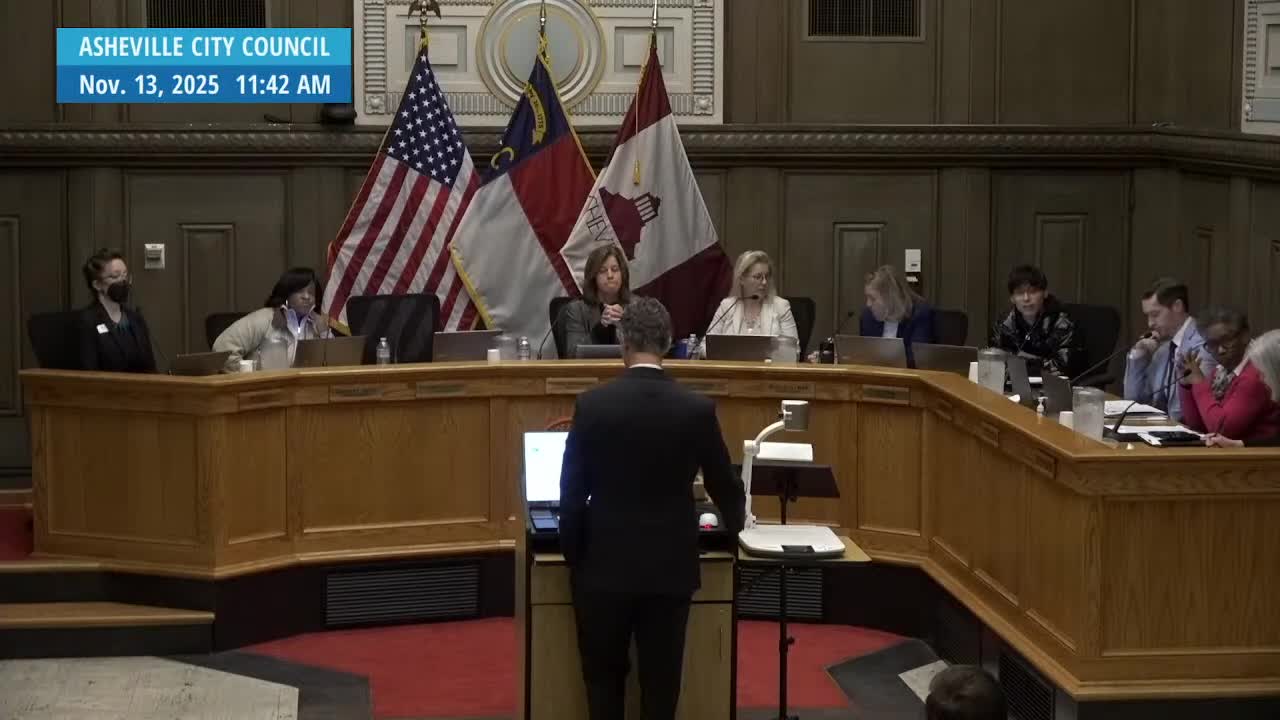
Emily, HR leadership, told council the Raftelis Consulting Group assessment delivered in March 2024 included 22 recommendations; HR has completed nine, including a departmental restructuring and filling key positions. Emily said HR has relisted and updated 15 administrative personnel policies, moved the employee health clinic to a new facility, launched the Perform module of NeoGov with the police department and established HR liaisons embedded in departments to improve service delivery.
On wage‑equity, Emily said the team used a disparate‑impact framework and compared average pay for Black women to colleagues in the same job classes. "On average Black women here make 6.28% higher than their colleagues in the same job class," she said, adding that of 33 job classes held by Black women, five showed any disparity and in those instances nine women earned about 3.9% less than peers, a difference Emily called "within statistical norms for tenure." City Manager Deborah Campbell emphasized the analysis should not be read as dismissing staff concerns: "We had to dig deeper and get more information," she said.
Council members pressed HR for additional outcome metrics (turnover, time‑to‑hire, promotion and retention) and for clarity about recruitment and promotional pathways. Emily said HR is developing measurable outcomes and plans to track turnover and time‑to‑hire and that some recommendations are on hold because they would require adding FTEs not yet budgeted.
Councilors also raised the status of temporary or "temp seasonal" workers, who many described as long‑term workers without benefits. Emily acknowledged classification issues and said staff are working with Finance and CREF to reclassify positions where appropriate and to explore transitioning some seasonal roles to part‑time benefited roles, noting potential administrative savings but also added benefit costs.
Next steps the HR team outlined include finishing SOPs and policy updates by the end of the fiscal year, continuing the wage‑equity work across other demographic groups, and reporting additional recruitment and retention metrics to council.
Don't Miss a Word: See the Full Meeting!
Go beyond summaries. Unlock every video, transcript, and key insight with a Founder Membership.
30-day money-back guarantee
Sponsors
Proudly supported by sponsors who keep North Carolina articles free in 2025

