Staff seeks council guidance to nudge Asheville transit plan toward ridership; council asks for equity and cost data
November 14, 2025 | Asheville City, Buncombe County, North Carolina
This article was created by AI summarizing key points discussed. AI makes mistakes, so for full details and context, please refer to the video of the full meeting. Please report any errors so we can fix them. Report an error »
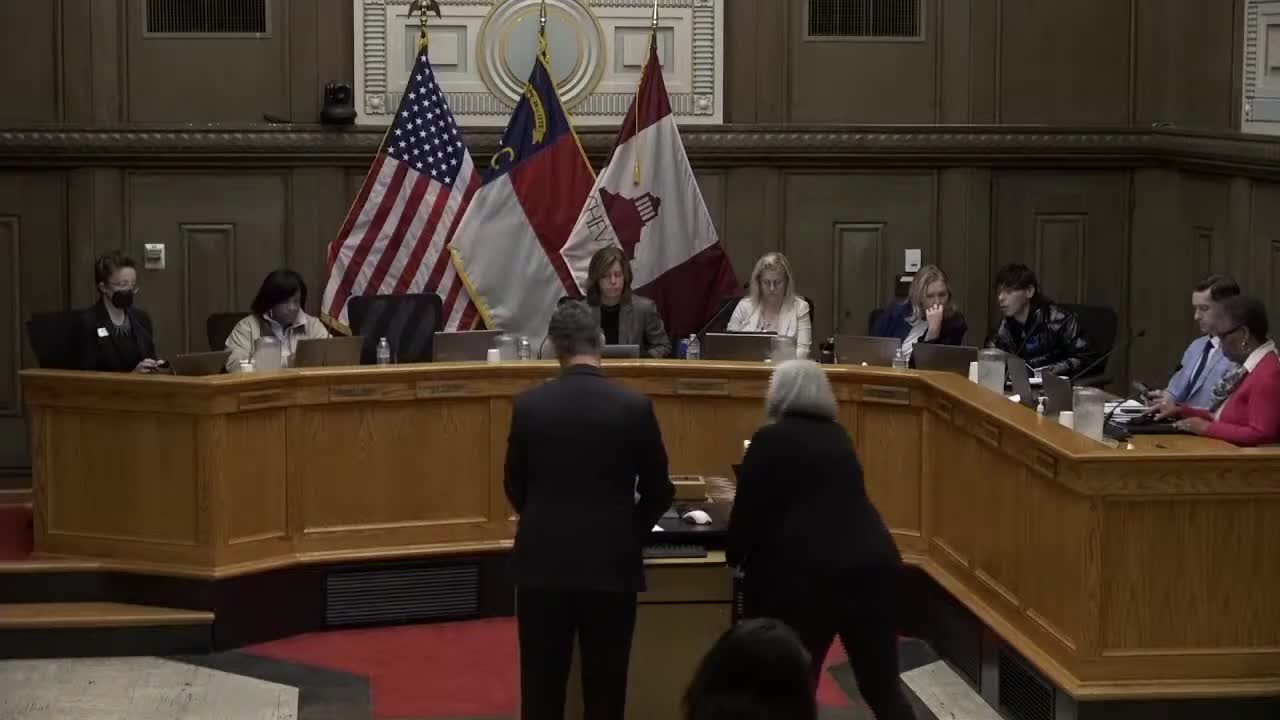
Jessica (transit staff) summarized public engagement and said the project received more than 900 survey responses and about 660 answers to the core ridership/coverage preference question. "We did have about 900 plus responses to the overall survey," she said, noting the sample is not statistical but provides direction for design work. Staff reported lower‑income respondents and frequent riders tended to favor coverage, while higher‑income respondents skewed toward ridership.
Given recent council feedback, staff recommended a modest "nudge" toward ridership for the next phase and said the consultant will draft a network reflecting that direction. Council members raised equity concerns, urging the study to prioritize frequency improvements for low‑income and public‑housing neighborhoods and to avoid shifting service primarily toward higher‑income corridors. One council member recommended including operator/union insights and former drivers in the working group to reflect operational realities.
Council asked for route‑level ridership, on‑time performance and missed‑trip data, cost estimates for tradeoffs (ballpark dollars per route or per frequency increase), and clearer information on who benefits and who may be harmed by potential changes. Staff said a draft network and more tangible trade‑off impacts are expected in late January or early February, when council will have another opportunity to review specific routing, frequency and fiscal implications before any formal action.
View the Full Meeting & All Its Details
This article offers just a summary. Unlock complete video, transcripts, and insights as a Founder Member.
30-day money-back guarantee
Sponsors
Proudly supported by sponsors who keep North Carolina articles free in 2025

