El Segundo mayor pitches Vision 2050 after city restores fiscal health and advances park, pool renovations
November 14, 2025 | El Segundo City, Los Angeles County, California
This article was created by AI summarizing key points discussed. AI makes mistakes, so for full details and context, please refer to the video of the full meeting. Please report any errors so we can fix them. Report an error »
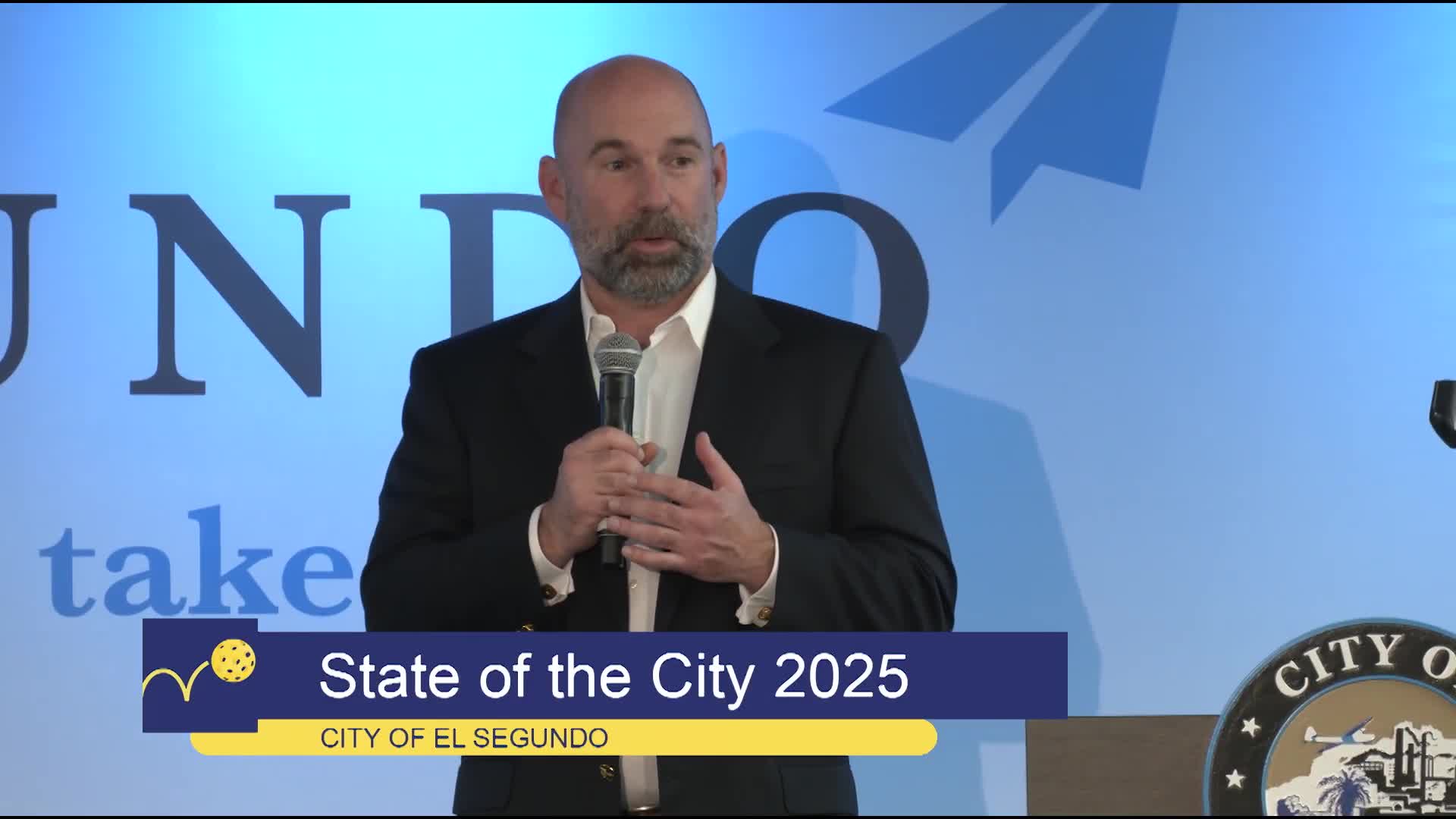
Pimentel said the city is putting those resources to work: "We have 48 active capital improvement projects worth more than $29,000,000," including ADA improvements, street and sidewalk work, and upgrades to parks and facilities. Two keystone projects highlighted were the Recreation Park remodel and the renovation of The Plunge indoor swim stadium.
Councilmember Lance Giroux described phase 1 of Recreation Park work as focused on field upgrades, a remodeled teen center, a multiuse court and a new skate park. He also announced that a contract was awarded to demolish an abandoned reservoir, cap utilities and level soil to expand adjacent Hilltop Park, with construction due to begin in January and turf and irrigation installation scheduled for May.
Ali Mancini, director of recreation, parks and library, reviewed The Plunge's history and the renovation plan that preserves the facility's art‑deco façade while updating the interior to current building and accessibility standards. Mancini said sponsors have contributed more than $2,000,000 toward reopening The Plunge in 2026 and that corporate and individual sponsorship options remain available starting at $1,500.
Pimentel also introduced Vision 2050, the city's land use element update launched in March 2025. "Vision 2050 isn't just a plan. It's a community planning process," he said, urging residents to visit elsagundo.org/vision2050 to review materials and join upcoming meetings. The mayor framed the update as a long‑range blueprint to balance industrial and commercial strengths with housing, parks and mobility over the next 20–25 years.
The mayor closed the segment by asking for public patience and participation while the city implements these projects and solicits input on longer‑term land use choices.
Don't Miss a Word: See the Full Meeting!
Go beyond summaries. Unlock every video, transcript, and key insight with a Founder Membership.
30-day money-back guarantee
Sponsors
Proudly supported by sponsors who keep California articles free in 2025

