Commission reviews CIP spreadsheet with linked contracts and directs sample project analysis; public suggests multi-year audit
November 14, 2025 | Redondo Beach City, Los Angeles County, California
This article was created by AI summarizing key points discussed. AI makes mistakes, so for full details and context, please refer to the video of the full meeting. Please report any errors so we can fix them. Report an error »
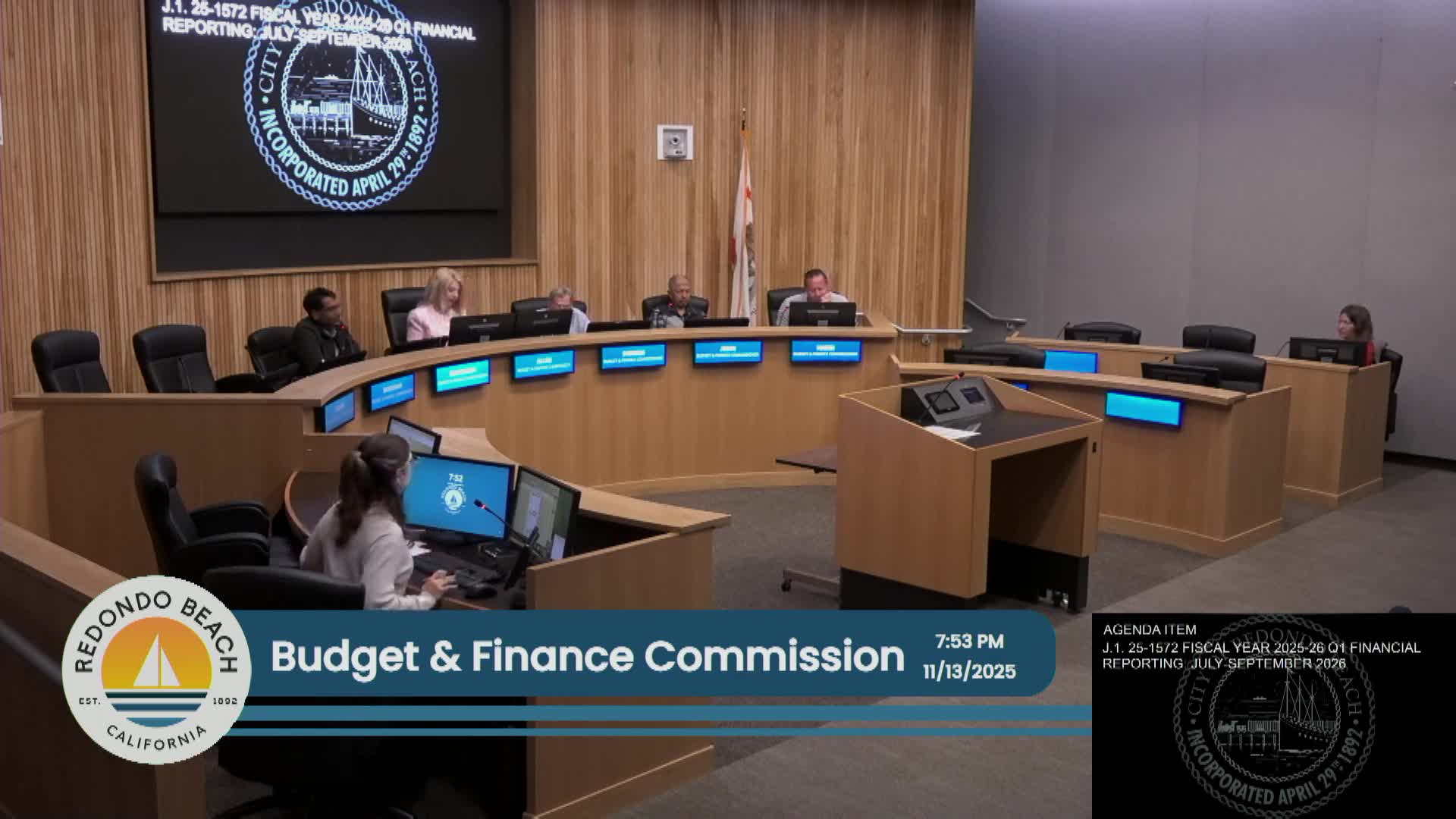
Commissioner Jesse and other members said the spreadsheet provides far more transparency than previously available but pressed for explanations of why some projects grow substantially from their initial appropriation to final cost. Stephanie and staff explained that early appropriations often fund preliminary or design phases and that council-approved additional appropriations and change orders later increase totals — all of which in City policy require council approval.
Public commenters with procurement and contracting backgrounds urged a deeper analytic review covering multiple years to detect patterns — for example, contractors who repeatedly underbid and then submit large change orders, or potential collusion between design engineers and bidders. Commissioners agreed to a phased approach: first, have a commissioner (volunteer) and staff analyze one or two projects in detail and report findings at the next meeting; depending on those results, the commission may recommend a third-party or forensic audit to the City Council.
Chair Allen and others emphasized that staff's spreadsheet links to the original agenda items and contract documents allow any commissioner to review full supporting materials, and that the commission would decide next steps after a targeted analysis.
View the Full Meeting & All Its Details
This article offers just a summary. Unlock complete video, transcripts, and insights as a Founder Member.
30-day money-back guarantee
Sponsors
Proudly supported by sponsors who keep California articles free in 2025

