Sullivan County discusses special zoning and possible moratorium for data centers amid energy and infrastructure concerns
November 14, 2025 | Sullivan County, Tennessee
This article was created by AI summarizing key points discussed. AI makes mistakes, so for full details and context, please refer to the video of the full meeting. Please report any errors so we can fix them. Report an error »
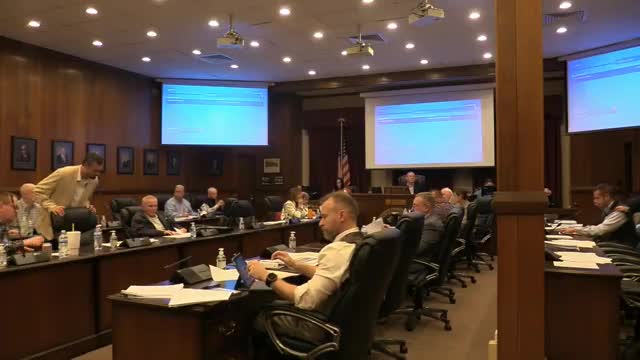
Clay Reid, appearing as a planning/administration guest, said data centers and related operations (including some cryptocurrency mining and AI facilities) are high-demand energy users and will remain part of modern infrastructure; he summarized research suggesting the sector could account for roughly 7–9% of U.S. grid demand by 2030. Reid recommended creating a P&D-3 (plant/manufacturing) district that would locate data centers in industrial parks with transitional buffering from residential areas.
Commissioners asked practical questions about distinctions between crypto mining and conventional data centers, employment, and tax effects. Reid said employment per project varies; some data-mining installations employ only a few people while larger data centers can employ dozens to low hundreds. He offered a hypothetical facility profile: a 400,000-square-foot campus, roughly $125 million in real property value, and an illustrative estimate of roughly $800,000 in annual property tax revenue on the real property in early years before depreciation adjustments.
Commissioners and staff discussed infrastructure constraints, noting the Tennessee Valley Authority would evaluate power-supply decisions and that few county sites have the ready infrastructure for large facilities. Several commissioners supported a temporary, time-limited moratorium (six to nine months suggested) to allow the county to finish zoning language and coordinate with utility partners without permanently closing the door to projects.
The commission did not adopt a moratorium on Nov. 13; staff indicated they are preparing draft zoning that would direct data centers to industrial locations and address buffers, noise and other community impacts for future consideration.
View the Full Meeting & All Its Details
This article offers just a summary. Unlock complete video, transcripts, and insights as a Founder Member.
30-day money-back guarantee
Sponsors
Proudly supported by sponsors who keep Tennessee articles free in 2025

