Milford public divides over athletic director as board moves to executive session
November 14, 2025 | Milford Exempted Village, School Districts, Ohio
This article was created by AI summarizing key points discussed. AI makes mistakes, so for full details and context, please refer to the video of the full meeting. Please report any errors so we can fix them. Report an error »
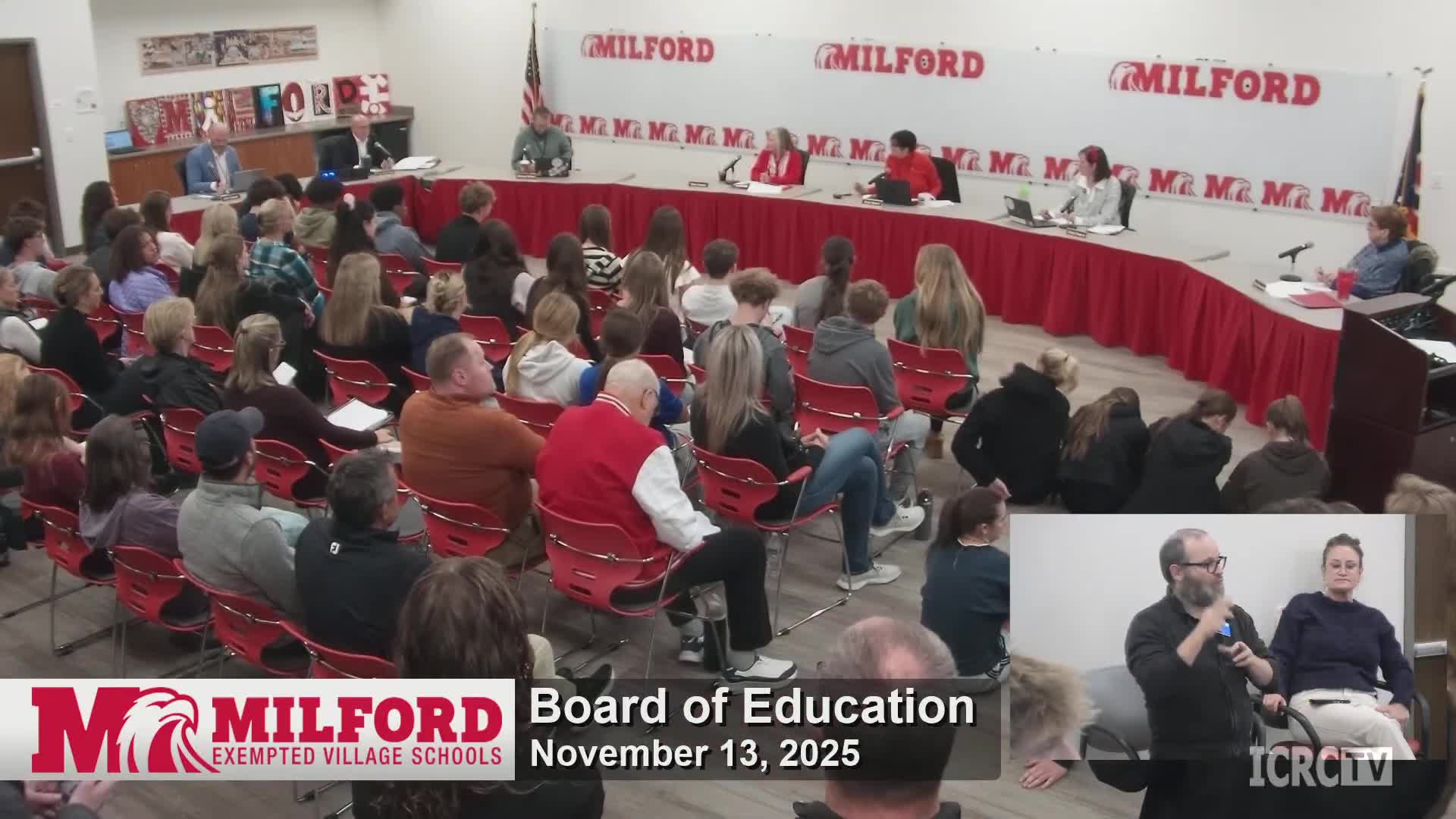
Dustin Faulkner, a local resident who addressed the board during public participation, said the district has allowed “toxic environments” to fester when complaints are buried, and urged the board to prioritize student protection over booster loyalty. “Protecting students is not a procedural detail. It is a moral obligation, period, full stop,” Faulkner said.
Kathleen Faulkner, speaking later in the same public-comment period, cited the district’s own report and called for the resignation of the boosters’ president, called for mandatory training for coaches on abuse prevention and mandatory reporting, and described a pattern she said mirrors high-profile institutional failures elsewhere. “Using influence, networks, and personal loyalties to shield someone who has endangered children is a gross breach of trust,” she said.
Several coaches and athletic staff countered those claims. Connor Peck, who said he leads Milford men’s lacrosse and helped organize a unified letter signed by more than 30 Milford coaches representing over 20 programs, urged the board to support Aaron Zepka and said the coaches, staff and many parents back Zepka’s leadership. “We serve over 750 Milford High School athletes and thousands more through youth programs,” Peck said, citing the breadth of local support.
Students also spoke in Zepka’s defense. Olivia Zayah, a senior and student sideline reporter, said Zepka “gave me the go-ahead” for student reporting opportunities and helped her stay at Milford; other students described program upgrades, expanded visibility for smaller sports, and personal support from the athletic director.
Board President reminded speakers that policy BDC and Ohio law limit discussion of individual personnel matters in open session and said the board could not disclose confidential details. The president stated that, beyond limited clarifications, “this matter does not involve student safety or financial issues.” Following public comment, the board voted unanimously to withdraw into executive session to discuss the employment of a public employee; the board said it would not make any votes that night and would return only to adjourn.
What happened next: The meeting moved to executive session; the board did not announce any personnel decisions at the Nov. 13 public meeting.
Why it matters: Public testimony compressed two competing local narratives — parents and advocates demanding accountability and transparency, and coaches, staff and students stressing the athletic director’s programmatic gains and personal support for athletes. The legal limits on public discussion mean the board’s deliberations and any personnel decisions may take place in closed session under Ohio law.
View the Full Meeting & All Its Details
This article offers just a summary. Unlock complete video, transcripts, and insights as a Founder Member.
30-day money-back guarantee
Sponsors
Proudly supported by sponsors who keep Ohio articles free in 2025

