Lake Bluff trustees discuss ordinance to restrict use of village property and resources for civil immigration enforcement; no vote
November 14, 2025 | Lake Bluff, Lake County, Illinois
This article was created by AI summarizing key points discussed. AI makes mistakes, so for full details and context, please refer to the video of the full meeting. Please report any errors so we can fix them. Report an error »
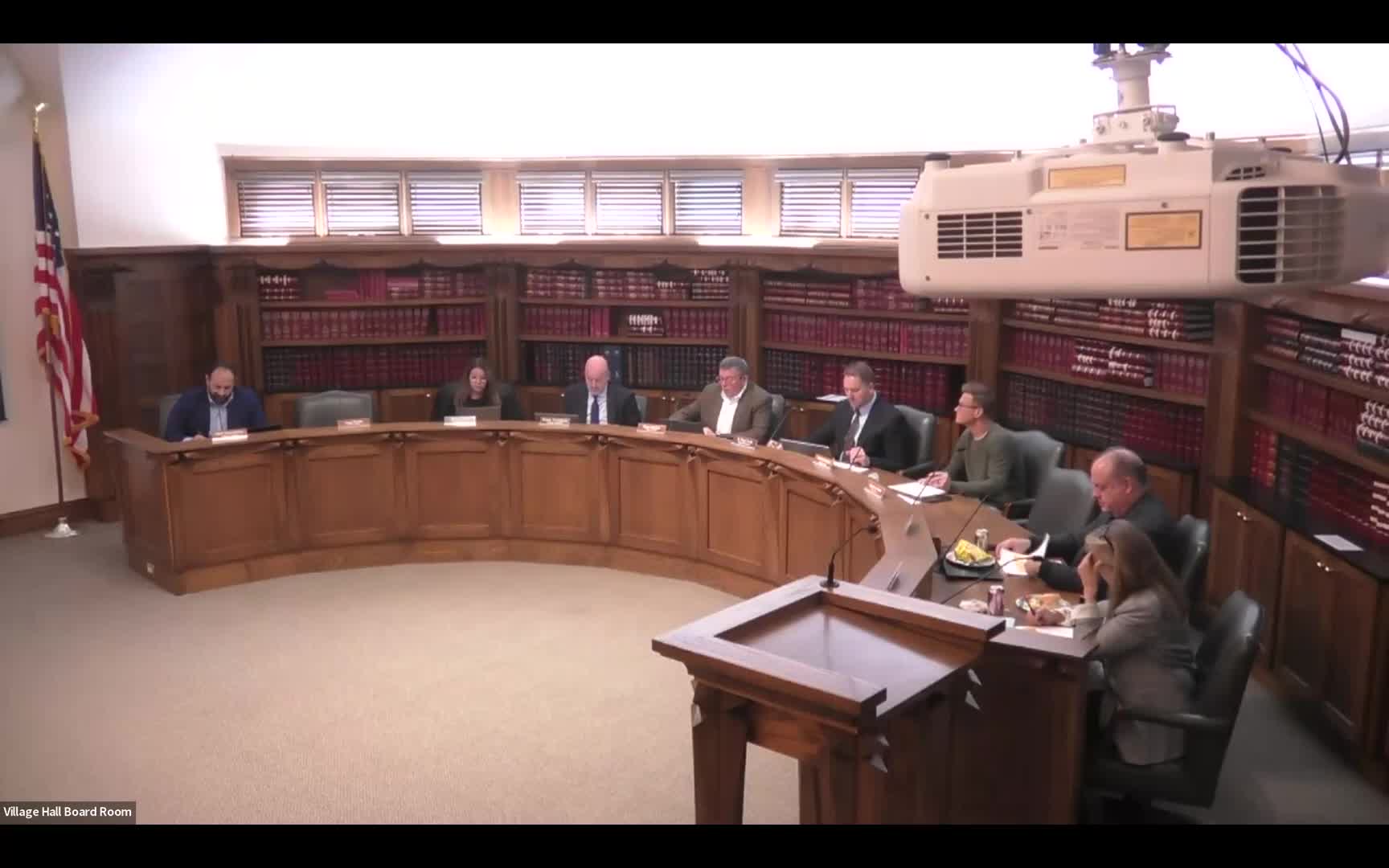
Village Attorney Peter Friedman opened the discussion with a legal overview, telling trustees that anti‑commandeering principles under the U.S. Constitution and the Illinois Trust Act constrain local cooperation with federal civil immigration enforcement. “Local law enforcement agencies cannot detain or continue to detain any individual solely on the basis of an immigration detainer,” Friedman said, summarizing the state restrictions he outlined in a memorandum circulated to the board.
The memo and Friedman’s remarks described tools municipalities have used elsewhere — ordinances, resolutions, executive orders or manager administrative actions — and highlighted a common municipal step: prohibiting use of municipal property for federal staging, processing or operations bases. Friedman cautioned that while a community can ban prolonged use of village property for such federal operations, it generally cannot physically prevent federal agents from operating on public streets and sidewalks: enforcement would rely on code tickets, fines or seeking injunctions in court.
Trustees pressed for clarity on several points. Trustee Raffi asked whether the draft should cover village personnel and other assets beyond property; Friedman said the Trust Act as written applies primarily to law enforcement functions but noted some municipalities have restated Trust Act language to apply to all employees as an affirmative statement of policy. “Some communities have specifically applied the Trust Act to all employees, not just local law enforcement officers,” he said, warning that that broader reading is legally aggressive and may be subject to challenge.
Board members also discussed whether the measure should explicitly name federal agencies such as ICE or DHS. Friedman said the ordinance can be written agency‑agnostic and still cover any federal actor performing civil immigration enforcement, and he recommended focusing on restricting use of village facilities and resources rather than trying to regulate federal activity on public streets.
Signage and messaging were a recurring concern. Several trustees urged authorization for the village manager to post accurate notice signs if needed, while Friedman cautioned that village‑issued signs must avoid political phrasing and should state the law plainly to reduce First Amendment risk. Trustees compared the idea to standardized business signs (for example, state‑defined “no guns” signs) and discussed whether the village should provide a legally vetted sign for businesses and property owners.
Trustees and staff also asked about operational responses: whether supervisors could be dispatched to document enforcement actions, whether police could be directed to record incidents with body cameras, and whether the village would share certain data (for example, license plate information) with federal agents. The Police Chief said the village does not provide license‑plate records to immigration enforcement without a criminal court warrant and that such requests would be handled through legal counsel.
No ordinance was adopted. Instead, Friedman told the board he had “clear direction on how to revise the elements,” and trustees asked staff to return with a revised draft that explicitly addresses the scope (property, personnel, vehicles), timing (perpetual or sunset), and signage/notification options. The committee also heard public comments urging both transparency (publishing the full draft) and caution about politicizing the issue.
Next steps: staff will revise the draft ordinance and return it to trustees for further review; no formal vote or ordinance adoption took place at the Nov. 10 meeting.
View the Full Meeting & All Its Details
This article offers just a summary. Unlock complete video, transcripts, and insights as a Founder Member.
30-day money-back guarantee
Sponsors
Proudly supported by sponsors who keep Illinois articles free in 2025

