Parents and staff press Portland Public Schools over Jefferson Rising boundary plan; district outlines timeline and more engagement
November 14, 2025 | Portland SD 1J, School Districts, Oregon
This article was created by AI summarizing key points discussed. AI makes mistakes, so for full details and context, please refer to the video of the full meeting. Please report any errors so we can fix them. Report an error »
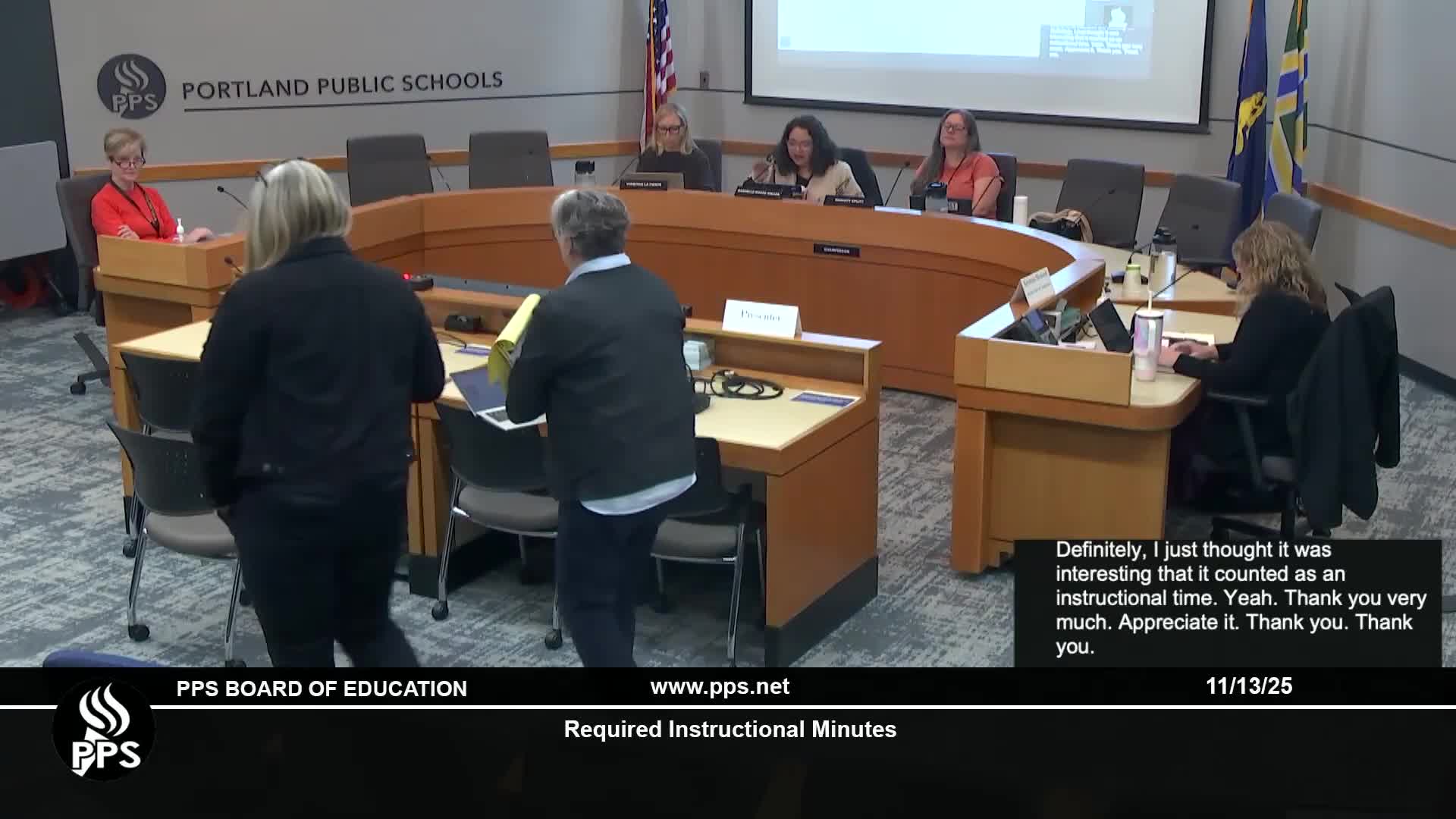
Margaret Calvert, assistant superintendent for school planning and modernization, said staff ran six public engagement sessions in October and November, collected more than 200 completed feedback forms and engaged roughly 400 participants. “We are posting materials every Friday,” she said, describing a running set of FAQs and weekly updates the district is publishing as it compiles feedback and refines scenarios.
Why it matters: the proposal — branded in district materials as “Jefferson Rising” — would reassign some students now double‑assigned to Grant and Jefferson and aims to stabilize enrollment and programming at Jefferson while modernizing the facility. Families and board members told staff they want clearer detail on how programming, extracurriculars and advanced coursework would be phased in during construction and transition years.
What parents said
Multiple parents said they were surprised or first learned about the scenarios from neighbors rather than district outreach. Chris Boyce, a Sabin parent, told the committee that “our Our concerns are, 1, a lack of transparency and engagement,” and he urged the district to provide additional modeling past 2030–31 and consider a scenario that keeps Sabin aligned with Grant.
Laura Westwood, who described a parent‑developed “scenario F,” asked the district to include that refinement in deliberations, saying it “achieves the same enrollment outcomes as scenario C” while preserving established K–12 pathways and local community cohesion.
A recurring theme from parents and some board members was concern about the earliest cohorts being moved to Jefferson while construction and program expansion are still underway. “The plan to have current sixth and seventh graders attend Jefferson before construction is complete does not account for the enormous sacrifices that you’re asking these students to make,” Stella Parker said during public comment.
District response and next steps
Staff said the two‑pronged analysis that generated the three public scenarios combined an equity lens (examining impacts for Black, Native and multilingual learners) and capacity/programming measures tied to board policy. Calvert said staff prioritized four key indicators: school size (targeting roughly 1,100 students for stability), who is impacted, enrollment differential across high schools, and feeder pattern alignment.
Calvert outlined a public timeline that includes an open house at Jefferson on Dec. 6, an additional public comment night at Jefferson on Dec. 8, a work session Dec. 16 with the full board and a recommendation going to a planned early‑2026 vote. Staff also said they will form an advisory committee this winter to frame decisions on rightsizing and modernization across the district.
Questions outstanding
Board members repeatedly asked for clearer curriculum and program plans: what advanced classes — AP, IB, dual credit or other offerings — will be available to students shifted into Jefferson, and when will those programs be phased in? Calvert said curriculum will be co‑constructed with Jefferson staff, students and families and signaled that some advanced coursework could be introduced as students reach sophomore year.
Board members also pressed enrollment staff on the potential interaction between modernization at other schools (for example, a rebuilt Cleveland) and specialized programs such as the Japanese dual language immersion (JDLI) pathway at Grant. Judy Brennan, director of enrollment and transfer, said JDLI cohorts have historically moved together to Grant and that enrollment patterns have not shown major reversions to neighborhood schools after modernization, although some shifts are possible.
What’s next
The district plans to continue weekly FAQs, translate materials into multiple languages and post fuller engagement data. Calvert said staff will return with a recommendation in December and will bring more detailed student engagement results — including transcripts or images of sticky‑note boards — at the board’s request. The full board is scheduled to discuss the recommended proposal on Dec. 16, 2025, with a vote planned in January 2026.
View the Full Meeting & All Its Details
This article offers just a summary. Unlock complete video, transcripts, and insights as a Founder Member.
30-day money-back guarantee
Sponsors
Proudly supported by sponsors who keep Oregon articles free in 2025

