PPS says it met Division 22 instructional‑minutes targets this year; explains 80% rule and exemptions
November 14, 2025 | Portland SD 1J, School Districts, Oregon
This article was created by AI summarizing key points discussed. AI makes mistakes, so for full details and context, please refer to the video of the full meeting. Please report any errors so we can fix them. Report an error »
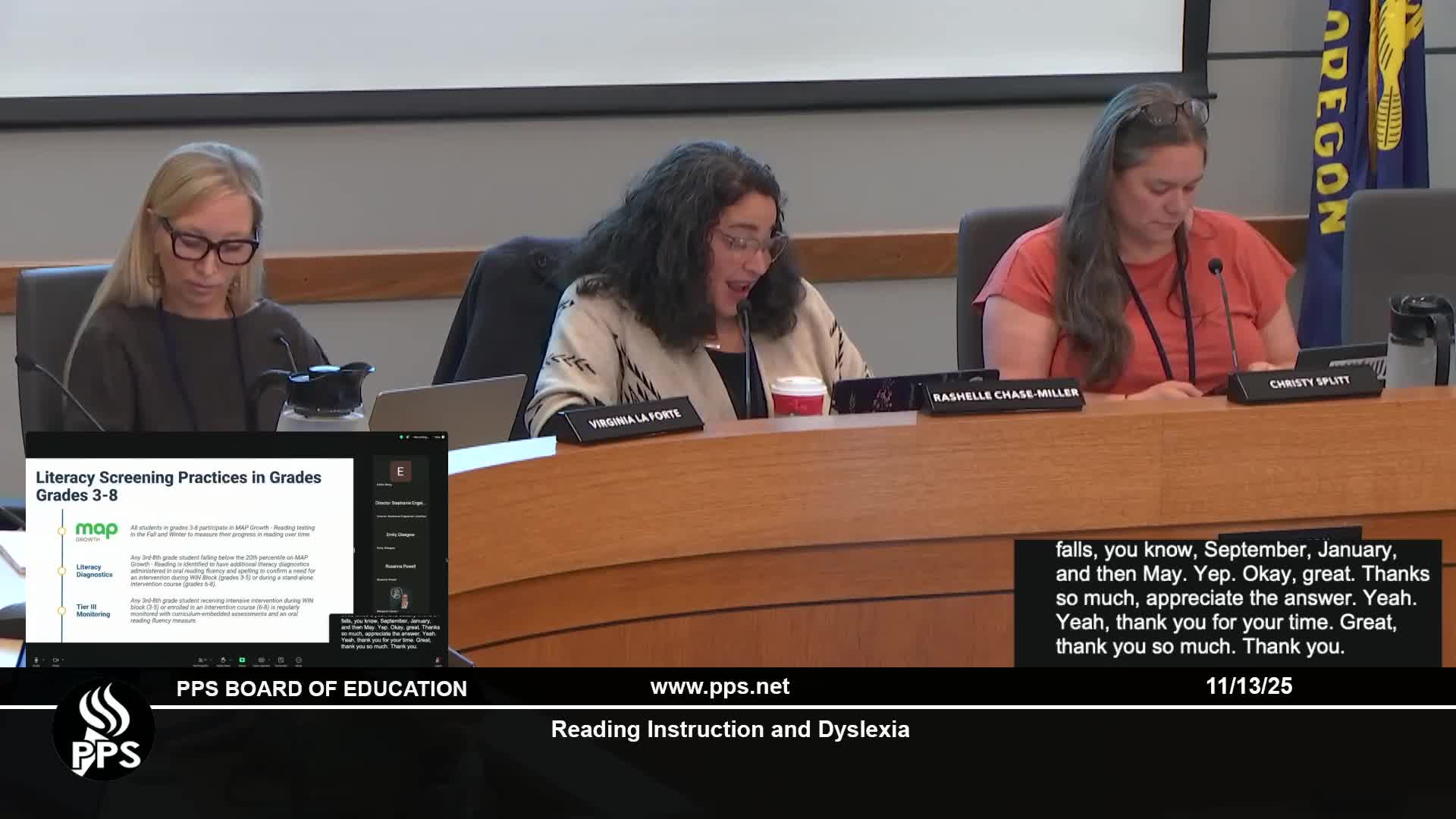
Joanna Tobin, senior director for Instructional Excellence and Improvement, reminded the committee of the grade‑band minimums embedded in Division 22: 966 hours for grade 12, 990 hours for grades 9–11 and 900 hours for K–8. Tobin explained that the district’s methodology evaluates school schedules and the academic calendar and subtracts non‑instructional time such as passing time, recess and lunch when computing the totals.
The 80% rule and exemptions
Tobin described the OAR‑framed requirement commonly called the “80% rule”: at least 92% of students districtwide (staff phrased the required district‑level target) must be in schools where at least 80% of enrolled students have the opportunity to be fully scheduled into the required instructional minutes. When the district reviewed the prior year, Cleveland fell just short at 79.4%, which required staff attention and notification; Tobin reported the district is now in compliance.
Staff noted that the state provides allowable exemptions that boards can approve to adjust calculations for specific cases (for example, AP/IB exemptions or conference allowances). In PPS’s current calculations, the only exemption built into the calendar is 18 hours for parent‑teacher conferences; staff said any broader use of exemptions would be brought to the board if needed to maintain compliance.
Student scheduling and senior exemptions
Board members sought clarity about seniors who are not 'fully scheduled' (defined as eight of eight periods). Staff explained that forecasting and counseling provide seniors the opportunity to select early release or late start if they are on track to graduate and that many scheduling differences are the result of internships, jobs or dual‑credit courses. Those individual student scheduling decisions are handled at the school and counselor level and do not require board approval unless the system‑level exemptions are being adjusted.
Study hall and other counting questions
Directors asked whether study hall counts as instructional minutes. Staff said study hall can count when a teacher is assigned, attendance is taken and students are engaged in academic work according to a syllabus; staff noted they are reviewing study hall practices for consistency across campuses.
No board vote was taken; the presentation was informational and staff said they will continue to work with high‑school principals and scheduling teams to maintain compliance going forward.
Don't Miss a Word: See the Full Meeting!
Go beyond summaries. Unlock every video, transcript, and key insight with a Founder Membership.
30-day money-back guarantee
Sponsors
Proudly supported by sponsors who keep Oregon articles free in 2025

