San Ramon previews Trails Master Plan with 35 recommendations, aims for early 2026 final draft
November 14, 2025 | San Ramon City, Contra Costa County, California
This article was created by AI summarizing key points discussed. AI makes mistakes, so for full details and context, please refer to the video of the full meeting. Please report any errors so we can fix them. Report an error »
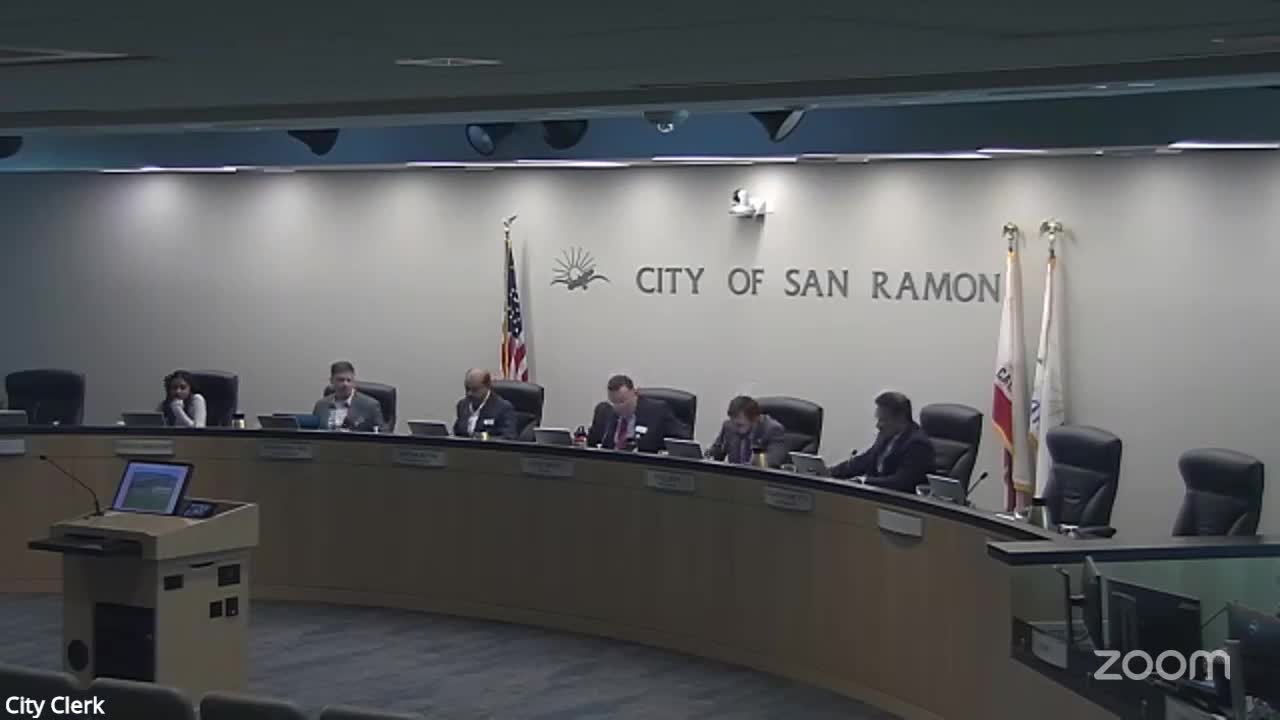
Ben Fish, landscape architect with Design Workshop, told commissioners the plan centers on neighborhood connections, regional links, improvements to the Iron Horse Trail, enhancements to existing trails and a hierarchy of trailheads and wayfinding. "We're excited to show these preliminary recommendations," he said, and pointed commissioners to an interactive story map the project team has developed.
The presentation singled out several regionally significant ideas: a proposed connector from San Ramon to Las Trampas Regional Preserve, partnerships with East Bay Regional Park District on a planned 2026 connector, a proposed trail from Old Ranch Park toward Dublin and improved access at Tassajara Ridge. Staff also highlighted potential Iron Horse Trail improvements, including shade plantings and selective widening where easements allow.
Keith (City staff) said the plan is rooted in a community needs assessment, multiple surveys and consultations with partner agencies. "These efforts and findings are referenced in the first 49 pages of the draft document," he said. Staff asked the commission to focus feedback on the preliminary recommendations in the meeting packet and noted that the team will use commissioner input to develop alignments and prioritization.
Commissioners pressed staff on several implementation points. Chair Breed and others asked for clearer definitions of GAD property (Geologic Hazard Abatement District) and whether the city already holds trail easements on those lands; staff said existing center-line easements exist for some routes but any expansion would require working with conservation easement holders. Commissioners also asked that the plan explicitly call out trail maintenance and trash-receptacle needs; staff confirmed those items would be added under trail amenities and maintenance standards.
Several commissioners suggested prioritizing projects that use city-owned land so that the city can deliver visible results more quickly; staff agreed to include a 5-/10-year prioritization framework with cost and timing categories. Ben Fish said the next steps are to develop prioritization criteria, an action plan, potential funding strategies and construction and maintenance standards, and to return to the commission with a final version in early 2026 for approval.
Public comment reinforced residents' concerns about signage and navigation. Angie Kangas, who said she has done the city's trails challenge, urged clearer signs and better wayfinding so users can find trailheads and know where trails begin and end; staff said those comments will be addressed through the wayfinding and mobile-app elements of the plan.
The commission did not take formal action on the plan at the meeting. Staff will revise the draft to incorporate commissioner feedback on readability, prioritization, trail amenities and interagency coordination, then return the refined package to the commission for further review and a formal vote on a final plan in early 2026.
Don't Miss a Word: See the Full Meeting!
Go beyond summaries. Unlock every video, transcript, and key insight with a Founder Membership.
30-day money-back guarantee
Sponsors
Proudly supported by sponsors who keep California articles free in 2025

