San Ramon commissioners pause cosponsorship policy update after public outcry over field allocations
November 14, 2025 | San Ramon City, Contra Costa County, California
This article was created by AI summarizing key points discussed. AI makes mistakes, so for full details and context, please refer to the video of the full meeting. Please report any errors so we can fix them. Report an error »
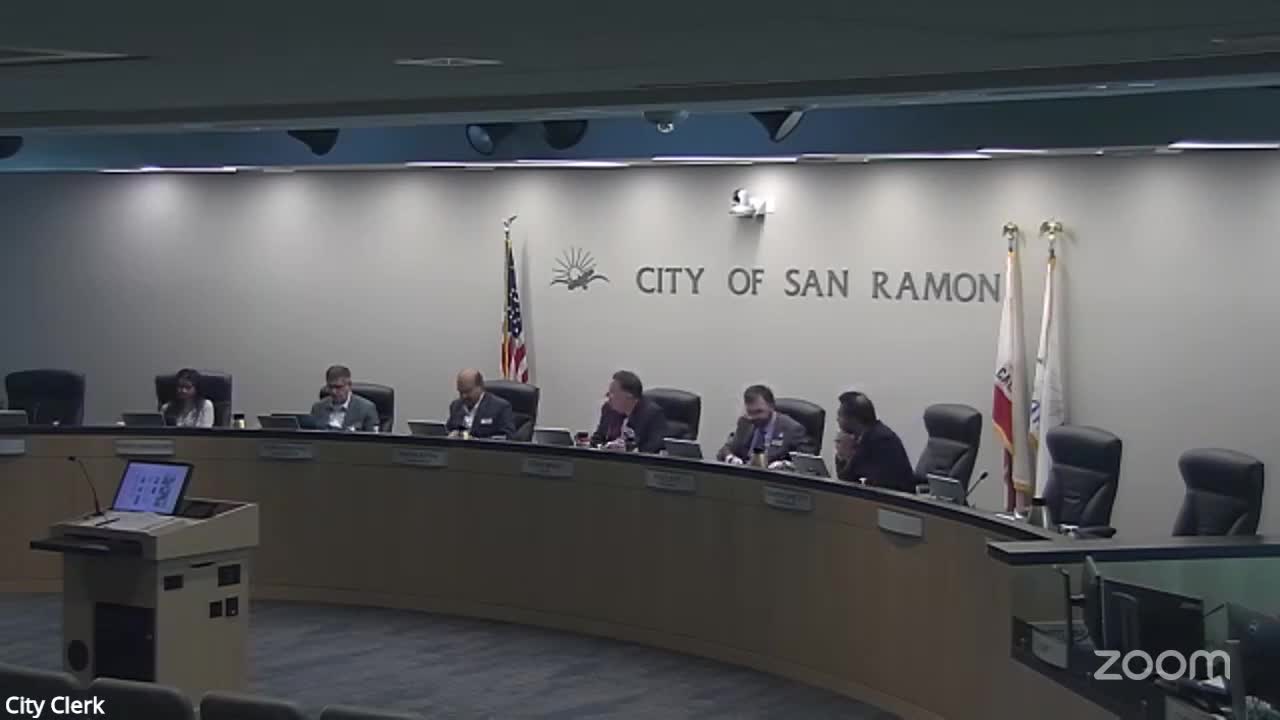
"This policy plays a a vital role in how the city supports the community based sports and recreation programs in San Ramon," Keith (staff) told the commission as he outlined proposed changes that include standardized add/drop forms, a shortened cancellation deadline (from 30 to 14 days), scheduling timelines (gyms moving to a six-month cycle and pools aligned to high school swim seasons), a requirement that new applicant organizations be established at least three years, and new documentation requirements including proof of nonprofit status and descriptions of safety protocols.
Director Perizzano opened the policy presentation by saying staff recommended that the commission "receive, provide direction, and approve the revisions to the cosponsor policy." Staff also detailed proposed enforcement steps: annual renewal and monitoring of residency and participation numbers, a tiered system for prioritizing groups, payment-plan options requiring a 50% initial deposit, and an updated appeals process aligned to the city's municipal code.
Public comment quickly focused on allocation impacts rather than the draft's administrative details. Representatives of San Ramon youth clubs, including the SRCA youth cricket organization, said recent scheduling changes and new cosponsor requests had already reduced their field time. "We are bumped out by 1 third of the allocation," one speaker said, arguing that losing home-ground time would hurt long-term player development and the ability to host regional championships.
Multiple public commenters asked the commission to require a capacity assessment before accepting any new cosponsored group, to preserve existing pathways for youth athletes and to ensure the allocation process is transparent. Speakers described cricket's particular space needs (longer match durations and home-ground requirements) and warned that reallocating time without increasing field capacity would reduce practice frequency for established teams.
Commissioners echoed those concerns. Several asked staff to add explicit language designating the director (or designee) as the policy owner, to return commission approval to the formal onboarding process for any new cosponsored group, to strengthen written conflict-resolution steps and to require staff confirmations (for example, written receipt of cancellations and budget materials) so groups have an audit trail. Vice Chair Levy explicitly recommended the draft go to the commission's policy subcommittee first for further refinement rather than approving it in full at the meeting.
Rather than approving the draft, the commission reached consensus to pause and ask staff to revise the document with the items raised in discussion. Director Perizzano said staff will incorporate edits (including clearer tier definitions, allocation and capacity evaluation language, and confirmation/communication steps) and route the revised draft through the commission's policy committee for a more focused review before bringing it back to the full commission.
No formal policy vote was taken at the meeting. Staff said the existing cosponsorship policy remains in force while revisions are drafted and reviewed. Commissioners and staff urged stakeholder engagement and increased transparency during the revision process so that both established cosponsor groups and prospective applicants understand how allocations and priorities will be decided moving forward.
View the Full Meeting & All Its Details
This article offers just a summary. Unlock complete video, transcripts, and insights as a Founder Member.
30-day money-back guarantee
Sponsors
Proudly supported by sponsors who keep California articles free in 2025

