Prescott Planning Commission recommends LDC changes to comply with state law, limits some public hearings
November 14, 2025 | Prescott City, Yavapai County, Arizona
This article was created by AI summarizing key points discussed. AI makes mistakes, so for full details and context, please refer to the video of the full meeting. Please report any errors so we can fix them. Report an error »
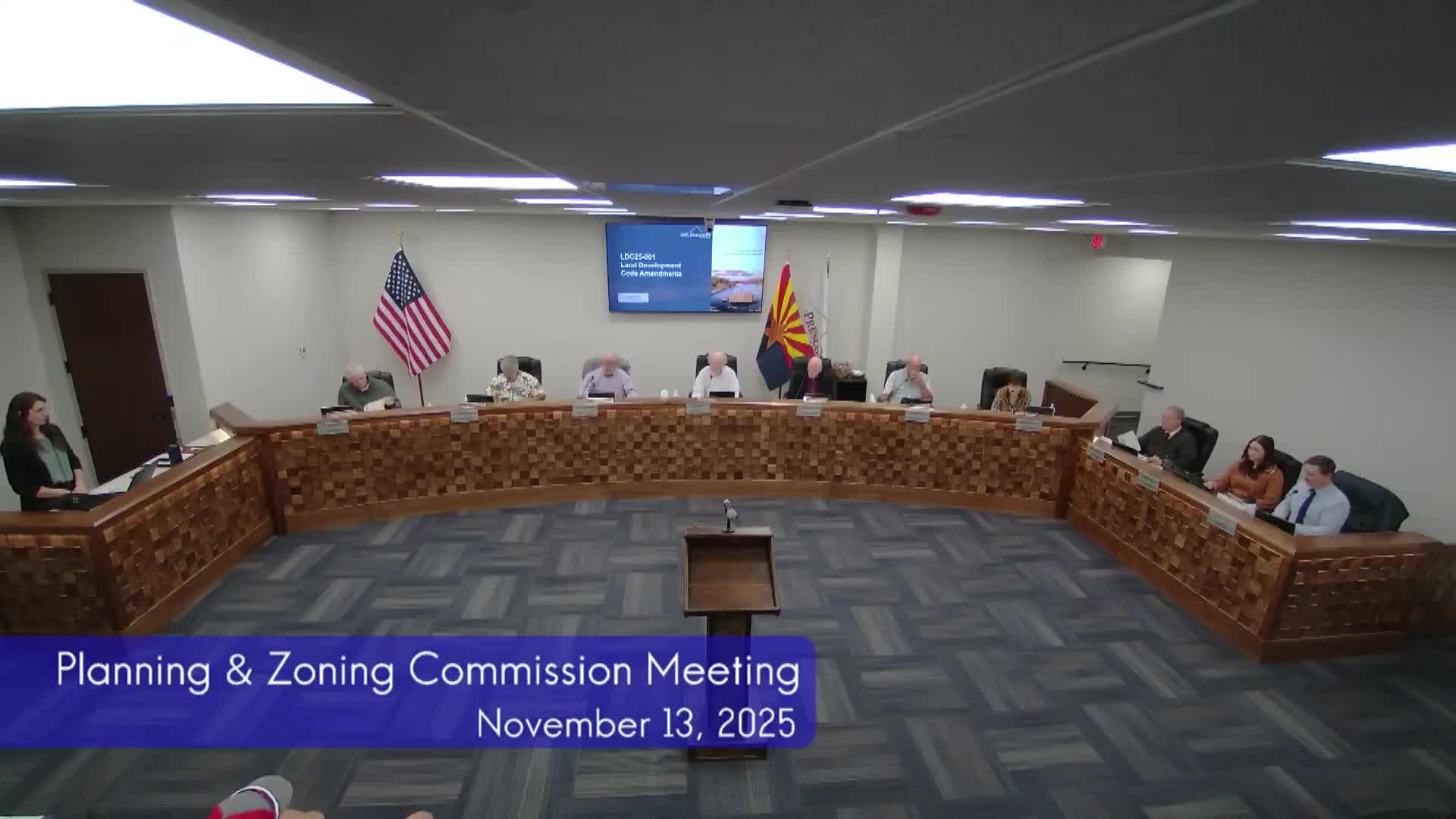
Bramlett said Articles 7, 8, 9 and 11 of the Land Development Code were updated and that “preliminary plots, final plots, site plan review and waivers of standards” no longer need to go forward to the Planning & Zoning Commission and City Council for public hearings. "We're still reviewing these through our building permit process," Bramlett said, adding the code criteria were revised to be more objective so administrative staff can apply them.
The staff presentation stressed an important carve-out: an exemption added by related state legislation (referred to in staff materials as House Bill 2928) excludes districts and properties of historical significance from the administrative-only rule. "This section does not apply to land in a district of historical significance, anything on the National Register of Historic Places and designated historic by a local government," Bramlett said, noting design review tied to historic preservation would continue through the Prescott Preservation Commission and remain subject to public hearings and the normal appeals process.
Commissioners pressed staff on the policy trade-offs. Commissioner Tom Hutchison said the change "feels like a hit to transparency," asking whether the loss of routine public hearings had been considered. Bramlett responded that the city will keep technical review and internal checks, and another staff member noted that the appeal routes from a preservation commission denial to City Council remain in place.
Commissioners also asked about notice requirements. Bramlett clarified that rezones, map or text amendments, planned area developments and neighborhood or general plan updates are unaffected and will still be noticed and heard publicly; the administrative-review conversion applies to the specific items listed in ARS 9-500.49, not to zoning changes that require public hearings.
During discussion commissioners cited recent local examples — including an old city hall project and a Whiskey Row hotel — to illustrate how the process can play out when preservation review and special use permits intersect. Bramlett said projects within a local historic district would continue with preservation commission review and that applicants could appeal preservation decisions to City Council.
After public comment urging outreach to state legislators, Commissioner Tom Riley moved to recommend approval of the LDC revisions "consistent with Arizona Revised Statutes 9-500.49 as shown in Exhibit A," and Commissioner Jim Whiting seconded. The roll call recorded six approvals and one disapproval; the motion passed to forward the amendments to City Council for consideration.
The Planning Commission’s recommendation does not itself change the code; it forwards the proposed ordinance and amended LDC text to City Council, which will consider adopting the ordinance and formally modify the Land Development Code if it votes to do so.
Don't Miss a Word: See the Full Meeting!
Go beyond summaries. Unlock every video, transcript, and key insight with a Founder Membership.
30-day money-back guarantee
Sponsors
Proudly supported by sponsors who keep Arizona articles free in 2025

