CRA backs multiple East Tampa affordable‑housing projects, approves subsidies totaling millions
November 14, 2025 | Tampa, Hillsborough County, Florida
This article was created by AI summarizing key points discussed. AI makes mistakes, so for full details and context, please refer to the video of the full meeting. Please report any errors so we can fix them. Report an error »
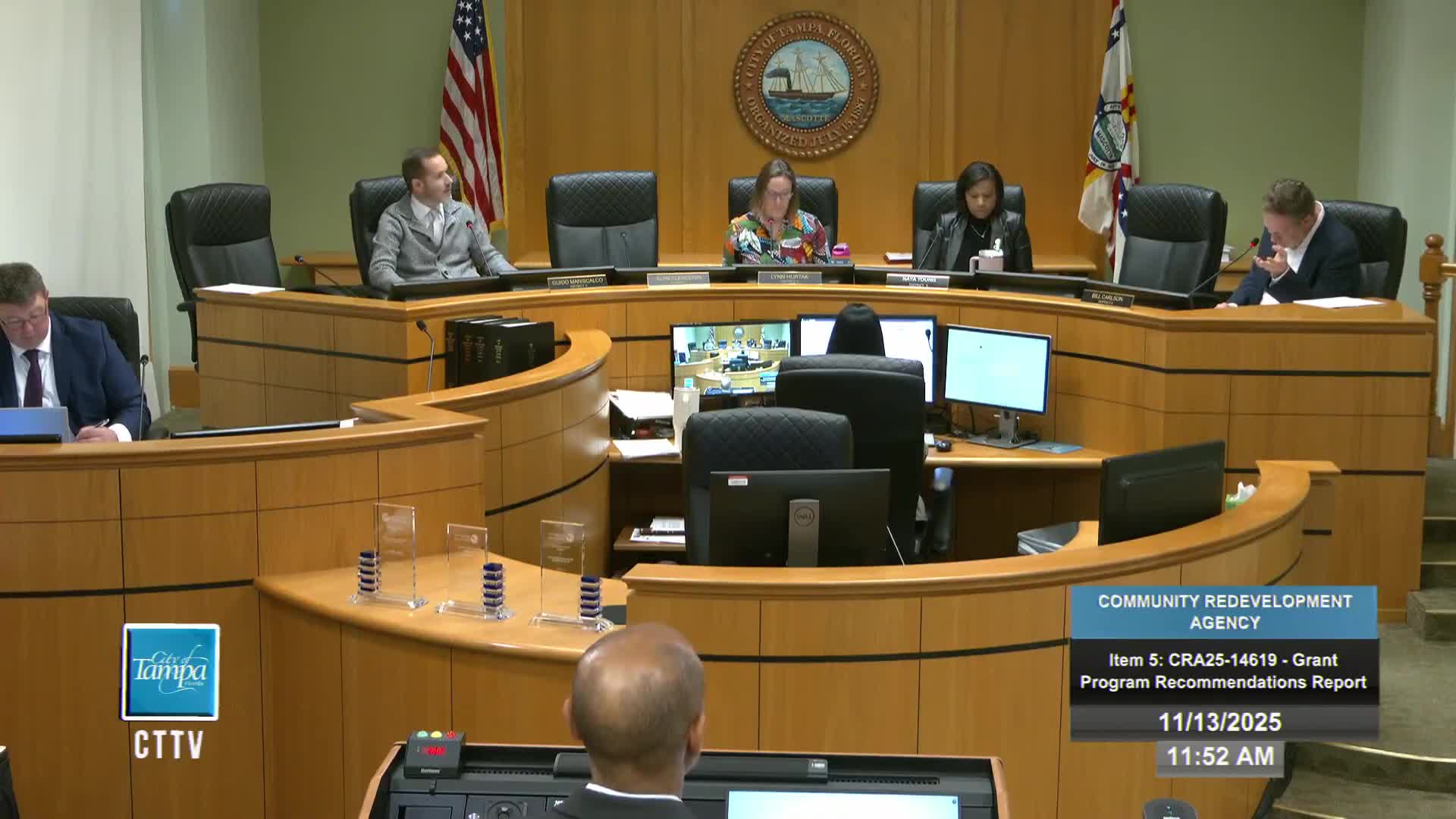
Klontz Properties requested $2.5 million in developer subsidy to build 12 two‑bedroom units in Grant Park; staff and the East Tampa Community Advisory Committee recommended a reduced allocation of $1.75 million, which the board approved by voice vote. Cynthia Clontz Garcia, a legacy owner in the neighborhood, told the board her family will use owned land and manage the project locally and said 41% of units will target households at 50% AMI or below.
The CDC of Tampa requested $5 million to create 75 affordable units (the rezoning approved earlier in the week reduced the approved unit count from 79 to 75). Vanessa McCleary, CDC vice president of real estate development, said the program is phase 1 of a multi‑phase neighborhood redevelopment that also includes pursuit of grocery and other services. The board approved the CDC request; staff said households will be targeted at 40–60% AMI.
Staff also presented a Domain Homes partnership to build five for‑sale single‑family homes on CRA‑held or privately contributed infill lots. CRA staff recommended a $75,000 per‑home subsidy to lower purchase prices to the City of Tampa sales price threshold; the board approved the $75,000 per home subsidy (five homes, total CRA subsidy $375,000). Staff noted buyers may combine CRA subsidy with city down‑payment assistance or lender programs to buy down price and meet affordability targets.
Public comment heavily favored the projects: community leaders, neighborhood liaisons and nonprofit partners described long involvement in East Tampa and urged the board to approve funding to prevent displacement and expand attainable housing options. Board members highlighted the projects as part of a longer community vision and emphasized the need to pair funding with outreach and technical assistance for smaller local developers to access grants.
Next steps: CRA staff will finalize funding agreements and phasing schedules, administer down‑payment assistance options in coordination with city housing programs, and report back to the board on implementation milestones and timelines.
View the Full Meeting & All Its Details
This article offers just a summary. Unlock complete video, transcripts, and insights as a Founder Member.
30-day money-back guarantee
Sponsors
Proudly supported by sponsors who keep Florida articles free in 2025

