Carbondale P&Z leans toward tiered ADU review, continues public hearing to Jan. 8
November 14, 2025 | Carbondale, Garfield County, Colorado
This article was created by AI summarizing key points discussed. AI makes mistakes, so for full details and context, please refer to the video of the full meeting. Please report any errors so we can fix them. Report an error »
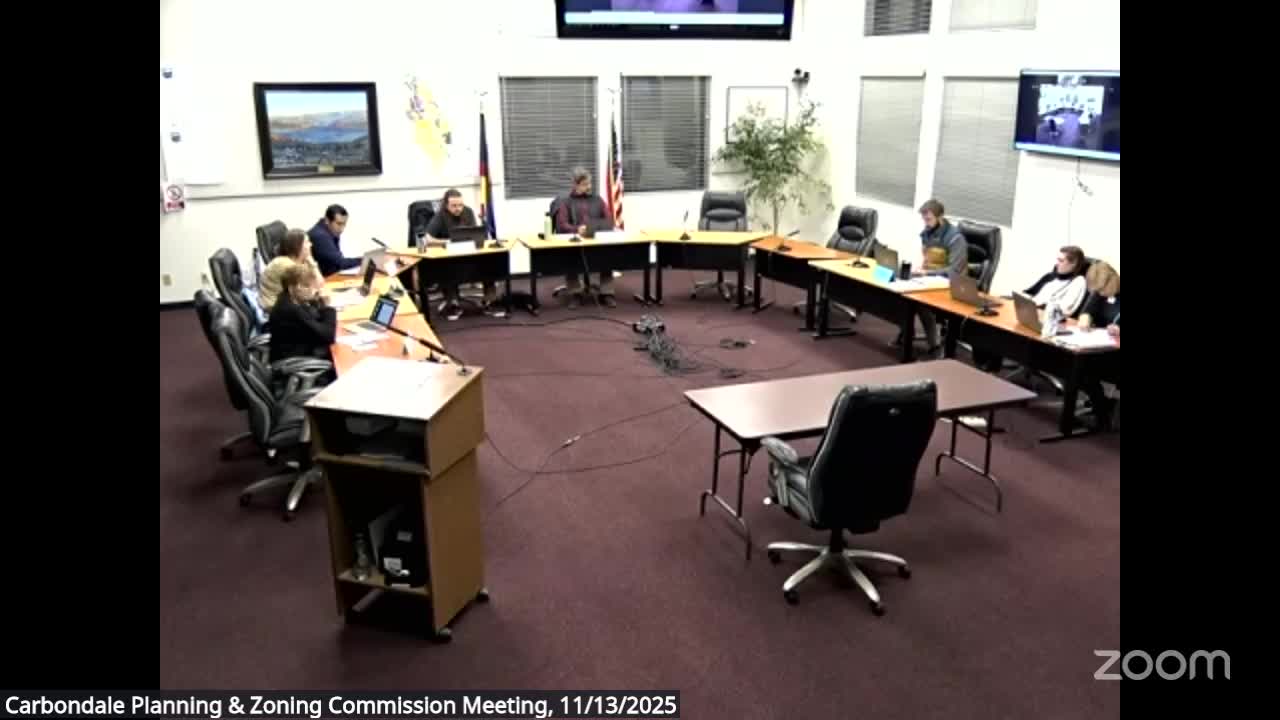
The commission, after hearing public comment and staff presentation, agreed in principle to a tiered development‑review process that would allow small or interior ADUs to be approved administratively by staff while routing larger or potentially higher‑impact ADUs (based on objective thresholds such as square footage, building height or proximity to lot lines) to the Planning & Zoning Commission for public hearing. The commission voted to continue the public hearing to Jan. 8, 2026, so staff can prepare draft code language and obtain town‑attorney review.
"Changing impervious is not possible during this time because it wasn't noticed in the talk about ADUs," said resident Kenny Teitler, urging commissioners to consider a development bonus or ADU exemption for impervious coverage instead of incorporating a lot‑coverage change into the ADU amendment.
Jared, town planning staff, told the commission the public notice for the current amendment covered ADUs broadly but did not include zonewide dimensional changes such as lot‑coverage; he recommended forwarding any decision on OTR (Old Town Residential) impervious limits to a separate, broader public process with Historic Preservation Committee (HPC) involvement. "People who might have an interest in that topic aren't aware that that impervious lot coverage for the OTR should be increased," Jared said, noting the OTR was created in 2008 with lower lot‑coverage thresholds.
On form and scope, commissioners indicated they are comfortable allowing attached and detached ADUs across zone districts, subject to staff‑written text. The panel also signaled majority support for a modest bulk‑storage exemption (staff were asked to return with specific language; one discussed figure was about 30 square feet) and favored relying on objective measurements (square footage, height, setbacks) rather than bedroom counts as tier thresholds to reduce loopholes and "gamesmanship."
Several commissioners favored not giving neighbors an automatic right to trigger a public hearing for administrative ADU approvals; instead, if an application meets the administrative thresholds there would be no neighbor notice, while proposals exceeding the thresholds would go to public hearing.
Chair (unnamed in the transcript) summarized the next steps: staff (Garrett/Ellie) will package the commission’s direction into draft code text for the next packet, add a packet note flagging the OTR lot‑coverage concern for Board of Trustees review, and return with specific tier thresholds and draft language for bulk‑storage exemptions. The commission set Jan. 8, 2026 as the continued hearing date to allow for staff drafting and attorney review.
Procedural votes taken at the meeting included approving the Oct. 23 minutes (consent agenda), closing public comment, and the motion to continue the ADU public hearing. Vote tallies were recorded verbally as "ayes around the room" and "Ayes have it" but specific roll‑call counts were not provided in the record.
The Commission’s direction narrows the choices staff must convert into specific code language: a tiered review process, objective thresholds for when P&Z must review an ADU, allowing attached/detached ADUs across zones, and a request to the Board of Trustees to further study OTR lot‑coverage limits. The next packet will show how those choices translate into proposed Unified Development Code (UDC) text.
What’s next: staff will draft proposed code text reflecting the commission’s guidance, seek town‑attorney review, and return the ADU amendment for continued public hearing on Jan. 8, 2026. Members of the public who want their views included should watch for the next public packet and the continued hearing notice.
View the Full Meeting & All Its Details
This article offers just a summary. Unlock complete video, transcripts, and insights as a Founder Member.
30-day money-back guarantee
Sponsors
Proudly supported by sponsors who keep Colorado articles free in 2025

