Joint Education Committee advances K–12 language and literacy bill after hours of testimony and amendments
November 14, 2025 | Education, Joint & Standing, Committees, Legislative, Wyoming
This article was created by AI summarizing key points discussed. AI makes mistakes, so for full details and context, please refer to the video of the full meeting. Please report any errors so we can fix them. Report an error »
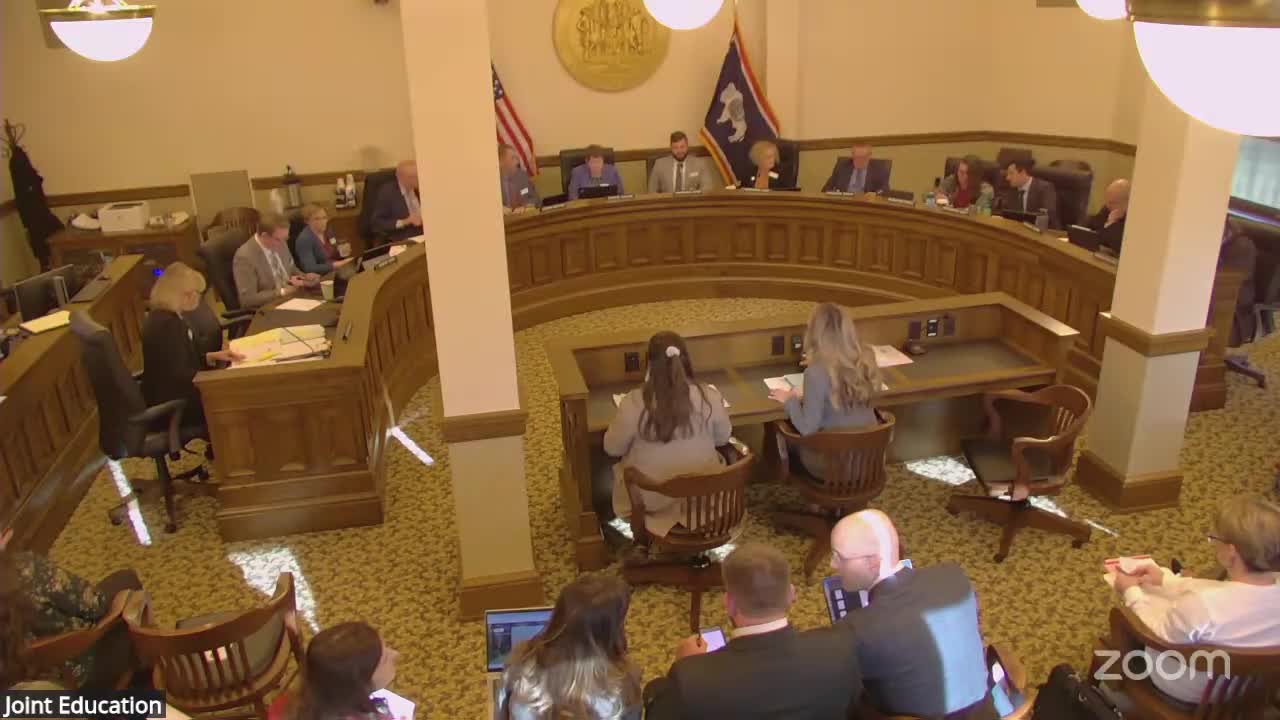
Cheyenne — The Joint Education Committee advanced a major rewrite of Wyoming’s reading law on Thursday, voting to sponsor 26 LSO 217 (working draft 0.7) after more than five hours of presentations and public testimony from educators, parents, advocates and district officials.
Sponsor Senator Mike Rothfuss summarized the bill as a comprehensive K–12 language and literacy program that would replace the existing K–3 reading statute. The draft directs every school district to adopt a district language and literacy program (DLLP); requires universal and dyslexia screeners and diagnostic assessments; mandates Individual Reading Plans (IRPs) for identified students with 30‑day implementation and parent collaboration; requires high‑quality instructional materials aligned with the state’s definition of the science of reading; establishes reporting and accountability requirements for districts; and creates a literacy division within the Department of Education.
“We worked hard to bring together a coalition of superintendents, a literacy cabinet, stakeholders, parent groups and the University of Wyoming,” Rothfuss told the committee while walking members through changes between drafts 0.6 and 0.7. He described technical edits — adding developmental language disorder to definitions, changing the timing of some screening windows, clarifying that 70 hours of extended instruction must be aligned to evidence‑based materials, and moving some progress reporting to quarterly — and said the policy intent remained the same across drafts.
Stakeholders and parents filled the witness list. Dozens of family testimonies described children who struggled with reading and whose families paid thousands out‑of‑pocket for evaluations and private tutoring. “Only half of Wyoming’s children can read proficiently by third grade,” testified Shandell Pine, an advocate and parent whose organization helps families navigate dyslexia supports.
Teachers, literacy specialists and district leaders largely supported the bill’s goals but raised concerns about implementation and local control. Several superintendents said the state should consult districts when the bill directs the State Superintendent to identify approved screeners, diagnostics and instructional materials. The Wyoming Association of School Administrators and some district leaders also warned the committee to consider available workforce and training resources, particularly at the secondary level.
Contested policy elements included a statutory prohibition on the so‑called “3‑cueing” approach to word recognition. Supporters argued the technique is not evidence‑based and can leave struggling readers dependent on guessing strategies. Carrie Roden, a literacy advocate, told the committee: “The 3‑cueing system... is not evidence‑based teaching. Why would we want any teaching that is not evidence‑based?” District leaders said they worried about removing instructional options altogether.
To address concern and strike a compromise, the committee adopted an amendment limiting the statutory ban to prohibit the 3‑cueing system “as the only basis for teaching word recognition or decoding,” allowing districts flexibility to use some strategies when appropriate while making decoding and evidence‑based instruction the primary approach.
Other committee amendments included: clarifying that required rules and lists be developed “in consultation with school districts,” changing some statutory language from “shall provide” to “shall offer” for optional extended services, and adding a phrase that summer or extended instruction be age‑ and district‑appropriate while retaining a 70‑hour guidance for additional supports. The committee also modified language about professional development so roles between the Department of Education and the Professional Teaching Standards Board (PTSB) align.
Motion and vote: After amendments, the committee moved the 0.7 working draft for sponsorship. Roll call recorded 9 ayes, 8 nos and 1 excused; the chair declared the measure passed out of committee for sponsorship in the 2026 session.
Why it matters: The draft would expand screening and intervention beyond K–3 to K–12, create a state literacy apparatus to vet materials and monitor district compliance, and require increased reporting; proponents say it will make evidence‑based literacy instruction universal in Wyoming schools, while critics warn of possible overreach and implementation costs.
What’s next: The bill has been cleared for sponsorship in the 2026 session. If filed, it will be subject to amendment and fiscal review during session; the Department of Education and districts will continue working with sponsors on rule‑making, definitions and implementation details.
Representative Lawley (subcommittee cochair) and Senator Rothfuss said they expect further technical amendments during drafting and rulemaking and invited continued stakeholder input.
Sponsor Senator Mike Rothfuss summarized the bill as a comprehensive K–12 language and literacy program that would replace the existing K–3 reading statute. The draft directs every school district to adopt a district language and literacy program (DLLP); requires universal and dyslexia screeners and diagnostic assessments; mandates Individual Reading Plans (IRPs) for identified students with 30‑day implementation and parent collaboration; requires high‑quality instructional materials aligned with the state’s definition of the science of reading; establishes reporting and accountability requirements for districts; and creates a literacy division within the Department of Education.
“We worked hard to bring together a coalition of superintendents, a literacy cabinet, stakeholders, parent groups and the University of Wyoming,” Rothfuss told the committee while walking members through changes between drafts 0.6 and 0.7. He described technical edits — adding developmental language disorder to definitions, changing the timing of some screening windows, clarifying that 70 hours of extended instruction must be aligned to evidence‑based materials, and moving some progress reporting to quarterly — and said the policy intent remained the same across drafts.
Stakeholders and parents filled the witness list. Dozens of family testimonies described children who struggled with reading and whose families paid thousands out‑of‑pocket for evaluations and private tutoring. “Only half of Wyoming’s children can read proficiently by third grade,” testified Shandell Pine, an advocate and parent whose organization helps families navigate dyslexia supports.
Teachers, literacy specialists and district leaders largely supported the bill’s goals but raised concerns about implementation and local control. Several superintendents said the state should consult districts when the bill directs the State Superintendent to identify approved screeners, diagnostics and instructional materials. The Wyoming Association of School Administrators and some district leaders also warned the committee to consider available workforce and training resources, particularly at the secondary level.
Contested policy elements included a statutory prohibition on the so‑called “3‑cueing” approach to word recognition. Supporters argued the technique is not evidence‑based and can leave struggling readers dependent on guessing strategies. Carrie Roden, a literacy advocate, told the committee: “The 3‑cueing system... is not evidence‑based teaching. Why would we want any teaching that is not evidence‑based?” District leaders said they worried about removing instructional options altogether.
To address concern and strike a compromise, the committee adopted an amendment limiting the statutory ban to prohibit the 3‑cueing system “as the only basis for teaching word recognition or decoding,” allowing districts flexibility to use some strategies when appropriate while making decoding and evidence‑based instruction the primary approach.
Other committee amendments included: clarifying that required rules and lists be developed “in consultation with school districts,” changing some statutory language from “shall provide” to “shall offer” for optional extended services, and adding a phrase that summer or extended instruction be age‑ and district‑appropriate while retaining a 70‑hour guidance for additional supports. The committee also modified language about professional development so roles between the Department of Education and the Professional Teaching Standards Board (PTSB) align.
Motion and vote: After amendments, the committee moved the 0.7 working draft for sponsorship. Roll call recorded 9 ayes, 8 nos and 1 excused; the chair declared the measure passed out of committee for sponsorship in the 2026 session.
Why it matters: The draft would expand screening and intervention beyond K–3 to K–12, create a state literacy apparatus to vet materials and monitor district compliance, and require increased reporting; proponents say it will make evidence‑based literacy instruction universal in Wyoming schools, while critics warn of possible overreach and implementation costs.
What’s next: The bill has been cleared for sponsorship in the 2026 session. If filed, it will be subject to amendment and fiscal review during session; the Department of Education and districts will continue working with sponsors on rule‑making, definitions and implementation details.
Representative Lawley (subcommittee cochair) and Senator Rothfuss said they expect further technical amendments during drafting and rulemaking and invited continued stakeholder input.
Don't Miss a Word: See the Full Meeting!
Go beyond summaries. Unlock every video, transcript, and key insight with a Founder Membership.
✓
Get instant access to full meeting videos
✓
Search and clip any phrase from complete transcripts
✓
Receive AI-powered summaries & custom alerts
✓
Enjoy lifetime, unrestricted access to government data
30-day money-back guarantee
