Trinity Behavior Care urges use of opioid‑settlement funds for treatment, jail programming in Marlboro County
November 14, 2025 | Marlboro County, South Carolina
This article was created by AI summarizing key points discussed. AI makes mistakes, so for full details and context, please refer to the video of the full meeting. Please report any errors so we can fix them. Report an error »
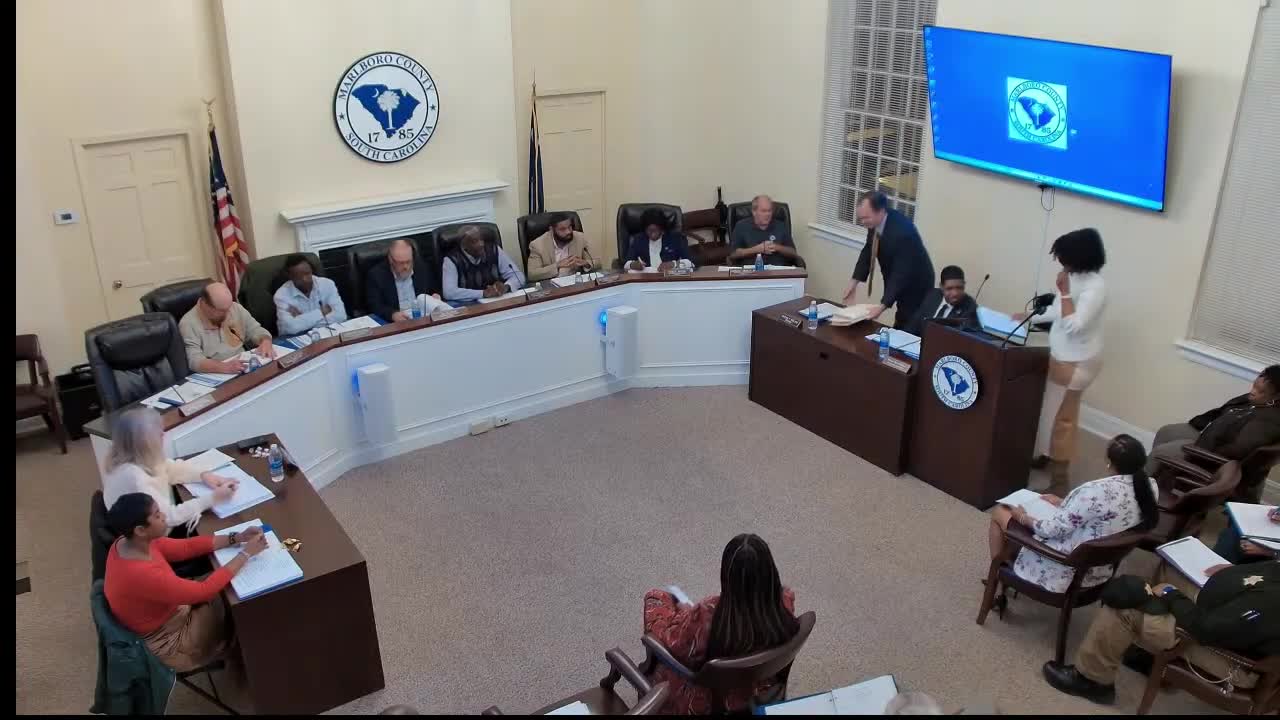
Representatives from Trinity Behavior Care presented to the Marlboro County Council on the South Carolina Opiate Recovery Fund, saying the settlement funds should be used to expand medication‑assisted treatment (MAT), provide naloxone, fund prevention programming in schools and support treatment services inside the county detention center.
The presenter and detention‑center staff said local figures show 'at least over 80 suspected overdoses' and one fatality in Marlboro County from January through November. Trinity said it has provided services to roughly 150 inmates this year at the county detention center, including peer support and clinical counseling, and that it helps connect people leaving detention to housing, jobs and Medicaid.
Trinity asked the council to ensure documentation and reporting are available to the county because some of the funds pass through county government. Council members requested that monthly or biannual reports be filed with county offices so elected officials can review activity and outcomes. Trinity said it provides monthly reports from directors and biannual documentation to the state but will make county copies available on request.
Trinity also described a community task force—composed of EMS, law enforcement, health providers and faith‑based leaders—designed to improve overdose reporting (separating suspected vs. confirmed overdoses), guide prevention and coordinate naloxone distribution. Presenters emphasized performance measurement: client starts, retention in treatment and overdose reversals.
Council members asked about the task force’s membership and whether meetings would be public; staff said the task force is a designated group (EMS, law enforcement, healthcare, faith‑based partners) and not an open public meeting. A council member asked for the county to have copies of monthly reports for oversight if the county is the funding pass‑through.
Trinity committed to tracking clients in treatment, overdose reversals and naloxone distribution as performance measures and to providing county officials with documentation as requested.
The presenter and detention‑center staff said local figures show 'at least over 80 suspected overdoses' and one fatality in Marlboro County from January through November. Trinity said it has provided services to roughly 150 inmates this year at the county detention center, including peer support and clinical counseling, and that it helps connect people leaving detention to housing, jobs and Medicaid.
Trinity asked the council to ensure documentation and reporting are available to the county because some of the funds pass through county government. Council members requested that monthly or biannual reports be filed with county offices so elected officials can review activity and outcomes. Trinity said it provides monthly reports from directors and biannual documentation to the state but will make county copies available on request.
Trinity also described a community task force—composed of EMS, law enforcement, health providers and faith‑based leaders—designed to improve overdose reporting (separating suspected vs. confirmed overdoses), guide prevention and coordinate naloxone distribution. Presenters emphasized performance measurement: client starts, retention in treatment and overdose reversals.
Council members asked about the task force’s membership and whether meetings would be public; staff said the task force is a designated group (EMS, law enforcement, healthcare, faith‑based partners) and not an open public meeting. A council member asked for the county to have copies of monthly reports for oversight if the county is the funding pass‑through.
Trinity committed to tracking clients in treatment, overdose reversals and naloxone distribution as performance measures and to providing county officials with documentation as requested.
View the Full Meeting & All Its Details
This article offers just a summary. Unlock complete video, transcripts, and insights as a Founder Member.
✓
Watch full, unedited meeting videos
✓
Search every word spoken in unlimited transcripts
✓
AI summaries & real-time alerts (all government levels)
✓
Permanent access to expanding government content
30-day money-back guarantee
