Board OKs permission to publish COMAR change allowing some interstate therapist licenses in schools
November 14, 2025 | Maryland Department of Education, School Boards, Maryland
This article was created by AI summarizing key points discussed. AI makes mistakes, so for full details and context, please refer to the video of the full meeting. Please report any errors so we can fix them. Report an error »
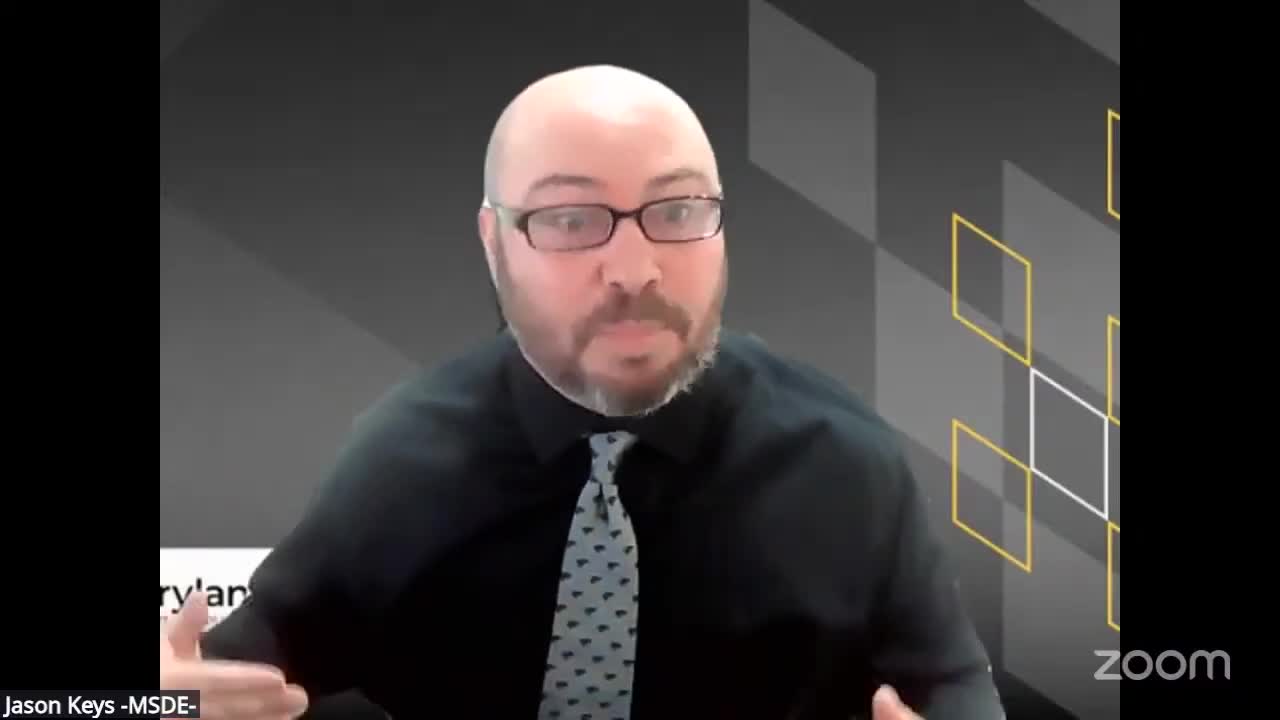
Jason Keyes, director of educator preparation and development at the Maryland State Department of Education (MSDE), told the board the proposed change aligns COMAR with federal rules that permit states and licensing boards to recognize compact privileges and certain military licensures. “These amendments allow a therapist to practice if they hold a valid license issued by the Maryland licensing board or a valid compact privilege to practice in Maryland,” Keyes said.
Board members asked which professions currently have interstate compact privileges. Sean (staff) clarified that, as of the meeting, the physical therapy compact is effective in Maryland and provides a compact privilege; other professions discussed — including occupational therapy, audiology and speech‑language pathology — are at various stages of registration or implementation in different states. Dr. Nikki Woodward noted an emerging compact for SLPs and asked about safeguards for out‑of‑state or remote providers; Keyes replied that licensing boards retain their review authority and that the COMAR change defers due diligence to those boards.
Debbie Hartland moved to give permission to publish the COMAR amendments; Dr. Taylor seconded. The board signaled unanimous consent and the regulation will follow the standard sequence: board of education review, a 15‑day look, a 30‑day Maryland Register publication for public comment, and a return to the board for final action after public comment.
What the rule does and does not change
The amendment does not remove the requirement that practitioners meet licensing standards; it adds an alternative pathway for recognition when a licensing board grants compact or reciprocity privileges. Keyes emphasized the rule is intended to reduce service gaps in schools while preserving the licensing boards’ authority to verify equivalency and discipline.
Next steps
MSDE will publish the proposed COMAR language for public comment and bring any post‑comment revisions back to the board for further consideration before final adoption.
Don't Miss a Word: See the Full Meeting!
Go beyond summaries. Unlock every video, transcript, and key insight with a Founder Membership.
30-day money-back guarantee
Sponsors
Proudly supported by sponsors who keep Maryland articles free in 2025

