Peoria Unified board adopts policy banning DEI initiatives in schools, 4–1
November 14, 2025 | Peoria Unified School District (4237), School Districts, Arizona
This article was created by AI summarizing key points discussed. AI makes mistakes, so for full details and context, please refer to the video of the full meeting. Please report any errors so we can fix them. Report an error »
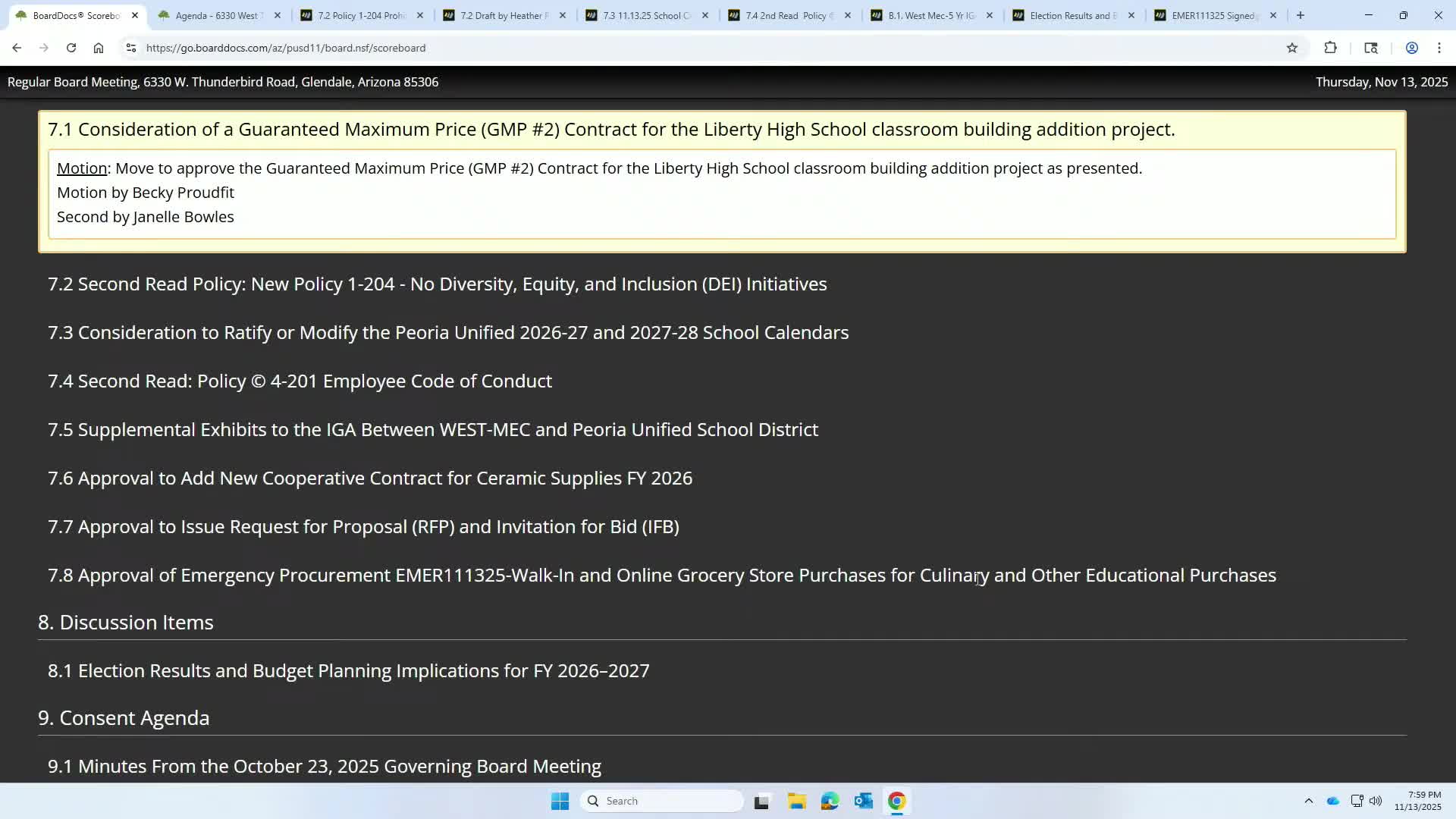
Superintendent Casey Summers summarized edits to the draft and said the administration revised definitions and guidance after the first read. The board convened an extended public comment period before the vote. Speakers split sharply: some urged the board to prohibit ideological training and the use of public funds for programs they described as divisive, while others warned the policy is vague, risks violating federal law and could limit legally required equity accommodations.
"DEI policies are not mandates. They are organizational frameworks that seek to promote the fair treatment and full participation of all individuals," said Kate DeLuca, who urged the board not to adopt a ban. In contrast, public commenters supporting the policy argued the board should focus on merit and academic performance.
Board members debated legal precedents and the risk that broadly worded bans could be struck down by courts. Trustee Melissa Ewing noted recent court rulings and recommended precise language aligned to federal and state law; Trustee Janelle Bowles emphasized fidelity to state statute. Trustee Ewing cast the lone dissenting vote, saying she was not ready to adopt the policy without further refinements.
The adopted policy contains provisions limiting the district’s ability to fund or require training or programs whose primary purpose is to advance DEI as an ideological framework, while maintaining compliance language for existing federal civil-rights laws (for example, IDEA and Section 504) that the trustees said continue to apply.
What the policy means in practice will depend on subsequent administrative guidance. During the debate, speakers asked how the policy would affect travel to professional conferences, booster-funded activities and curricular events that acknowledge historically underrepresented groups; district staff said they would produce clarifying guidance and legal analysis.
Next steps: district administrators said they will draft implementation guidance clarifying allowable staff training, booster activities and the treatment of legally protected programs, and they will continue community outreach to explain the policy’s scope.
Don't Miss a Word: See the Full Meeting!
Go beyond summaries. Unlock every video, transcript, and key insight with a Founder Membership.
30-day money-back guarantee
Sponsors
Proudly supported by sponsors who keep Arizona articles free in 2025

