Timberlane budget committee advances $92.1 million FY27 proposal, previews $1.5M transfer to contracted services
November 14, 2025 | Timberlane Regional School District, School Districts, New Hampshire
This article was created by AI summarizing key points discussed. AI makes mistakes, so for full details and context, please refer to the video of the full meeting. Please report any errors so we can fix them. Report an error »
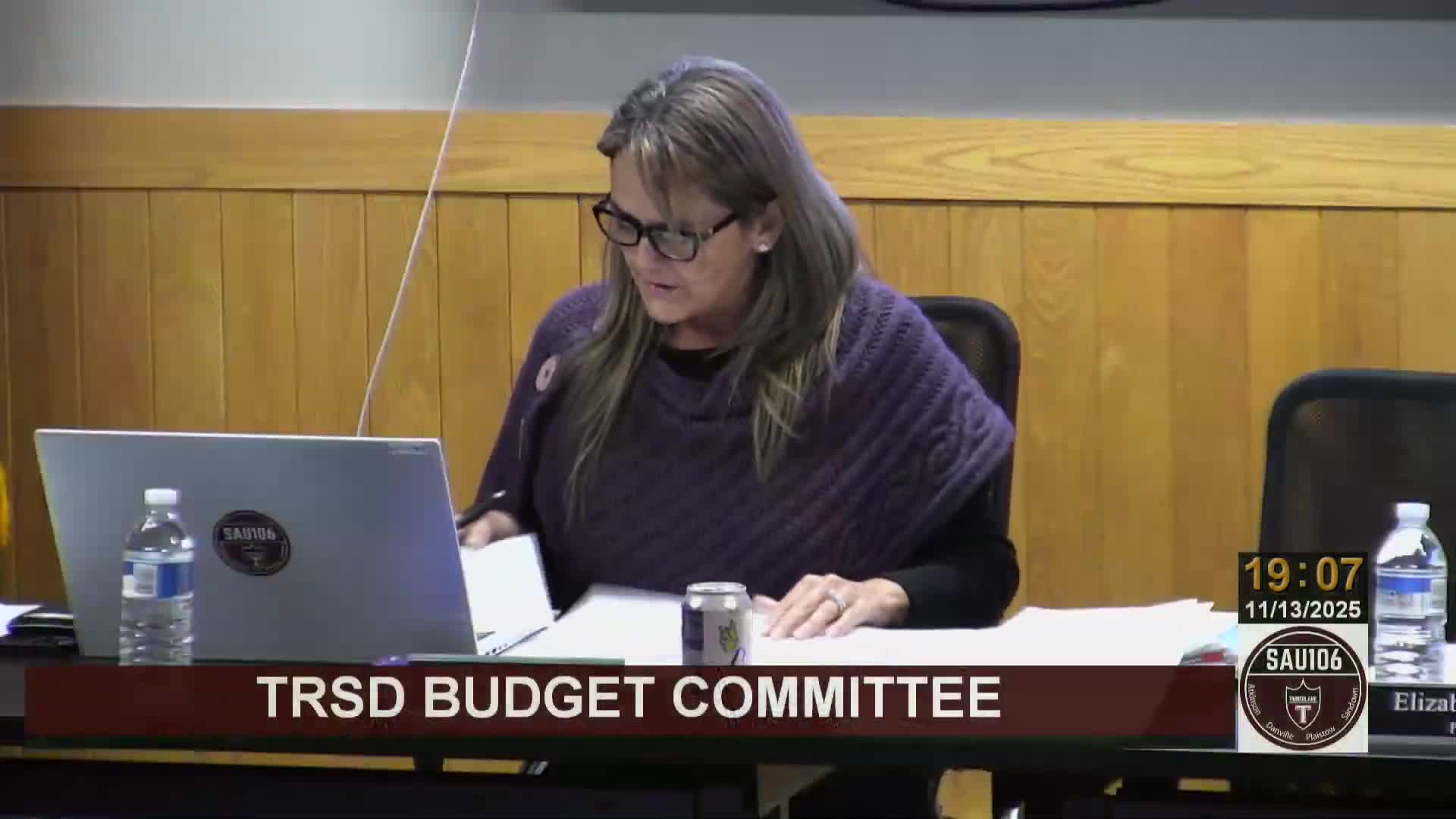
The proposal matters because it would significantly raise the district’s operating budget and, as members noted, carries direct implications for town tax rates. "The proposed budget in front of you is gonna stand at $92,098,476," Justin said, summarizing the total. He and finance staff also outlined key drivers: projected health‑insurance increases, contractual salary steps, and growing contracted special‑education needs.
Staff described several near‑term actions and assumptions that shape the numbers. Maria, district finance staff, explained that the administration will recommend a Nov. 20 school‑board motion to transfer $1.5 million from personnel salary lines to contracted services to cover known contractual obligations. "We're going to recommend to the board to make a budget transfer ... in the amount of 1 and a half million dollars," Justin said, adding that the move would shift 3 psychologist positions, 6 speech‑and‑language positions and 27 paraeducator roles to contracted services to reflect current delivery arrangements.
The committee received detailed staffing counts to explain the contractual pressure on the operating budget. Justin said the district currently uses 54.9 contracted‑service special‑education FTEs; for speech and language specifically, staff reported 11 contracted FTEs and 3 in‑district FTEs, while the personnel budget lists 9 speech FTEs. "We have 54.9 special education contracted service FTEs today," Justin said, using the figure to justify the transfer and contracted‑services increase.
Committee members raised questions about program priorities and tradeoffs. Discussion ranged from altering transportation practices (regional stops, revisiting the two‑mile standard), to reviewing administrative staffing, increasing class sizes, or postponing capital projects/CIP items. Several members urged caution about cutting services central to student support; others said the committee must weigh tax impacts and the district’s long‑term stability.
The packet also included student‑support data that framed part of the debate: two elementary schools (Stanville and Pollard) account for 81 Title I students districtwide, and 15 students are currently identified under the McKinney‑Vento homeless services designation. Staff reported field‑trip assistance needs this year at the middle school only (22 sixth‑graders, 38 seventh‑graders, and 50 eighth‑graders), an estimated total cost of about $5,500 for the trips reported to date.
On procedure and votes, the committee moved to accept the proposed operating budget for review and carried the motion. Members then took up three personnel requests: a days increase and salary adjustment for the out‑of‑district coordinator (motion carried 4–3), a 10‑day increase for five TTA special‑education facilitators (motion carried 6–1), and a salary adjustment for a senior technology specialist (motion carried 5–2). Justin and Maria told members that TTA calculations use projected 2027 contract rates and that the technology adjustment reflects responsibilities and ongoing negotiations.
Next steps: staff will bring a fiscal dashboard and monthly cash‑flow reports to future meetings, provide more detailed dollar estimates for suggested reduction areas (transportation, service‑level changes, CIP timing), and present the formal budget‑transfer request to the school board on Nov. 20. The committee scheduled its next regular meeting for Monday, Nov. 24 at 7 p.m.
What’s next: the transfer recommendation and any board action on the FY27 proposed budget will determine the district’s final operating request to voters and the timing of any further committee recommendations.
View the Full Meeting & All Its Details
This article offers just a summary. Unlock complete video, transcripts, and insights as a Founder Member.
30-day money-back guarantee
Sponsors
Proudly supported by sponsors who keep New Hampshire articles free in 2025

