State revenue estimate shows slight growth in 2026, small dip projected for 2027; officials warn reserves will shrink
November 14, 2025 | Senate, Committees, Legislative, Kansas
This article was created by AI summarizing key points discussed. AI makes mistakes, so for full details and context, please refer to the video of the full meeting. Please report any errors so we can fix them. Report an error »
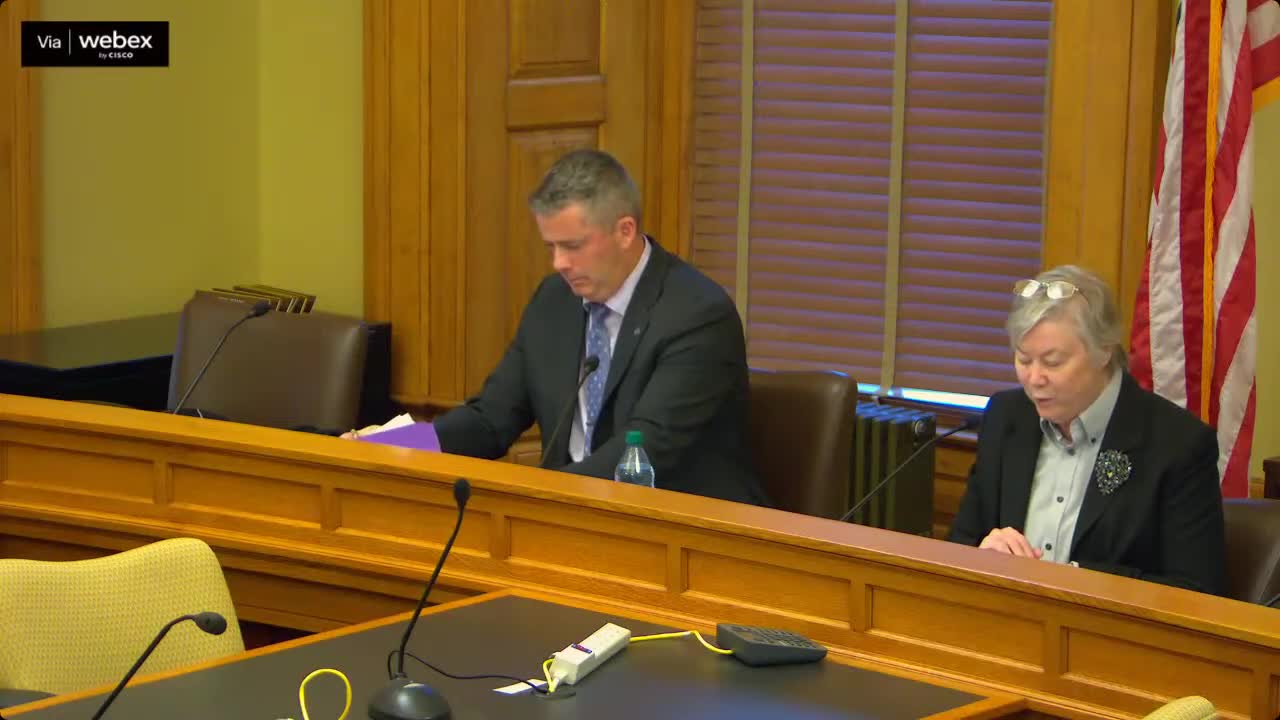
Shirley, a presenter for the consensus revenue estimating group, said the total receipt estimate for fiscal year 2026 is $10,220,000,000, "which represents an increase of a $165,900,000 or 1.6% relative to the spring estimate," and that the initial estimate for fiscal year 2027 is $10,133,000,000, "which represents a decrease of 93,900,000 or 0.9% below the newly revised fiscal year 26 estimate." The group emphasized that most forecast changes are modest and frequently involve shifts among inflation, real growth and nominal growth rather than large swings in receipts.
The presentation said the estimating cycle incorporated the effects of federal tax legislation passed over the summer where Kansas conforms to federal changes; officials noted those changes will have small net effects on state receipts. Adam Proffitt, a budget division official, summarized the group's work and said the increases reported are "nominal increases about the 1 and a half percent range" and fall within the margin of error from the spring forecast.
Officials outlined several components behind year‑to‑year movements in the profile. Proffitt said earlier suspensions and restorations of State General Fund (SGF) transfers create an artificial dip in FY2026 and a rebound in FY2027: the elimination of certain property tax mills shifted roughly $81 million into SGF transfers beginning in fiscal 2027, a previously suspended $55 million annual transfer to the Build Kansas Fund returns in fiscal 2027, and some campus restoration funding that was temporarily funded from other sources moves back to SGF in FY2027.
The presenters also recast some economic variables: calendar‑year 2025 inflation was revised slightly upward from 2.9% to 3.0%, real Kansas GDP for 2025 was revised from 1.7% to 1.8%, and nominal Kansas GDP was revised from 4.6% to 4.8%. Employment was reported down about 10,300 jobs year‑over‑year (roughly 0.7%), most of which the presenters attributed to a timing issue in local government education reporting that they expect to resolve in the next cycle.
On federal tax changes, officials said the largest state impact from H.R. 1 (referred to during the briefing as the "Big Beautiful Bill Act") is an estimated $145 million hit in fiscal 2027, roughly split between business and individual provisions: about $85 million for full expensing of certain business property, $32 million for full expensing of domestic research and development, about $7 million from changes to depreciation limits, and about $6.5 million from an enhanced child tax credit provision.
Reporters pressed presenters on school finance and the state's ending balance. Proffitt said estimates for K–12 spending in 2027–2030 are carried forward under current law because no new school finance formula exists yet; he added the forecast shows a $158 million downward reset in K–12 for fiscal 2026, driven primarily by a September count that recorded about 10,000 fewer students relative to the previous forecast. That lower K–12 base and higher federal Medicaid match (FMAP) helped close a previously projected budget gap but did not eliminate it.
Proffitt and Shirley said projected receipts fall short of projected expenditures by roughly $367 million in fiscal 2027 under the current profile, and larger shortfalls in subsequent years would erode the ending balance (the presentation shows the ending balance falling from about $2.9 billion in fiscal 2025 toward roughly $1.2 billion by fiscal 2030). "We're still, exceeding the revenues, with the expenditures in here on a forecasted basis," Proffitt said.
Proffitt said he will begin budget discussions with the governor in early December and reiterated the importance of sustainable revenues and aligning expenditures with receipts. The profile runs through fiscal 2030 and presenters cautioned that projections beyond that horizon involve greater uncertainty.
The briefing concluded without formal votes or actions; presenters distributed a profile to attendees and the meeting was adjourned.
View the Full Meeting & All Its Details
This article offers just a summary. Unlock complete video, transcripts, and insights as a Founder Member.
30-day money-back guarantee
Sponsors
Proudly supported by sponsors who keep Kansas articles free in 2025

