ULI panel urges co‑created vision, quick placemaking steps to jump‑start Bowie Town Center revitalization
November 14, 2025 | Bowie, Prince George's County, Maryland
This article was created by AI summarizing key points discussed. AI makes mistakes, so for full details and context, please refer to the video of the full meeting. Please report any errors so we can fix them. Report an error »
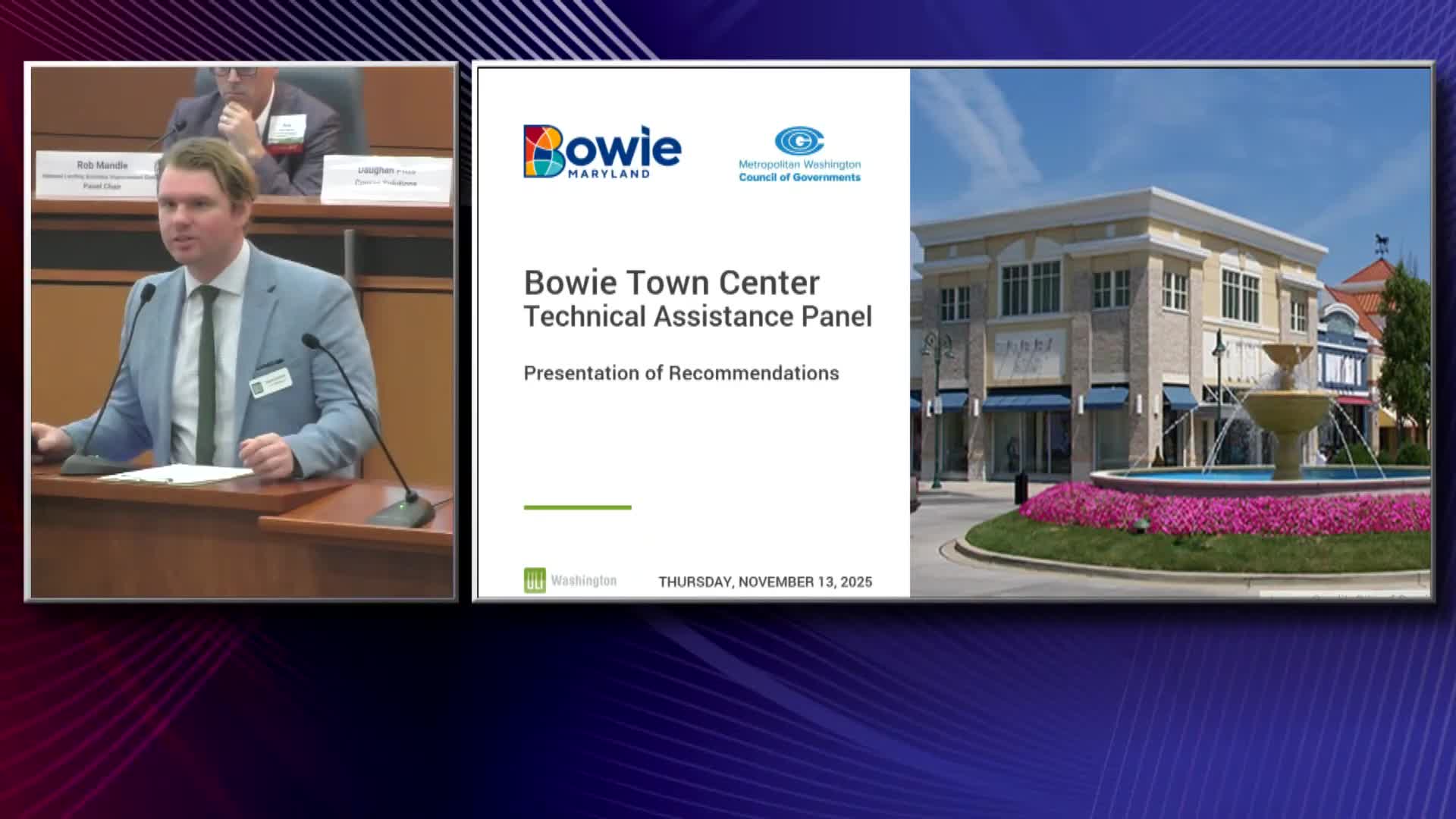
The panel, which spent two days on site and held stakeholder interviews, told an audience at a public presentation that Bowie must combine ‘‘physical’’ and ‘‘social’’ connections and craft ‘‘a co‑created community vision’’ to reverse decades‑old retail decline. ‘‘If there’s one thing to take away from today, it’s really about crafting a co‑created community vision for the future of Bowie Town Center,’’ panel chair Rob Bridal said.
Why it matters: Bowie Town Center is a mature retail center that the panel described as having reached a later stage of the typical retail lifecycle. Panelists warned that without change the center will face continued vacancy and falling patronage. The site contains large blocks of surface parking (the panel cited roughly 35 acres) and a mostly inward‑facing configuration that isolates it from surrounding neighborhoods and the regional trail network.
What the panel recommended: The panel’s findings, delivered to city staff and to inform a forthcoming written report, clustered around three priorities: (1) an inclusive, city‑led community engagement process to co‑create a vision with residents and property owners; (2) a suite of immediate, low‑cost ‘‘phase 0’’ placemaking moves to activate the center and demonstrate early benefits; and (3) phased physical and financial strategies to support incremental redevelopment.
Phase 0 and placemaking: Examples of short‑term actions included temporary programming (farmers markets, outdoor film, festivals), movable furniture and outdoor dining, murals and alley activations, and small ‘‘day 0’’ interventions around gateways and plazas. Panelist Sandeep Polia said these tactics are intended to make the center ‘‘an experience‑based destination rather than just a utilitarian shopping mall.’’ Presenters emphasized that many phase 0 ideas can be implemented on privately owned property with owner buy‑in.
Design and connectivity: Panelists urged reconfiguring some interior streetscapes—differently patterned parking on Town Center Drive, new north–south pedestrian connections, and expanded green links to Mill Pond, Allen Pond and the East Coast Greenway. The panel proposed accommodating a wider mix of uses over time, including lower‑rise residential near neighborhood edges, civic or cultural venues near city hall, and entertainment or performance spaces that are visible to the public realm.
Financing and implementation: The group highlighted financing tools used in regional case studies, such as tax increment financing (TIF), community development authorities, special tax districts and targeted public‑private partnerships, but said Bowie should tailor options to local jurisdictional and ownership realities. ‘‘Creative capital structures’’ will be needed to make mixed uses financially viable, Dawn Pitts said.
Questions from residents and next steps: The Q&A included concerns about preserving Bowie’s quieter character, the interim appearance of the center as leases turn over, tax impacts of public investment, and parking and access for seniors. Delegate Kim Taylor asked how involved property owners were; panelists said multiple owners complicate comprehensive redevelopment and stressed the need to align owners through engagement and identify any owners with sufficient footprint to drive change. Mayor Pro Tem Dufour Woodley told the audience staff had been tasked at the Nov. 3 City Council meeting to develop a revitalization plan and that the TAP report would be used as a tool in that process.
Timing: The panel said its written report would be drafted and delivered to the city in about six weeks to support the next phase of engagement and planning. Panel members repeatedly urged residents to take part: ‘‘Be ready to engage,’’ Bridal told the audience.
What remains unresolved: The presentation did not include a formal plan or binding commitments for public funding or zoning changes; those details will depend on subsequent staff recommendations, council direction and negotiations with property owners. The panel recommended next steps, including a structured engagement plan, owner outreach, and a project management team within the city to shepherd implementation.
The city and panel emphasized that the TAP is an early, nonbinding set of recommendations intended to catalyze a longer planning process and to provide a foundation for public discussion and decision‑making.
View the Full Meeting & All Its Details
This article offers just a summary. Unlock complete video, transcripts, and insights as a Founder Member.
30-day money-back guarantee
Sponsors
Proudly supported by sponsors who keep Maryland articles free in 2025

