Transit workers and riders tell council dispatcher moves and radio failures threaten service
November 14, 2025 | New York City Council, New York City, New York County, New York
This article was created by AI summarizing key points discussed. AI makes mistakes, so for full details and context, please refer to the video of the full meeting. Please report any errors so we can fix them. Report an error »
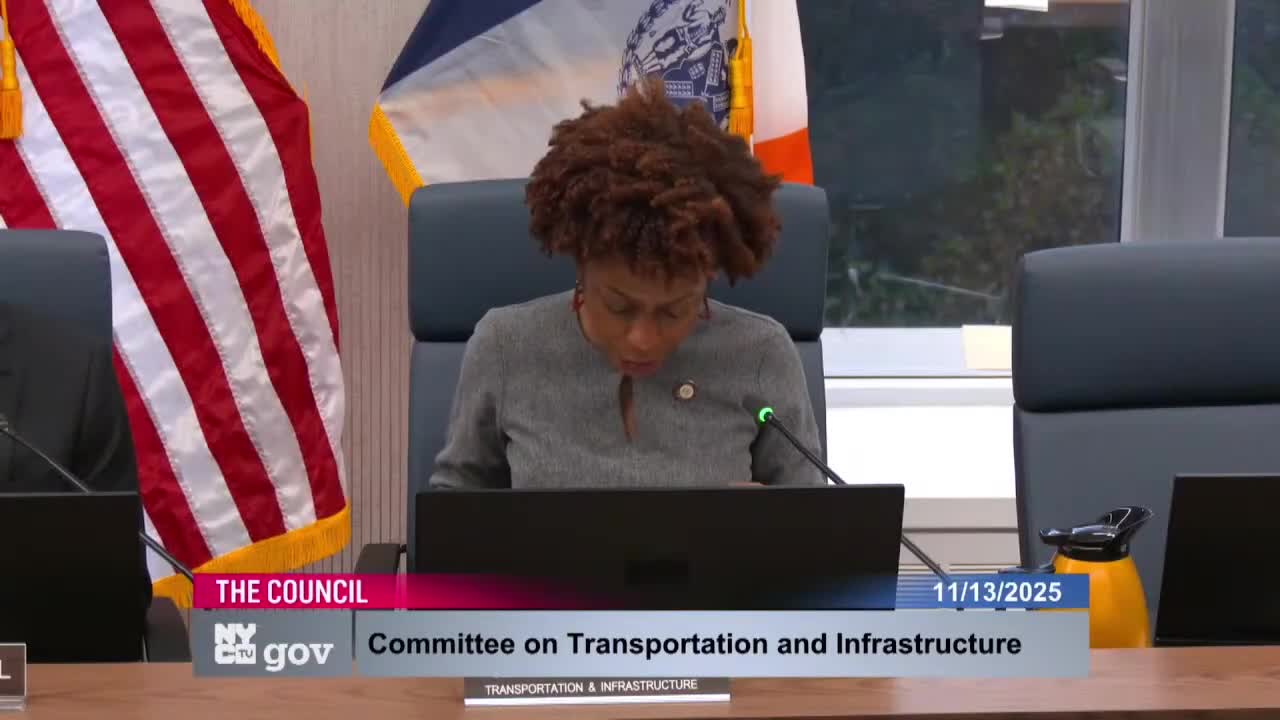
Jose de Jesus of TWU Local 106 said moving 26 dispatchers from field posts into a centralized Bus Command Center ‘‘creates a dangerous gap in service oversight.’’ He described radio drop calls and overlapping transmissions on the authority’s new radio system and urged the council to require more testing and preserve street-level dispatcher presence for incident response.
Demetrius Critchlow, testifying earlier, acknowledged the changes and defended centralization as an operational improvement: “When we centralize control of both incident management and service management ... you get a better handle of not only what's going on in dispatching,” he said, arguing that regional oversight enables more effective corridor-level decisions. He also said unions were notified and had opportunities to provide feedback.
Passengers United’s Charlton D’Souza criticized the Queens redesign’s implementation, describing long waits and canceled trips on some routes and saying his organization has plaintiffs preparing to sue the MTA over redesign impacts. Disability advocates and riders also testified about accessibility issues, including drivers not pulling to the curb and express-bus lift failures that can strand riders with disabilities.
MTA officials said they rely on data to measure the contribution of field dispatchers and are modernizing radio and communications systems; they also said targeted enforcement and technology tools (tap-and-ride, signal priority) are part of their broader approach to improve reliability.
The council asked for follow-up information and specific operational data — including radio-system success rates, console vacancy counts at the command center, and evidence that centralization improves schedule adherence — none of which was fully provided during the hearing. Several members signaled they would continue oversight on these topics and requested written agency responses.
Don't Miss a Word: See the Full Meeting!
Go beyond summaries. Unlock every video, transcript, and key insight with a Founder Membership.
30-day money-back guarantee
Sponsors
Proudly supported by sponsors who keep New York articles free in 2025

