DRMS will add graded enforcement option for tourist mines; division stresses no civil penalties
November 14, 2025 | Mined Land Reclamation Board, Governor's Boards and Commissions, Organizations, Executive, Colorado
This article was created by AI summarizing key points discussed. AI makes mistakes, so for full details and context, please refer to the video of the full meeting. Please report any errors so we can fix them. Report an error »
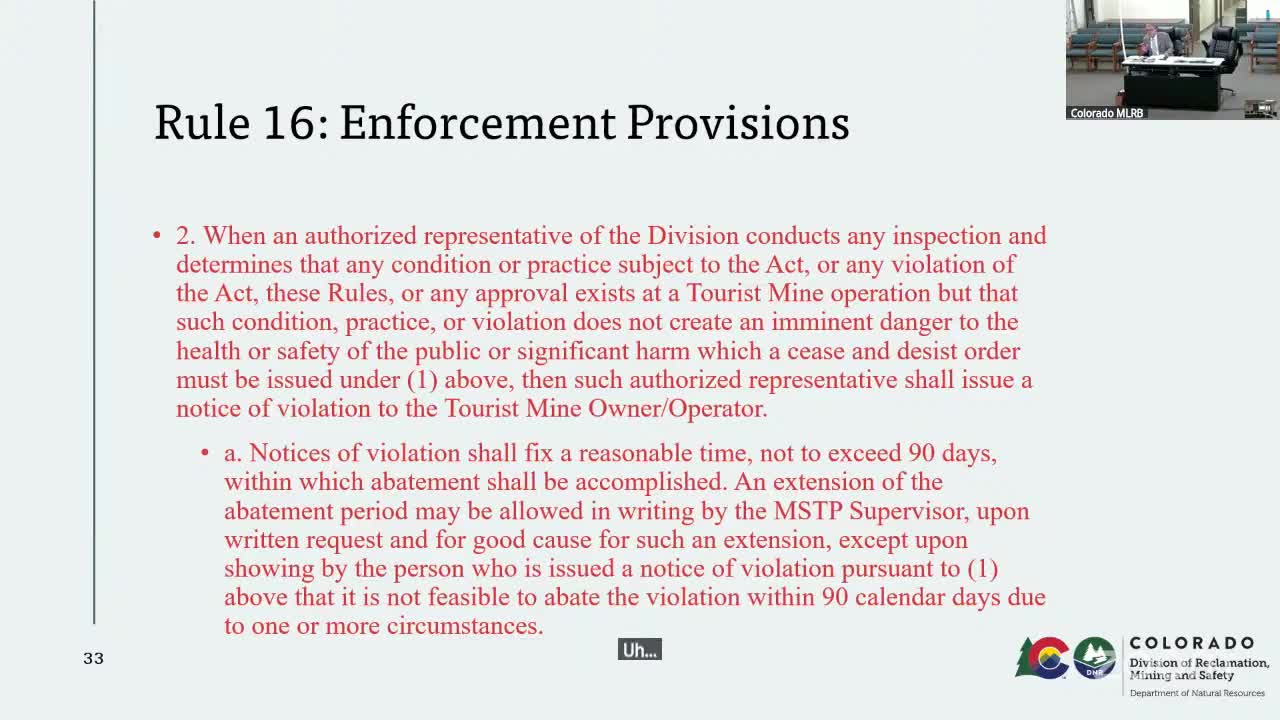
Under the draft enforcement language, an authorized representative would still issue a cease‑and‑desist where conditions create imminent danger to public health and safety. Where hazardous conditions are present but do not create an immediate danger, staff may instead issue a notice of violation that sets a reasonable abatement timeframe and documents corrective actions. The change is intended to allow more tailored remediation steps and reduce unnecessary long‑term closures for maintenance items.
Jason Musick and Jeff Yeh explained the policy rationale and stressed the limitations of DRMS enforcement authority: there are no civil monetary penalties under the proposed tourist‑mine rules. "There are no civil penalties here," Yeh said, adding that a notice of violation is primarily a corrective tool that can lead to a cease‑and‑desist only if conditions persist or immediate danger remains.
Operators welcomed the option to fix minor problems without a shutdown but asked how inspection records and notices would be recorded in public files. DRMS said inspection findings, notices and any petitions for modification would be documented, and that the division’s inspectors commonly use discretion and compliance assistance (for example, allowing repairs the same day) to resolve minor issues.
What happens next: DRMS will finalize proposed enforcement language, circulate clarifying edits and preserve the public record of inspections and violations; operators were reminded they may petition for site‑specific modifications.
View the Full Meeting & All Its Details
This article offers just a summary. Unlock complete video, transcripts, and insights as a Founder Member.
30-day money-back guarantee
Sponsors
Proudly supported by sponsors who keep Colorado articles free in 2025

