Fountain Valley trustees hear 'Next 5' facilities update; district flags aging portable AC units and warns comprehensive field rehab could average $1M per site
November 14, 2025 | Fountain Valley School District, School Districts, California
This article was created by AI summarizing key points discussed. AI makes mistakes, so for full details and context, please refer to the video of the full meeting. Please report any errors so we can fix them. Report an error »
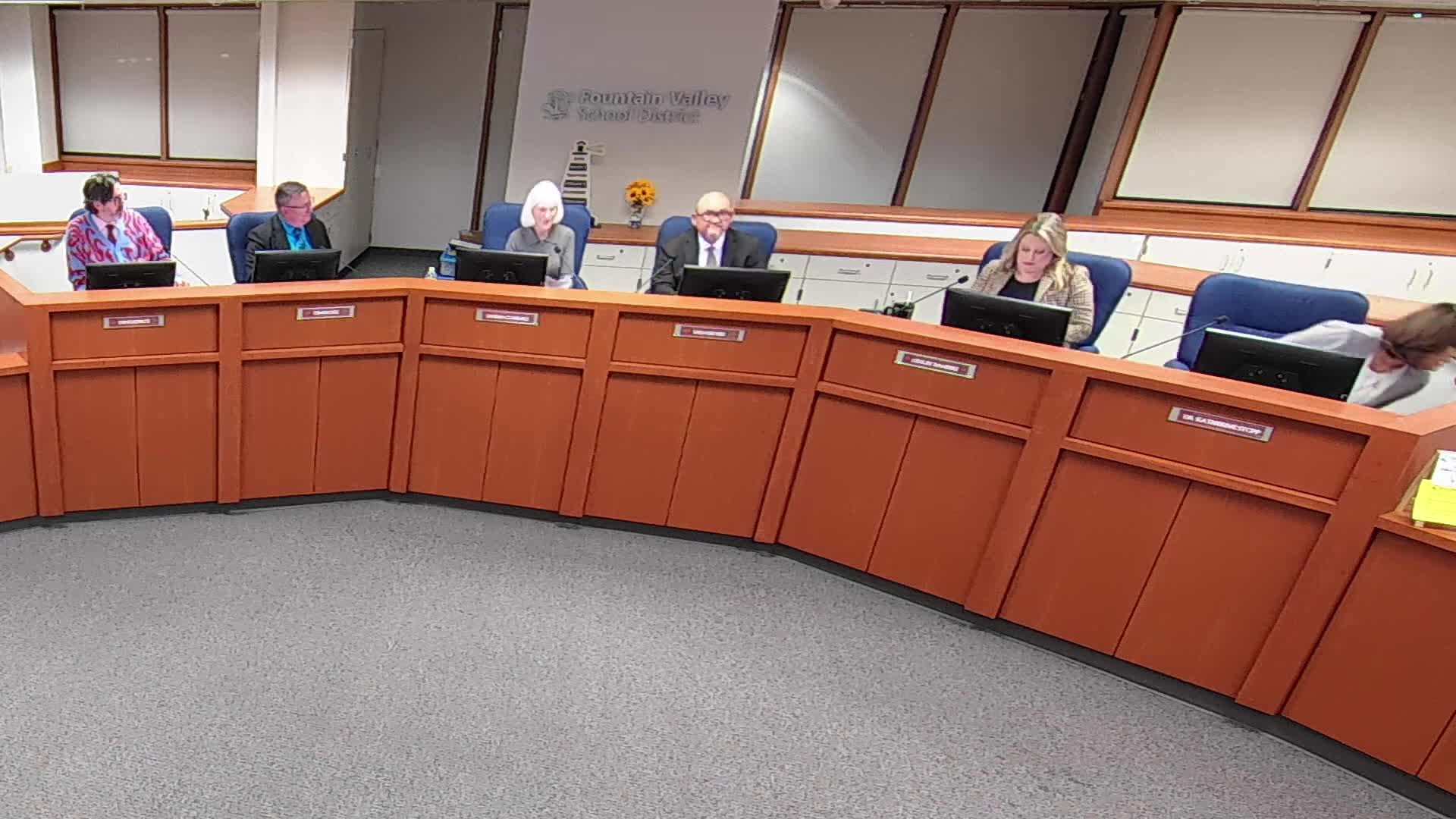
Assistant Superintendent of Business Isidro Barrera told trustees the district’s 2016 facilities master plan identified roughly $280,000,000 in deferred facility needs; community voters later approved a general obligation bond that generated about $63,000,000 for the district’s prioritized projects. Barrera said modernization work funded by that bond proceeded in phases from 2017 through 2023.
Barrera said the district has "a little bit under 70" portable BAR units — some 10 to 28 years old — that will need replacement and that the district has completed an initial phase of a state grant program intended to help replace units. He also reported the district has substantially completed fencing and security upgrades (perimeter fencing, digital communications, remote locking hardware and single points of entry) and replaced asphalt at all sites in 2022.
On fields, Barrera said a landscape‑architecture assessment (conducted in 2022) identified widespread irrigation and infrastructure problems — compacted, hydrophobic soils in parts of some fields, gopher damage and aging sprinkler systems — that limit the effectiveness of short‑term surface repairs. "This comprehensive plan, on average, would cost, and these are estimates, about a million dollars per site," Barrera said; he noted Cox — the largest and most damaged field — would likely be pricier than smaller sites.
Barrera described two paths forward: a limited, surface‑level program of urgent repairs to buy time (with risk that later comprehensive work would remove that interim work) or a full architectural and irrigation/turf replacement. He recommended a board workshop to review options, staging and funding sources, including state facilities matching funds and developer fees.
Board members confirmed that "turf" in the presentation means real grass (not artificial turf) and that the district does not yet have precise timelines for how long fields would be inaccessible during work; Barrera said it would not likely be an entire school year and that sites would be staged across summers similar to prior bond projects.
What happens next: staff recommended a dedicated board workshop to consider funding options and scheduling; trustees did not approve a financing plan at the Nov. 13 meeting but signaled interest in deeper review and community engagement before committing capital funds.
View the Full Meeting & All Its Details
This article offers just a summary. Unlock complete video, transcripts, and insights as a Founder Member.
30-day money-back guarantee
Sponsors
Proudly supported by sponsors who keep California articles free in 2025

