UNRWA says it remains operational in Gaza and West Bank, cites staff and services
November 14, 2025 | United Nations, Federal
This article was created by AI summarizing key points discussed. AI makes mistakes, so for full details and context, please refer to the video of the full meeting. Please report any errors so we can fix them. Report an error »
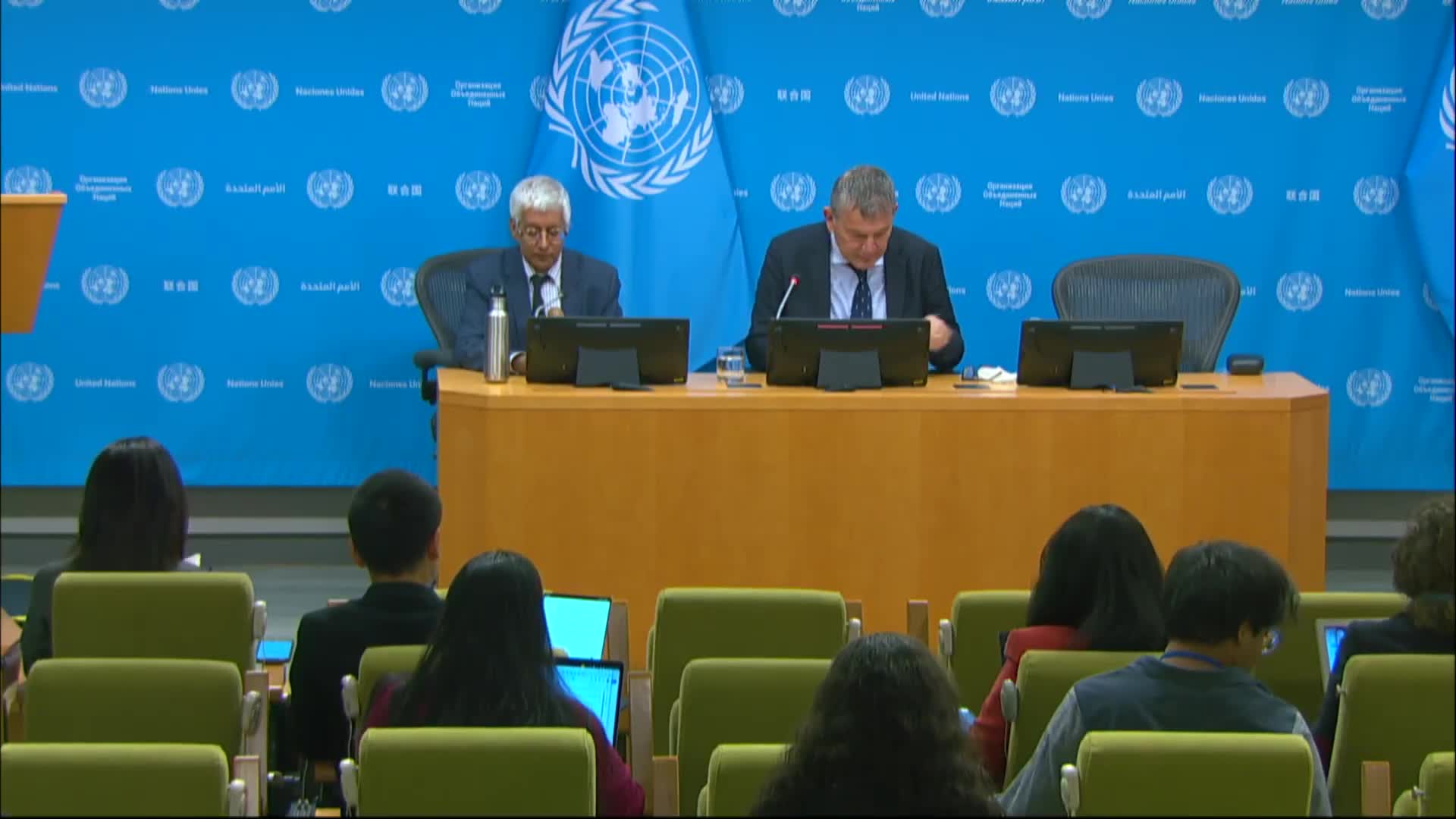
Philippe Lazzarini, commissioner‑general of the United Nations Relief and Works Agency for Palestine Refugees in the Near East (UNRWA), said the agency remains operational across Gaza and the West Bank despite recent legislation and international criticism.
"We are extraordinary operational," Lazzarini said, adding that UNRWA employs about 12,000 staff in Gaza and continues to provide life‑saving assistance and essential services. He told reporters UNRWA is sheltering about 75,000 people in roughly 100 of its premises across the Gaza Strip.
Lazzarini said UNRWA has delivered what he described as "more than 15,000,000 primary health consultations" over the past two years, with an average of about 14,000 consultations a day. He described a new vaccination campaign run in partnership with UNICEF and the World Health Organization, with UNICEF supplying vaccines and WHO managing the cold chain while UNRWA health staff administer inoculations.
The agency is also involved in water and sanitation work; Lazzarini said roughly 40% of the clean water currently available in Gaza is due to UNRWA engineers' interventions. On education, he said UNRWA has brought about 40,000 children back into in‑person learning and aims to expand in phases to 100,000 children as part of a larger target that he said could reach up to 300,000 children.
Lazzarini framed these activities as central to stabilizing communities and warned that losing educational continuity risks leaving a generation exposed to long‑term harms. He said UNRWA remains active in the West Bank as well, running schools for roughly 50,000 children and continuing to provide primary‑health consultations into 2025.
The briefing came after Lazzarini said two Knesset bills took effect this year and have affected operations in East Jerusalem and the processing of visas for international staff; he emphasized, however, that local UNRWA staff in the West Bank and Gaza continue to provide services.
Lazzarini called the agency "an extraordinary asset" for early recovery and stabilization and urged member states to recognize the operational role UNRWA plays on the ground.
The agency's next procedural step is an upcoming mandate renewal at the UN, which Lazzarini said should be accompanied by concrete support from member states.
"We are extraordinary operational," Lazzarini said, adding that UNRWA employs about 12,000 staff in Gaza and continues to provide life‑saving assistance and essential services. He told reporters UNRWA is sheltering about 75,000 people in roughly 100 of its premises across the Gaza Strip.
Lazzarini said UNRWA has delivered what he described as "more than 15,000,000 primary health consultations" over the past two years, with an average of about 14,000 consultations a day. He described a new vaccination campaign run in partnership with UNICEF and the World Health Organization, with UNICEF supplying vaccines and WHO managing the cold chain while UNRWA health staff administer inoculations.
The agency is also involved in water and sanitation work; Lazzarini said roughly 40% of the clean water currently available in Gaza is due to UNRWA engineers' interventions. On education, he said UNRWA has brought about 40,000 children back into in‑person learning and aims to expand in phases to 100,000 children as part of a larger target that he said could reach up to 300,000 children.
Lazzarini framed these activities as central to stabilizing communities and warned that losing educational continuity risks leaving a generation exposed to long‑term harms. He said UNRWA remains active in the West Bank as well, running schools for roughly 50,000 children and continuing to provide primary‑health consultations into 2025.
The briefing came after Lazzarini said two Knesset bills took effect this year and have affected operations in East Jerusalem and the processing of visas for international staff; he emphasized, however, that local UNRWA staff in the West Bank and Gaza continue to provide services.
Lazzarini called the agency "an extraordinary asset" for early recovery and stabilization and urged member states to recognize the operational role UNRWA plays on the ground.
The agency's next procedural step is an upcoming mandate renewal at the UN, which Lazzarini said should be accompanied by concrete support from member states.
Don't Miss a Word: See the Full Meeting!
Go beyond summaries. Unlock every video, transcript, and key insight with a Founder Membership.
✓
Get instant access to full meeting videos
✓
Search and clip any phrase from complete transcripts
✓
Receive AI-powered summaries & custom alerts
✓
Enjoy lifetime, unrestricted access to government data
30-day money-back guarantee
