Laguna Beach Unified presents special-education update; board presses on in-district options
November 14, 2025 | Laguna Beach Unified School District, School Districts, California
This article was created by AI summarizing key points discussed. AI makes mistakes, so for full details and context, please refer to the video of the full meeting. Please report any errors so we can fix them. Report an error »
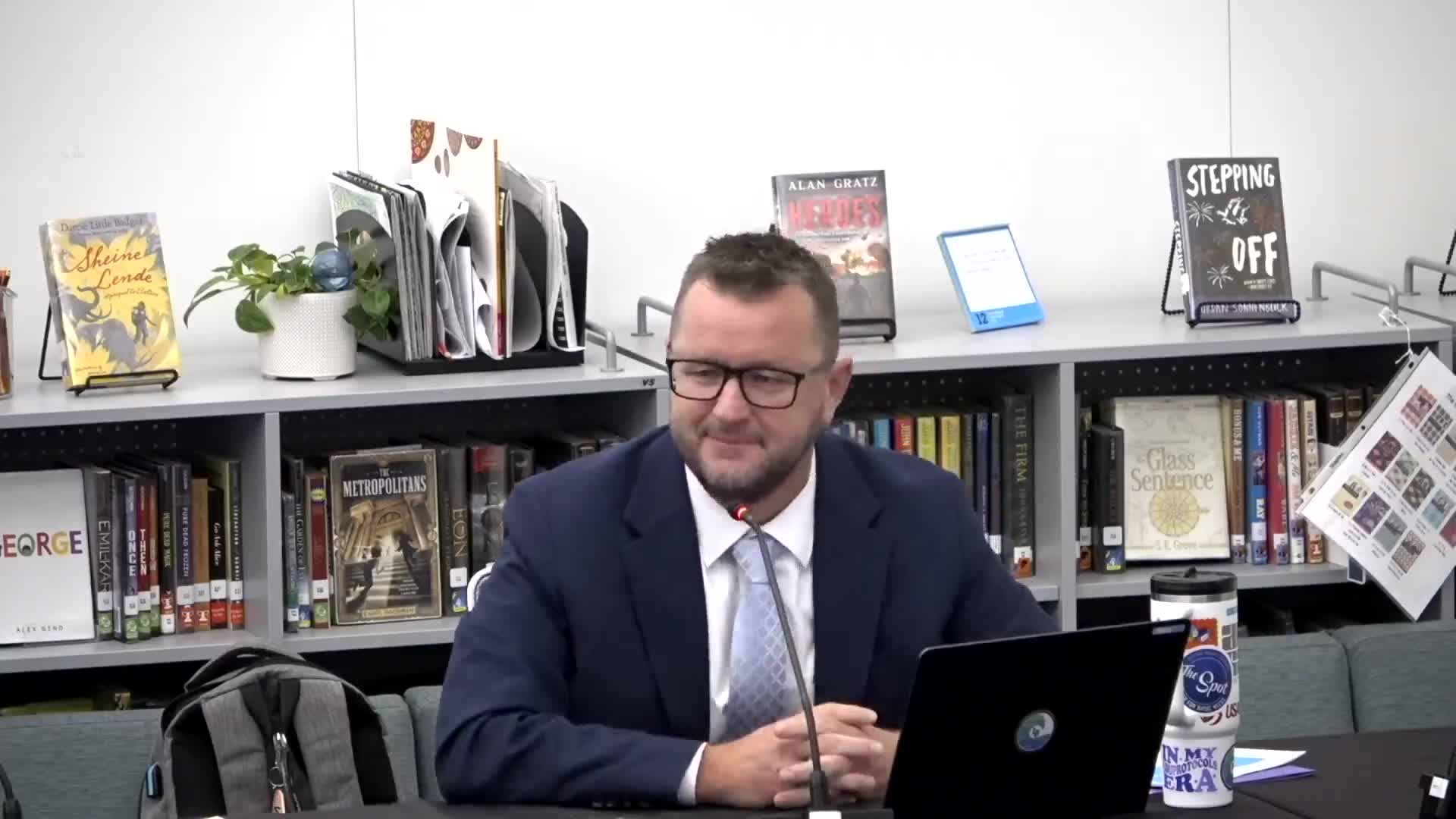
Moss told the board the district serves about 2,315 students and that approximately 11 percent — about 268 students — are enrolled in special education. She said roughly 237 of those students receive services inside district programs and 31 are placed outside the district in regional or nonpublic programs. "It’s our obligation to provide all of our students a free appropriate public education in the least restrictive environment," Moss said.
The presentation explained key timelines and processes used to identify and place students. Program specialist Jaylen Thompson summarized referrals and evaluation steps: school teams, parents and other sources may refer students; the school must provide an assessment plan within 15 calendar days after referral and complete a comprehensive multidisciplinary evaluation within 60 calendar days. "The IEP is a fluid document," Thompson said, noting annual reviews and three‑year reevaluations inform services.
Moss described in-district service models — including co-teaching at Thurston Middle School and Laguna Beach High School, shared and push‑in aide support at elementary and secondary levels, and three self-contained classes at Top of the World (preschool/TK, K–2, 3–5). She said about 64 percent of the in-district cohort (approximately 155 students) receive 80 percent or more of their special education services in general education settings, a figure she noted is above county and state averages.
The board asked several operational and legal questions. Members pressed whether the district can or should develop additional in-district programs to reduce out-of-district placements and what minimum enrollment would be required to make a new program feasible. Moss said feasibility depends on many factors — student profiles, staffing, facilities and whether a program could provide robust supports such as embedded therapists and behavior specialists. "Creating a program of one misses important opportunities for peer socialization and the range of supports a specialized program provides," she said.
Members also asked about dispute-resolution when families disagree with IEP recommendations. Moss described a layered approach: reconvening IEP teams, alternative dispute resolution and, rarely, due‑process hearings overseen by the Office of Administrative Hearings. She noted that a parent who withholds consent may trigger 'stay-put' protections for the student's current services and that settlement agreements outside the IEP context require board approval.
Moss highlighted staff training and family engagement initiatives, including dyslexia training for a district speech pathologist, expansion of the Read to Succeed after-school program, and a parent workshop scheduled Dec. 4 called "Partnering for Success for IEPs." She also described regional partnerships — memoranda of understanding with Capistrano Unified for adult transition programming, access to Saddleback Unified specialized programs, and collaboration with South Orange County SELPA and the Orange County Department of Education for regionalized services.
The district said it will continue to evaluate moderate programming at the secondary level and explore community‑based opportunities for students who attend schools outside the district. Board members indicated they will submit follow-up questions; Moss offered to provide additional details by email and in future meetings.
Don't Miss a Word: See the Full Meeting!
Go beyond summaries. Unlock every video, transcript, and key insight with a Founder Membership.
30-day money-back guarantee
Sponsors
Proudly supported by sponsors who keep California articles free in 2025

