Planning commission approves final site plan for cannabis retailer at 41 E. Walton with conditions
November 14, 2025 | Pontiac, Oakland County, Michigan
This article was created by AI summarizing key points discussed. AI makes mistakes, so for full details and context, please refer to the video of the full meeting. Please report any errors so we can fix them. Report an error »
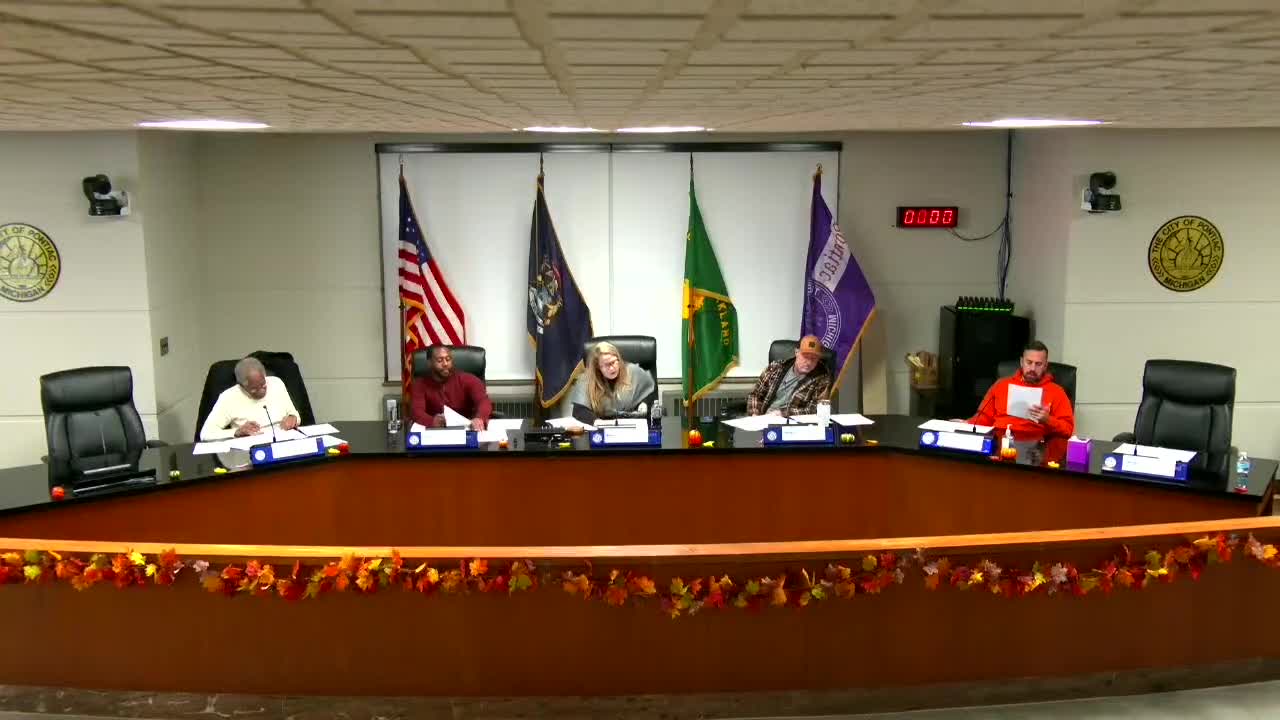
Planning staff (presenter Michael Betcher) said the building is approximately 3,200 square feet and lies within the Walton Boulevard adult‑use marijuana overlay (zone C‑3). Staff reviewed nine conditions carried forward from the Oct. 1 preliminary approval, including color elevations, photometric plans, landscaping, a retaining wall, rooftop screening and an odor management plan. Staff recommended enforcement of the zoning ordinance’s transparency requirement (clear glazing), a waiver to the loading‑dock screening requirement due to site constraints, and acceptance of either (a) repair/extension of the existing masonry retaining wall or (b) a fence alternative approved under section 4.405(c)(3), noting different landscaping depths would apply depending on that choice.
Applicant representative Eric Clark (on behalf of Cat Bald Lake) described repeated break‑ins at the company’s Hamtramck location and urged flexibility on window treatment and rear screening, saying the company had "spent almost $120,000 since 2020 on that property fixing that window." Clark said he would comply with the city’s final direction but asked the commission to consider alternatives that would avoid losing a required parking space if a 10‑foot landscaping band were mandated.
City legal and planning staff explained the municipal code requires clear, untinted glass and that transparency is intended to improve pedestrian safety and visibility. As the city attorney (Amy) summarized: "the glass has to be clear and untinted... the intent... is so that pedestrians can see what's going on inside the building before they enter." Staff also explained that if the applicant wanted a permanent deviation from the transparency standard, the appeal path would be to the zoning board of appeals and that timing could delay state application steps.
Public commenters were mixed but generally urged compliance with the code: resident Darlene Clark urged the commission to "stick to the rules" to build trust with residents; Carlton Jones commended petitioner outreach and supported the project if local engagement and hiring were pursued.
To accommodate the site conditions, the commission’s motion—moved by Vice Chair Jackson—approved final site plan FSPR25‑005 subject to multiple conditions: enforce clear glazing/transparency requirements; grant the waiver of loading‑dock screening; repair and maintain the masonry retaining wall at the northwest property corner or provide a 5‑foot vertical extension (or allow an approved fence alternative under section 4.405(c)(3)); remove the existing detached sign on the property; install additional bollards to protect the gas meter; and correct the underside awning color (no dark metallic green). The motion passed unanimously on roll call.
Staff directed the applicant to submit final drawings consistent with the motion and then pursue building permits and any remaining clerk or billing office steps needed for a certificate of occupancy and state license application.
This approval is limited to the terms set by the planning commission; other permits, building department approvals and state licensing remain required.
View the Full Meeting & All Its Details
This article offers just a summary. Unlock complete video, transcripts, and insights as a Founder Member.
30-day money-back guarantee
Sponsors
Proudly supported by sponsors who keep Michigan articles free in 2025

