City updates housing needs assessment; land bank, CHIP and land‑trust options highlighted
November 13, 2025 | Pittsburg, Crawford County, Kansas
This article was created by AI summarizing key points discussed. AI makes mistakes, so for full details and context, please refer to the video of the full meeting. Please report any errors so we can fix them. Report an error »
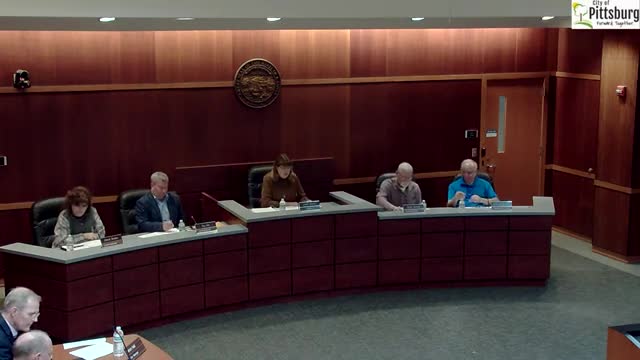
Kim Frohn, director of housing and community development, said the city contracted with Novogradic for a full assessment completed in late 2024 and recounted previous updates in 2015, 2018 and 2022. Frohn said stakeholder engagement included more than 90 participants representing city commissioners, lenders, developers and other housing stakeholders; the assessment identifies the primary target markets as extremely low‑to‑low income renters, first‑time homebuyers, owners seeking to downsize or upgrade, commuters and new residents.
Frohn detailed program outcomes tied to the assessment: the land bank (established 2015) has sold 71 properties since inception with 43 homes built or planned; the City Housing Incentive Program (CHIP) offers builders 10% of verified construction cost as an incentive up to $20,000 per home, with one CHIP home closed and ten under construction. Frohn said the CHIP fund had a little over $600,000 and that $500,000 was allocated to the CHIP account for incentives; the fund is intended as a revolving source replenished by property taxes over time.
Assistant Director Megan Keener summarized Housing Authority and federal program activity: the Pittsburg Public Housing Authority houses roughly 200–300 families monthly, including about 278 children and approximately 145 elderly or disabled individuals; security deposit assistance helped about 126 households in 2024–25 and the housing authority received a $100,000 award for 2025. Keener also described emergency solutions grant outcomes and a "Foster Youth to Independence" pilot with four participants.
Commissioners asked about land‑trust recommendations, development agreement requirements for land bank purchases, and whether donated lots could be used as pocket parks; staff described options and said development agreements typically include timelines to ensure lots are returned to productive use.
Next steps: staff recommended pursuing priority recommendations from the Novogradic report, promoting CHIP and coordinating neighborhood revitalization and county partnerships.
Provenance: Housing presentation and Q&A during Nov. 12 meeting.
Don't Miss a Word: See the Full Meeting!
Go beyond summaries. Unlock every video, transcript, and key insight with a Founder Membership.
30-day money-back guarantee
Sponsors
Proudly supported by sponsors who keep Kansas articles free in 2025

