Ishpeming audit shows grant-driven gains; council focuses on 2026 CIP, campground power and cart ordinance
November 13, 2025 | Ishpeming, Marquette County, Michigan
This article was created by AI summarizing key points discussed. AI makes mistakes, so for full details and context, please refer to the video of the full meeting. Please report any errors so we can fix them. Report an error »
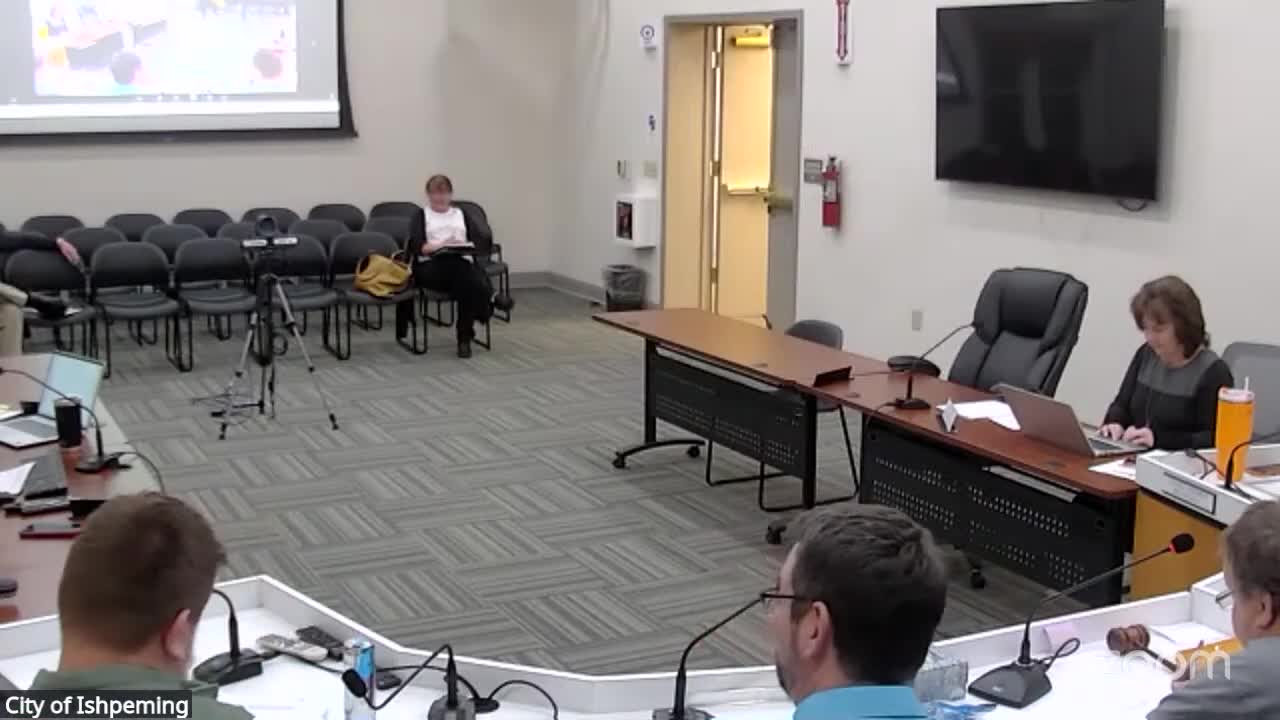
The auditor said the city’s total net position reported about $45,000,000, with an unrestricted balance near $2,000,000. He highlighted pension funding as a positive trend: the municipal pension plan is now over 95% funded, while the police pension carries roughly a $12,100,000 liability and sits around 70% funded. The general fund ended the year with a loss of about $180,000 but closed with a fund balance near $743,000, the auditor said.
Council members pressed staff on timing for project reimbursements after one member asked whether past accounting moves might have been used to "make it look good." "I don't know that we did the proper thing in the past. If we might have moved that money to make it look good," the council member said. City staff (Gray) and the auditor replied that the variation was a timing and revenue‑recognition issue — reimbursements received after the allowable cutoff were recognized in 2025, not 2024 — and that "nothing went wrong with the project," staff said.
Council then moved to the 2026 budget and capital improvement plan (CIP). Gray asked the council to focus direction on the CIP and the public improvement fund (about $600,000 annually, with roughly $200,000 servicing existing debt). Staff proposed a $100,000 allocation for assessments, planning and design to evaluate DPW, police, fire and city hall buildings so the city can be ready to pursue state or other grant funding; that amount is listed in the CIP gap column and a funding source has not been identified.
On specific projects, staff reported an updated Cedar Street paving estimate of $26,900 and a reduced hospital roadway estimate of about $115,000 (previously near $300,000). Gray recommended using local street reserves where appropriate; the transcript notes the local streets fund had a balance near $770,000 as of Sept. 30.
The council also discussed a proposed solar installation and campground service‑drop options. Gray said staff is evaluating whether to buy a smaller service drop for a few campsites or a larger service drop that could support more campsites or a future pavilion; she asked staff to provide the cost difference and noted general fund reserves as one potential source if the extra cost is modest ("if it's a difference of 10k...").
On sanitation, staff proposed purchasing garbage and recycling carts using a mix of grant dollars and the garbage fund reserve (about $600,000). Gray said recycling carts could be 80% reimbursed by Eagle (the recycling reimbursement program) while garbage carts do not qualify; implementing carts would require an ordinance amendment to switch to cart‑based service once carts are delivered.
Staff clarified that the CIP list is guidance and that any project funding will still require the regular bidding and purchasing approvals. The council was given deadlines for packet changes (Nov. 30) and told the budget item could be on the next council meeting agenda for approval.
The session closed with staff and auditors thanking council members for their questions and work to maintain accurate books during transitions. The council did not adopt the 2026 budget at this meeting; next procedural steps include finalizing CIP priorities, identifying funding sources for the $100,000 building assessment if council wishes to proceed, and placing the budget on the next meeting agenda for a potential vote.
Don't Miss a Word: See the Full Meeting!
Go beyond summaries. Unlock every video, transcript, and key insight with a Founder Membership.
30-day money-back guarantee
Sponsors
Proudly supported by sponsors who keep Michigan articles free in 2025

