North Allegheny board previews 2026–27 budget, passes Act 1 index resolution
November 13, 2025 | North Allegheny SD, School Districts, Pennsylvania
This article was created by AI summarizing key points discussed. AI makes mistakes, so for full details and context, please refer to the video of the full meeting. Please report any errors so we can fix them. Report an error »
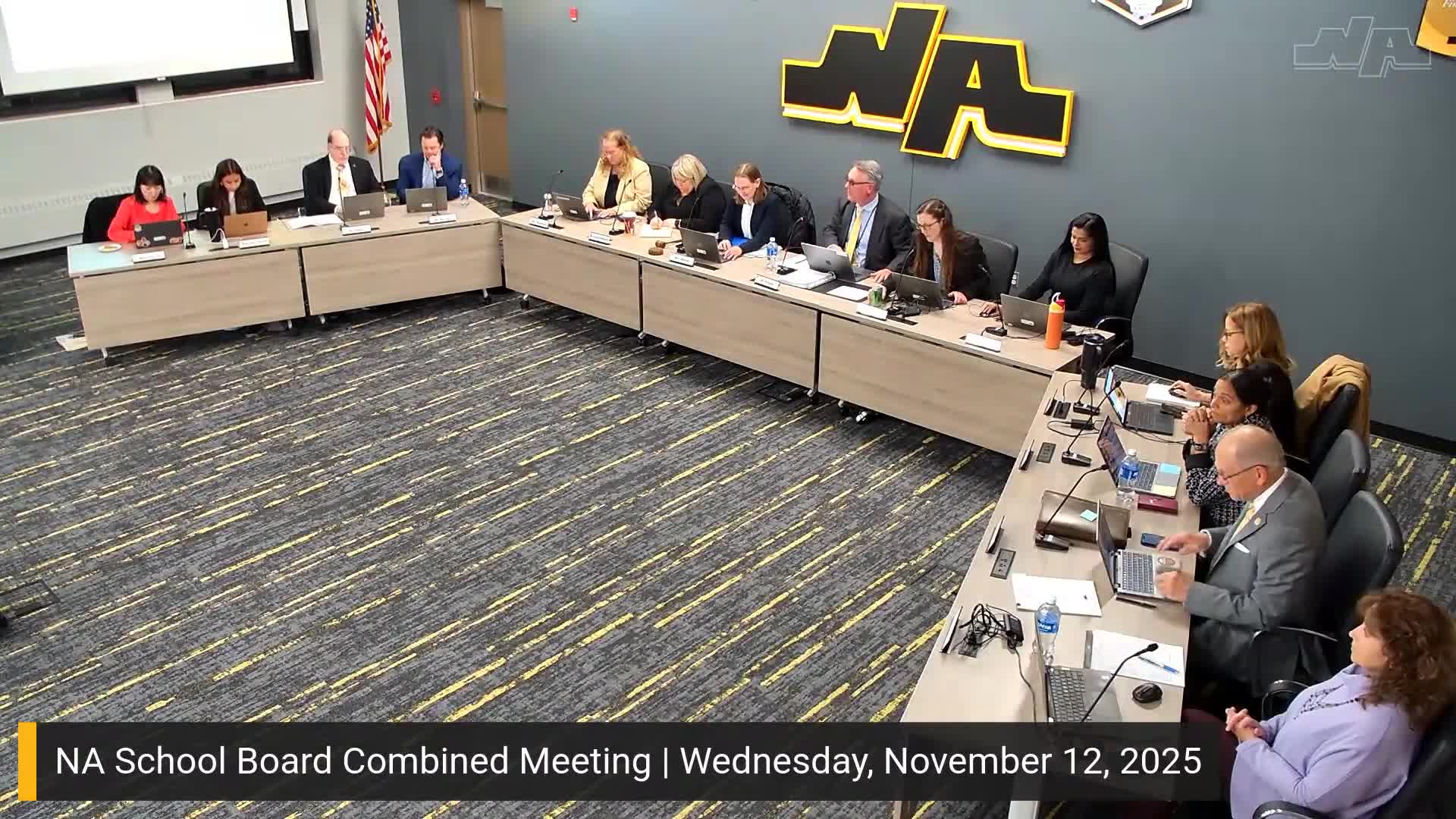
The North Allegheny School District board on Nov. 12 received a preliminary 2026–27 budget presentation and approved an Act 1 index resolution that limits future tax increases to the state index.
Mr. Hauser, the district’s finance presenter, told the board the audited 2024–25 numbers are on schedule for presentation in January and that the district increased its fund balance to "about $29,400,000," roughly 14.4% of the 2025–26 budget. "We have just over a $109,000,000 in the bank right now," he said, noting cash peaks in September and October because of tax collections.
The presentation laid out key 2026–27 assumptions: a 1% assessed‑value growth estimate for budgeting, an Act 1 index posted at 3.5%, and a forecasted millage rate of 20.4309 if the index is applied — an estimated increase of 6.609 mills. Hauser estimated the tax impact at roughly $175 annually for a home assessed at the district average of $254,000 (about $15 per month). He projected roughly $211 million in revenue and about $212 million in expenses, with salary and benefit increases and a one‑time ELA textbook purchase (about $1.3 million) among the principal expense drivers.
Hauser warned of revenue risks tied to the county common level ratio (CLR). "The CLR decline really hurt us on the growth rate," he said, explaining that assessed values can fall even when market values rise. He also noted sensitivity to Federal Reserve moves: "Every quarter of a point that it decreases costs the district about a $185,000 of earned income."
Board members pressed staff on options to close an estimated near‑term gap (Mr. Hauser said the $700,000 shortfall cited already reflects the 3.5% index), the possible effect on the district’s double‑A stable rating, and whether to model future millage increases in the five‑year plan. Hauser said the district could present multiple scenarios to rating agencies showing potential levers for future years and noted seed funding options for upcoming elementary renovations.
On a motion to adopt the Act 1 index resolution — described by staff as an agreement not to raise taxes more than the state index — the board approved the resolution as part of the finance folder. The finance vote closed with the folder passed; Mrs. Blackburn abstained from item number 2 (accounts payable) only, and the Act 1 resolution itself was approved.
The district will present audited 2024–25 numbers to the board in January and proceed through the budget timeline: proposed final budget hearings in March–April and a final budget vote expected May 20, 2026.
Outcome: The Act 1 index resolution passed; staff will return with audited financials in January and refine 26–27 projections ahead of the March–May budget process.
Mr. Hauser, the district’s finance presenter, told the board the audited 2024–25 numbers are on schedule for presentation in January and that the district increased its fund balance to "about $29,400,000," roughly 14.4% of the 2025–26 budget. "We have just over a $109,000,000 in the bank right now," he said, noting cash peaks in September and October because of tax collections.
The presentation laid out key 2026–27 assumptions: a 1% assessed‑value growth estimate for budgeting, an Act 1 index posted at 3.5%, and a forecasted millage rate of 20.4309 if the index is applied — an estimated increase of 6.609 mills. Hauser estimated the tax impact at roughly $175 annually for a home assessed at the district average of $254,000 (about $15 per month). He projected roughly $211 million in revenue and about $212 million in expenses, with salary and benefit increases and a one‑time ELA textbook purchase (about $1.3 million) among the principal expense drivers.
Hauser warned of revenue risks tied to the county common level ratio (CLR). "The CLR decline really hurt us on the growth rate," he said, explaining that assessed values can fall even when market values rise. He also noted sensitivity to Federal Reserve moves: "Every quarter of a point that it decreases costs the district about a $185,000 of earned income."
Board members pressed staff on options to close an estimated near‑term gap (Mr. Hauser said the $700,000 shortfall cited already reflects the 3.5% index), the possible effect on the district’s double‑A stable rating, and whether to model future millage increases in the five‑year plan. Hauser said the district could present multiple scenarios to rating agencies showing potential levers for future years and noted seed funding options for upcoming elementary renovations.
On a motion to adopt the Act 1 index resolution — described by staff as an agreement not to raise taxes more than the state index — the board approved the resolution as part of the finance folder. The finance vote closed with the folder passed; Mrs. Blackburn abstained from item number 2 (accounts payable) only, and the Act 1 resolution itself was approved.
The district will present audited 2024–25 numbers to the board in January and proceed through the budget timeline: proposed final budget hearings in March–April and a final budget vote expected May 20, 2026.
Outcome: The Act 1 index resolution passed; staff will return with audited financials in January and refine 26–27 projections ahead of the March–May budget process.
Don't Miss a Word: See the Full Meeting!
Go beyond summaries. Unlock every video, transcript, and key insight with a Founder Membership.
✓
Get instant access to full meeting videos
✓
Search and clip any phrase from complete transcripts
✓
Receive AI-powered summaries & custom alerts
✓
Enjoy lifetime, unrestricted access to government data
30-day money-back guarantee
